About this artwork
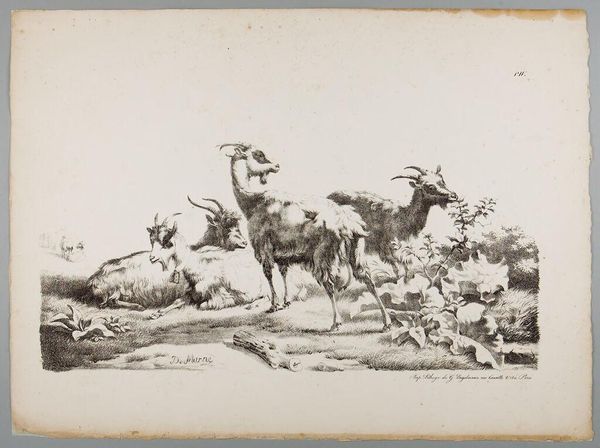
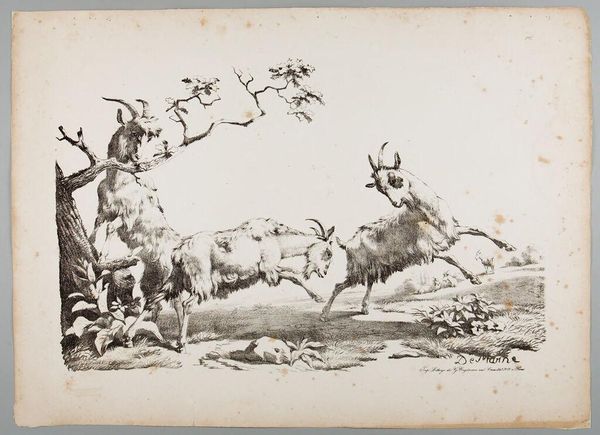
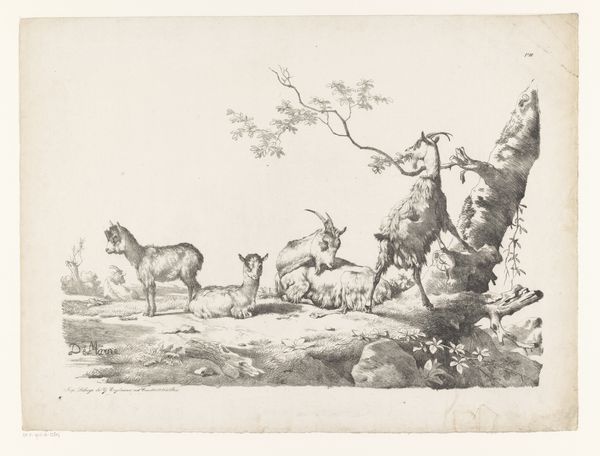
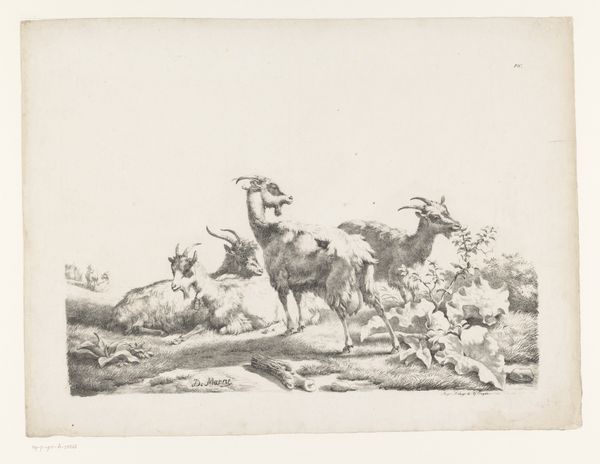
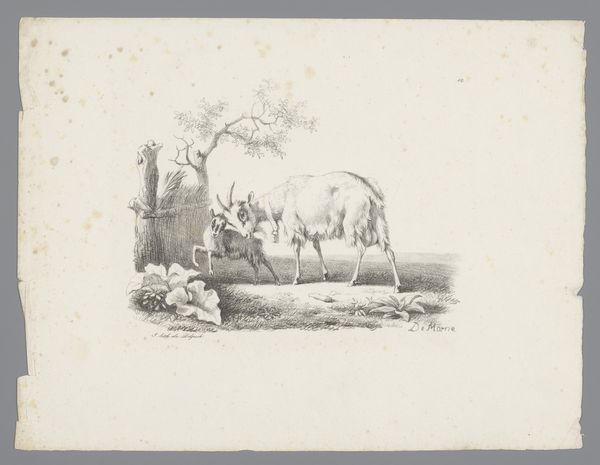
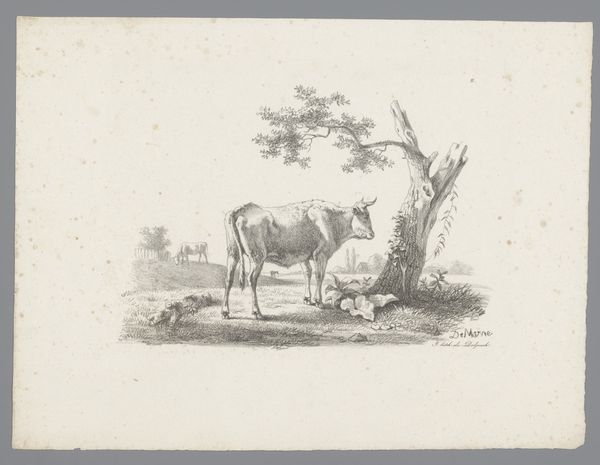
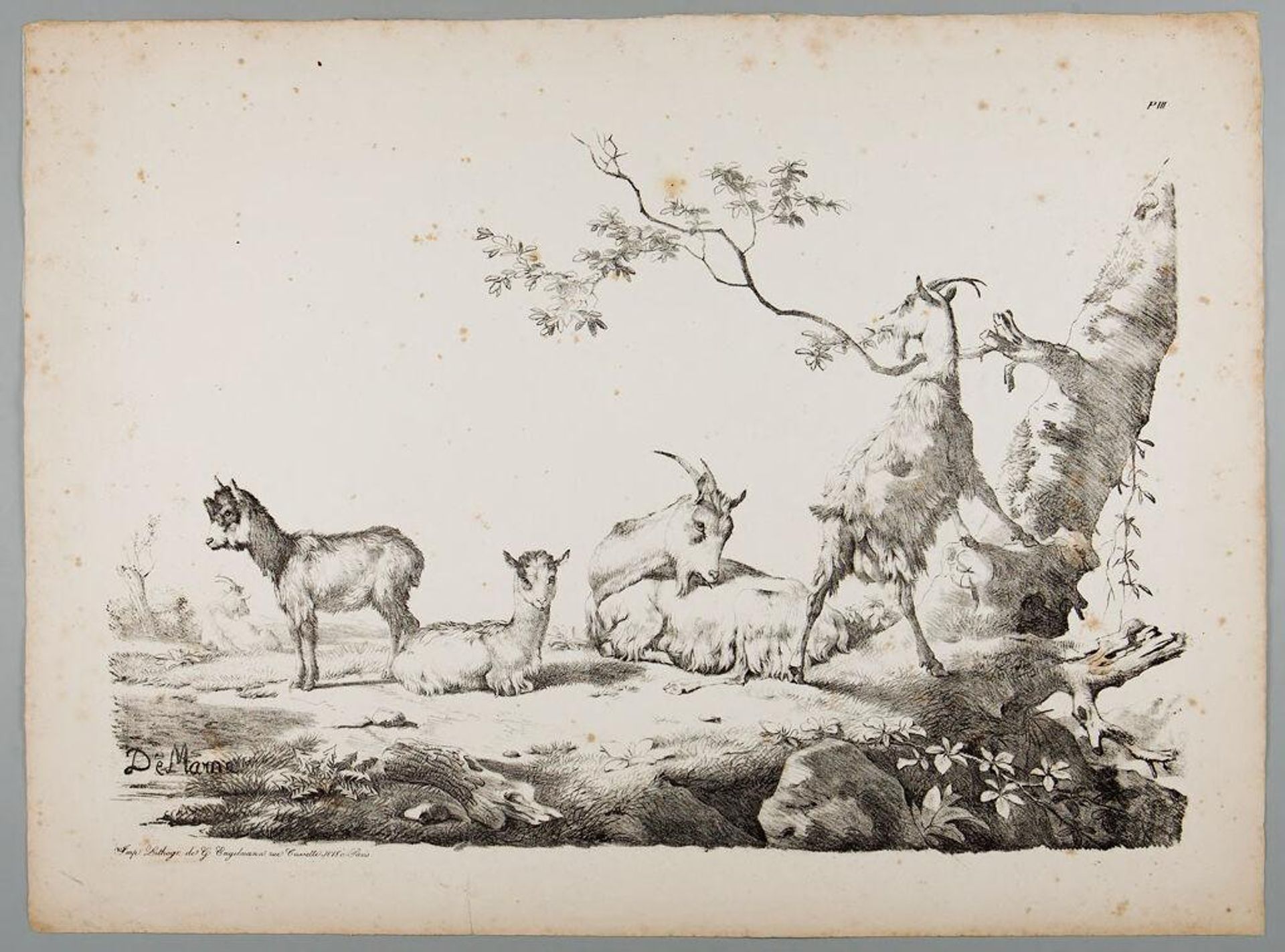
Editor: This is "Two Goats and Two Kids," a drawing by Jean Louis de Marne. It's quite charming, almost pastoral, with the goats arranged so decoratively. How might the art market of the time have shaped its appeal? Curator: Marne’s etchings contributed to an idealized vision of rural life popular among urban audiences. Consider the rise of bourgeois art collecting; how did images like this reinforce certain social fantasies about nature and animals? Editor: So, this seemingly simple scene is actually part of a larger cultural trend? Curator: Precisely! By depicting goats in this manner, Marne taps into an existing market for picturesque imagery, influencing and reflecting societal values. Editor: That's fascinating; I hadn't considered how commercial forces might influence artistic subjects. Curator: Indeed. It underscores the importance of understanding art’s economic context.
Two Goats and Two kids
1816


Artwork details
- Dimensions
- Sheet: 43 Ã 58 cm (16 15/16 Ã 22 13/16 in.)
- Location
- Harvard Art Museums
- Copyright
- CC0 1.0
Comments
Share your thoughts
About this artwork
Editor: This is "Two Goats and Two Kids," a drawing by Jean Louis de Marne. It's quite charming, almost pastoral, with the goats arranged so decoratively. How might the art market of the time have shaped its appeal? Curator: Marne’s etchings contributed to an idealized vision of rural life popular among urban audiences. Consider the rise of bourgeois art collecting; how did images like this reinforce certain social fantasies about nature and animals? Editor: So, this seemingly simple scene is actually part of a larger cultural trend? Curator: Precisely! By depicting goats in this manner, Marne taps into an existing market for picturesque imagery, influencing and reflecting societal values. Editor: That's fascinating; I hadn't considered how commercial forces might influence artistic subjects. Curator: Indeed. It underscores the importance of understanding art’s economic context.
Comments
Share your thoughts