About this artwork
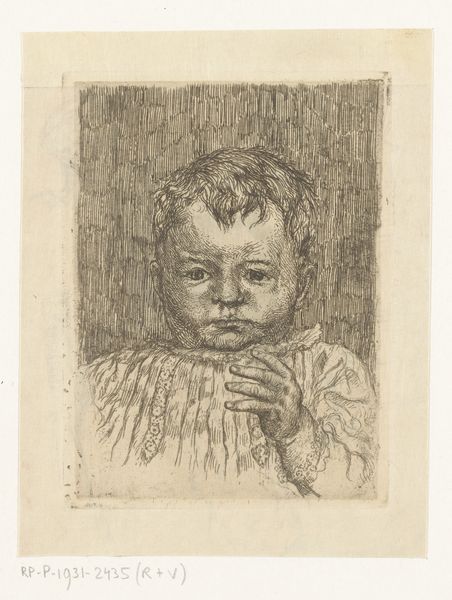
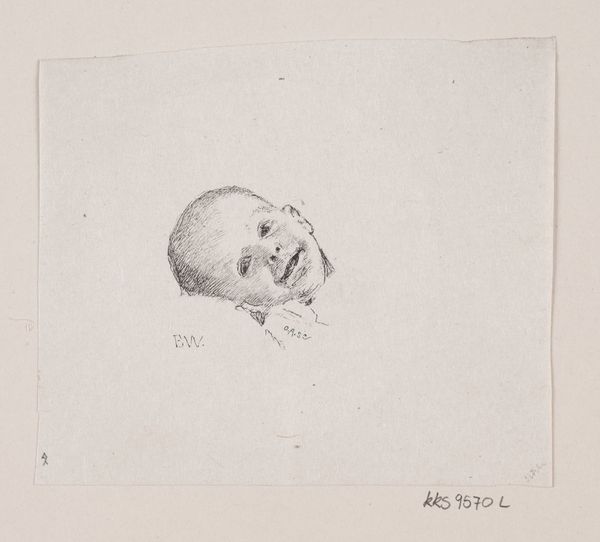
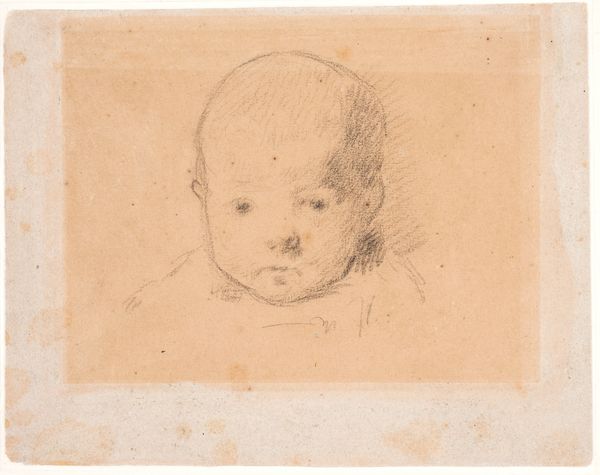
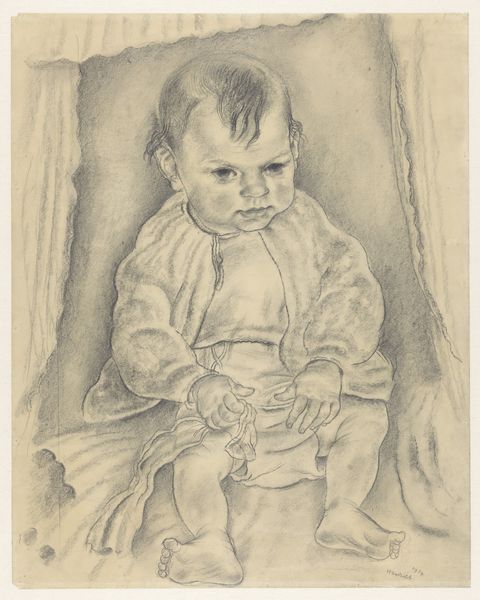
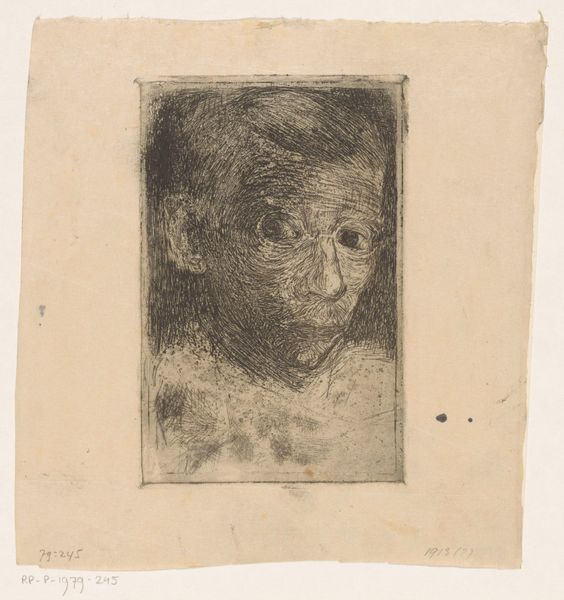
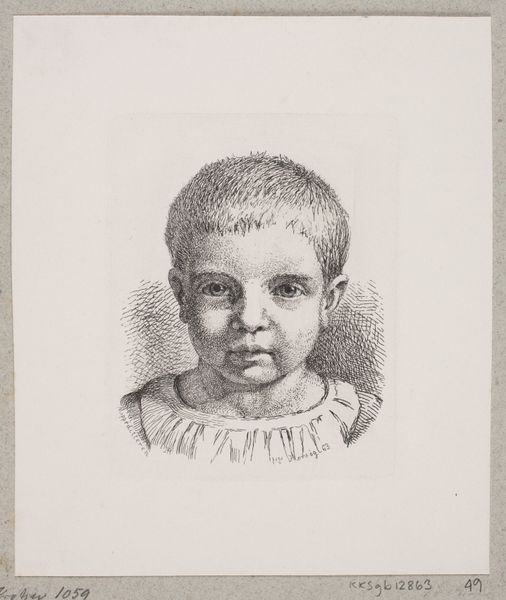
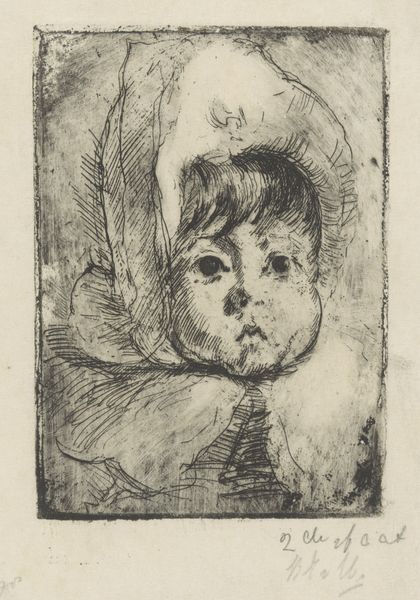
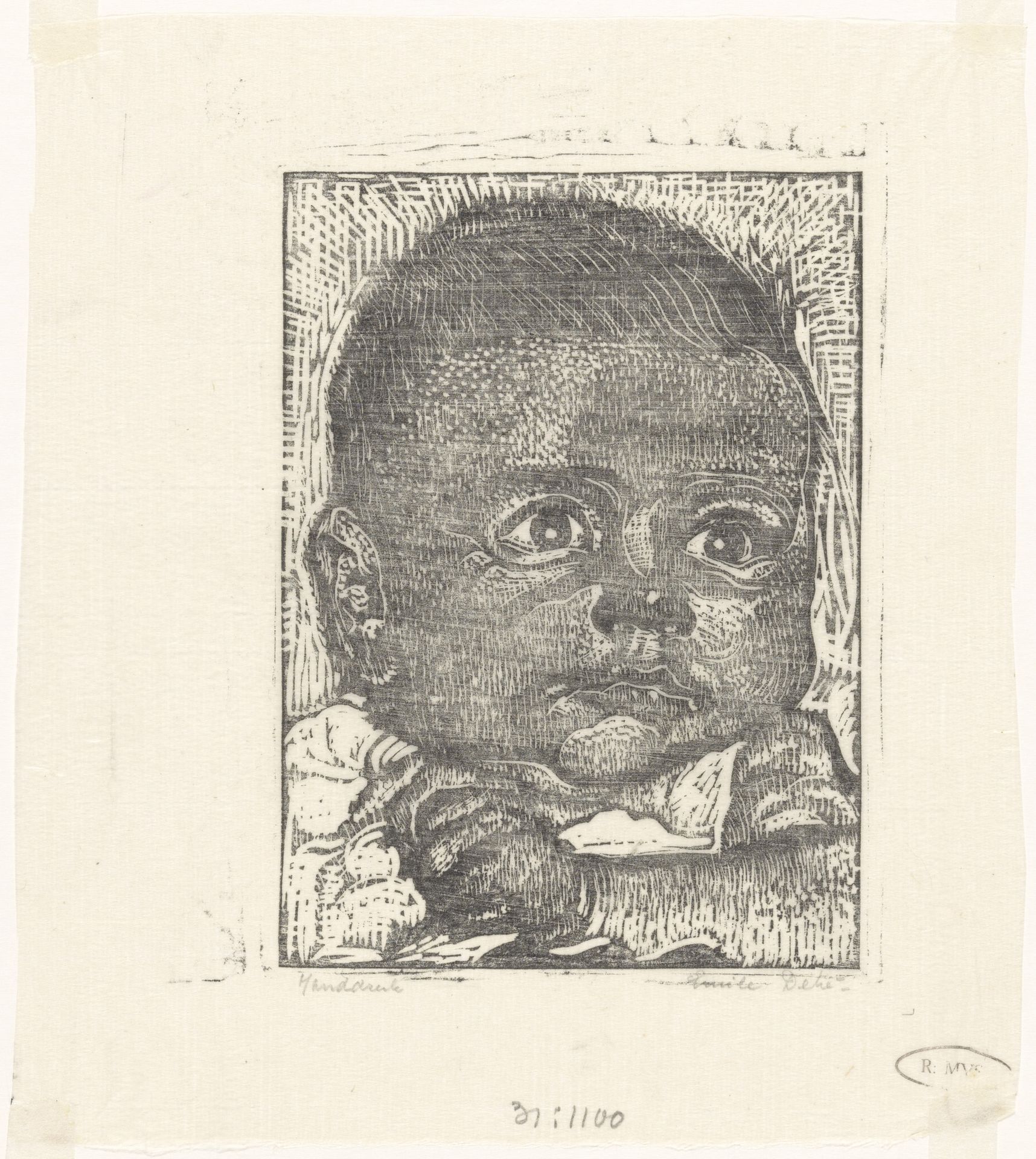
This is Emilius Wilhelmus Dehé's diminutive print of an unknown baby, now residing at the Rijksmuseum. Made with etching, its small dimensions belie the visual intensity achieved through tightly packed lines and contrasting textures. The composition is dominated by the baby's face, rendered with an almost hyper-realistic detail that pulls the viewer into an intimate encounter. Note how the artist uses the density and direction of etched lines to model the soft contours of the infant's face. This manipulation of line serves to emphasize the subject’s delicate features, while simultaneously creating a sense of depth and volume within the two-dimensional plane. The cross-hatched background, by contrast, acts as a stark formal counterpoint, pushing the figure forward. This tension between figure and ground activates the visual field, destabilizing any easy reading of the image. It challenges fixed notions of representation and highlights the constructed nature of perception itself. The artist invites us to reconsider the semiotic relationship between the depicted subject and the cultural codes we use to understand it.
Portret van een onbekende baby
1896 - 1931

Emilius Wilhelmus Dehé
1886 - 1947Location
RijksmuseumArtwork details
- Medium
- print, intaglio, engraving
- Dimensions
- height 195 mm, width 173 mm
- Location
- Rijksmuseum
- Copyright
- Rijks Museum: Open Domain
Tags
Comments
Share your thoughts
About this artwork
This is Emilius Wilhelmus Dehé's diminutive print of an unknown baby, now residing at the Rijksmuseum. Made with etching, its small dimensions belie the visual intensity achieved through tightly packed lines and contrasting textures. The composition is dominated by the baby's face, rendered with an almost hyper-realistic detail that pulls the viewer into an intimate encounter. Note how the artist uses the density and direction of etched lines to model the soft contours of the infant's face. This manipulation of line serves to emphasize the subject’s delicate features, while simultaneously creating a sense of depth and volume within the two-dimensional plane. The cross-hatched background, by contrast, acts as a stark formal counterpoint, pushing the figure forward. This tension between figure and ground activates the visual field, destabilizing any easy reading of the image. It challenges fixed notions of representation and highlights the constructed nature of perception itself. The artist invites us to reconsider the semiotic relationship between the depicted subject and the cultural codes we use to understand it.
Comments
Share your thoughts