About this artwork
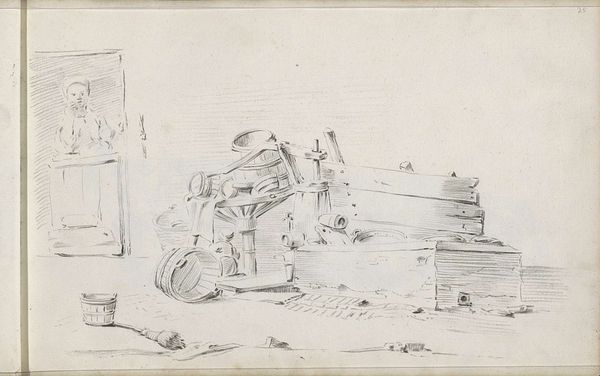
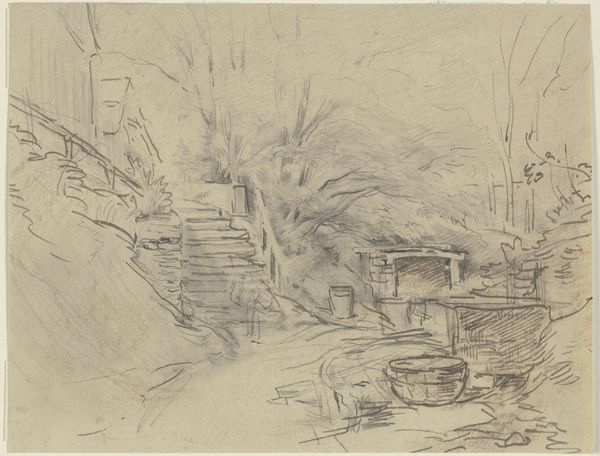
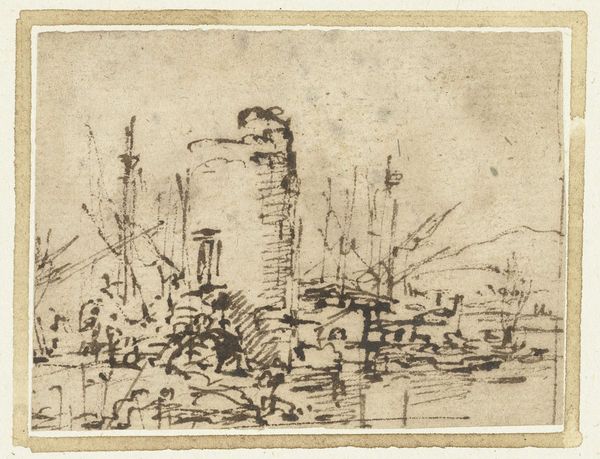
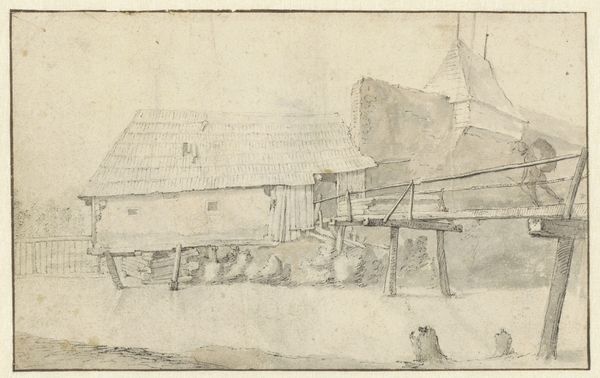
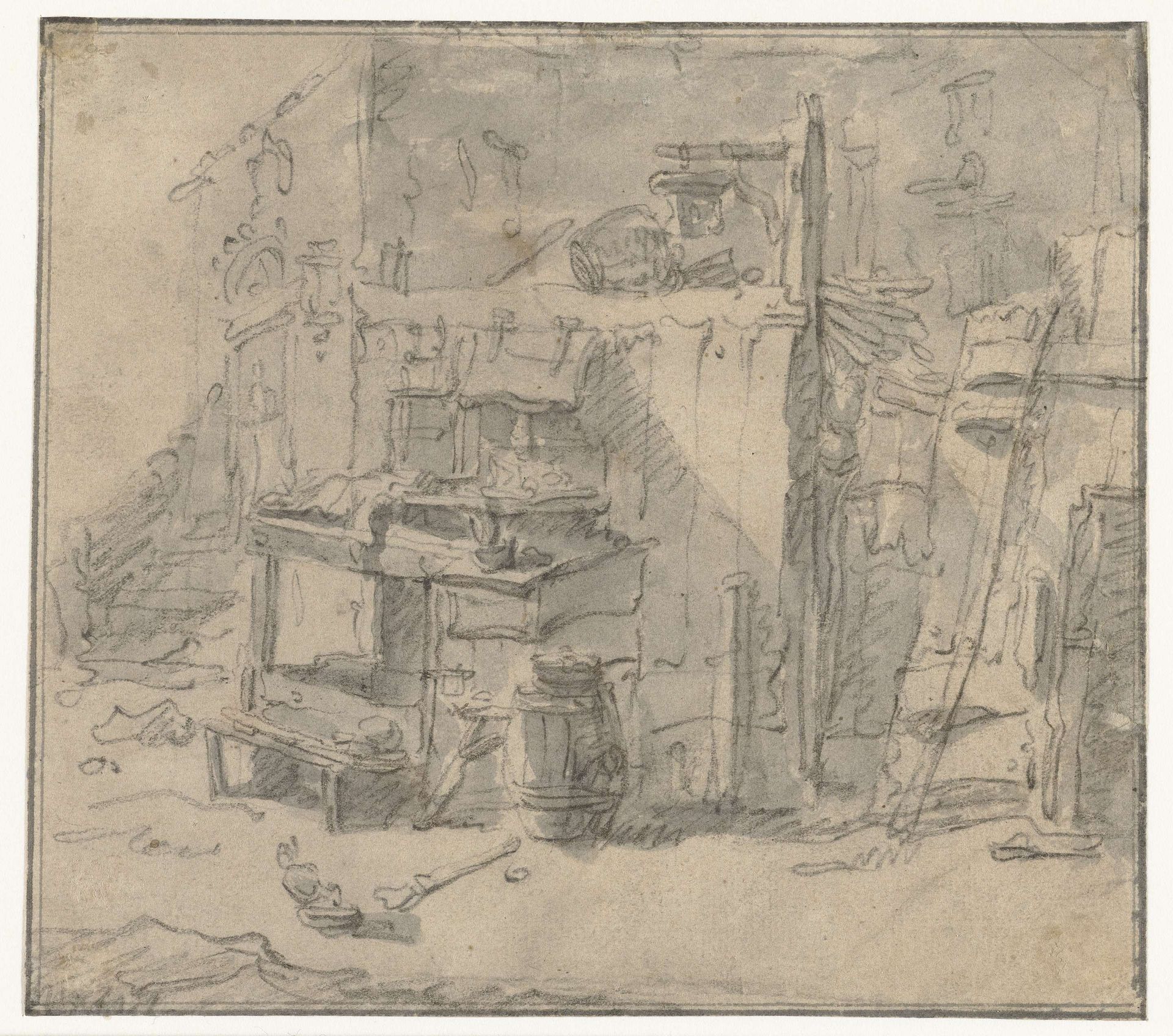
Emanuel Murant’s drawing depicts a humble scene of household objects in what appears to be a courtyard or backyard. The composition is dominated by everyday items. These elements are not merely objects; they are symbols of domesticity, reflecting the values and daily life of the era. Think of the enduring image of the 'vanitas' in still life paintings, where household items carry a reminder of life’s transient nature. Over time, these symbols shift, evolving into cultural markers of stability, comfort, and perhaps, as Freud would suggest, a connection to our earliest experiences of home and security. The recurrence of these images throughout art history taps into a collective memory, influencing how we subconsciously perceive our environment. Murant's drawing, in its understated portrayal, subtly engages us in a timeless dialogue about the human condition. This is a cyclical journey of rediscovery of meaning, where everyday objects echo through time, constantly resurfacing to remind us of our shared past.

Artwork details
- Medium
- drawing, paper, ink
- Dimensions
- height 131 mm, width 147 mm
- Copyright
- Rijks Museum: Open Domain
Tags
drawing
ink drawing
dutch-golden-age
pen sketch
furniture
paper
ink
genre-painting
Comments
Be the first to share your thoughts about this work.
About this artwork
Emanuel Murant’s drawing depicts a humble scene of household objects in what appears to be a courtyard or backyard. The composition is dominated by everyday items. These elements are not merely objects; they are symbols of domesticity, reflecting the values and daily life of the era. Think of the enduring image of the 'vanitas' in still life paintings, where household items carry a reminder of life’s transient nature. Over time, these symbols shift, evolving into cultural markers of stability, comfort, and perhaps, as Freud would suggest, a connection to our earliest experiences of home and security. The recurrence of these images throughout art history taps into a collective memory, influencing how we subconsciously perceive our environment. Murant's drawing, in its understated portrayal, subtly engages us in a timeless dialogue about the human condition. This is a cyclical journey of rediscovery of meaning, where everyday objects echo through time, constantly resurfacing to remind us of our shared past.
Comments
Be the first to share your thoughts about this work.