About this artwork
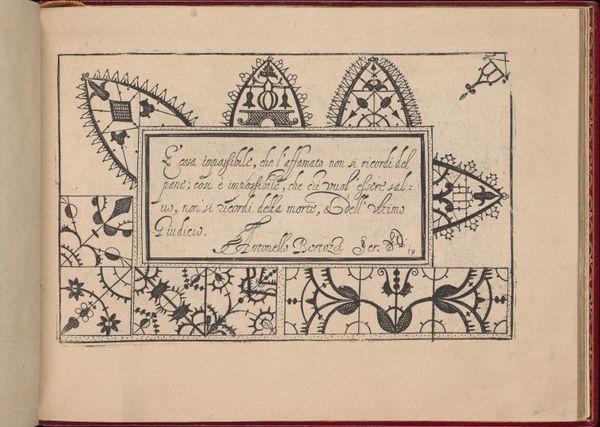
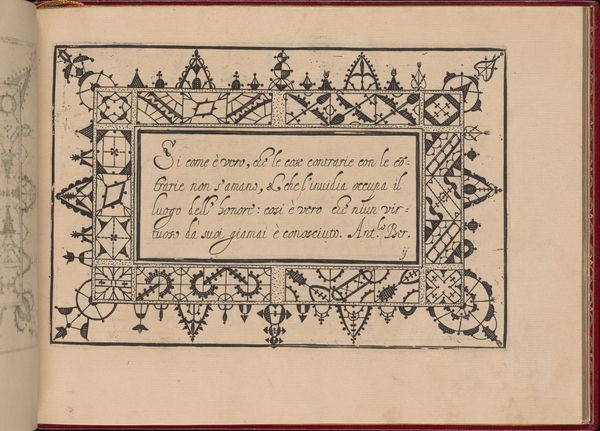
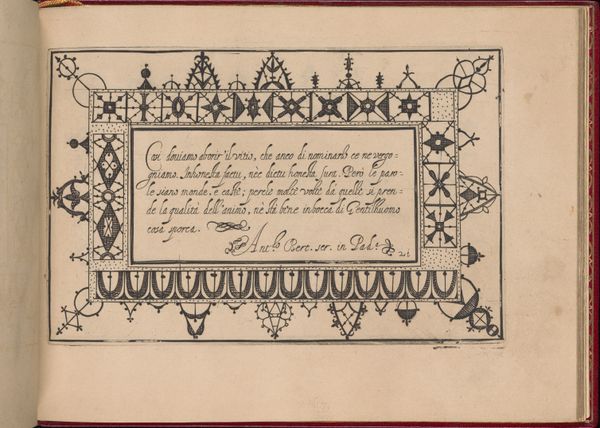
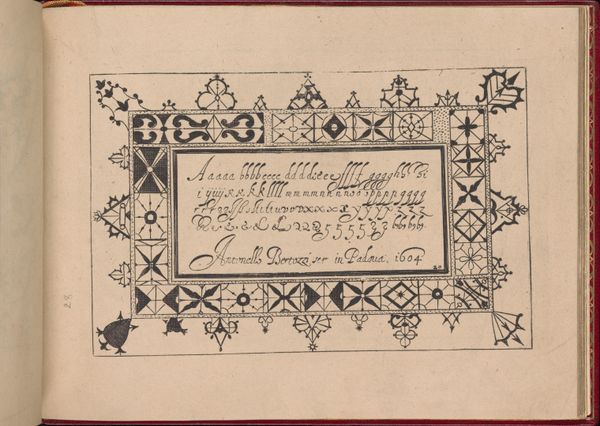
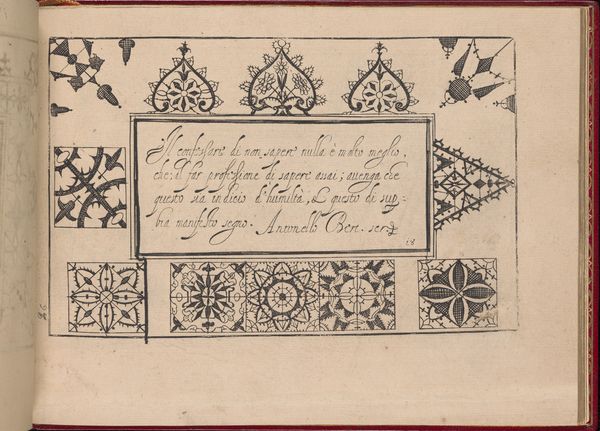
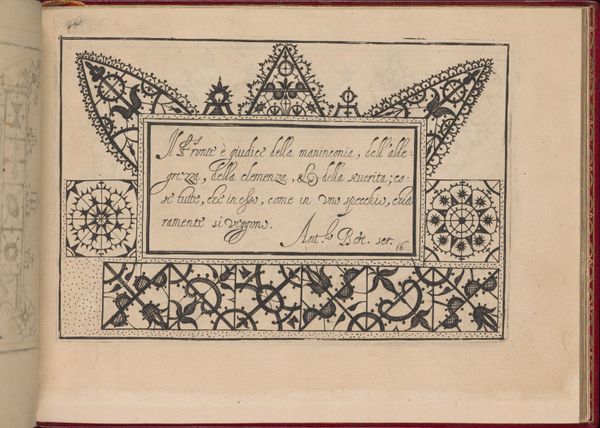
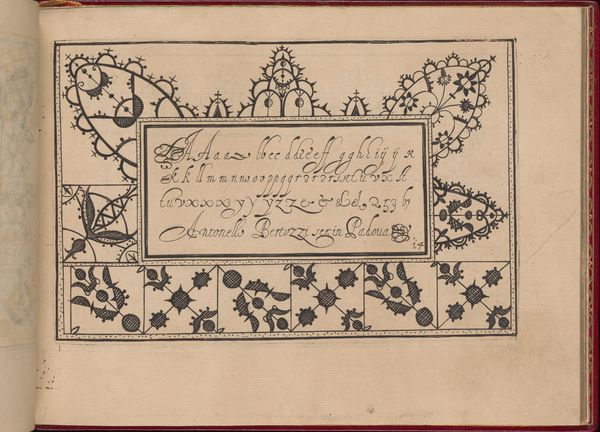
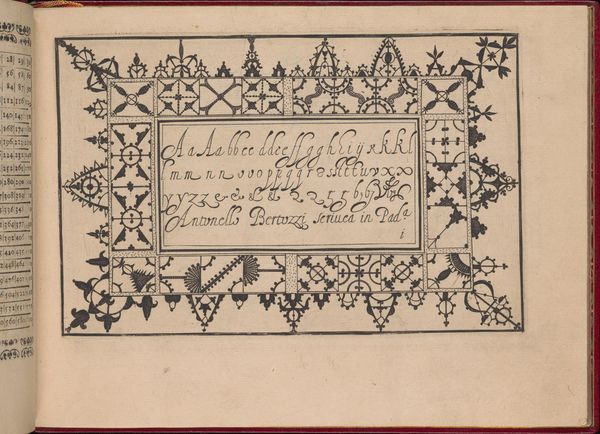
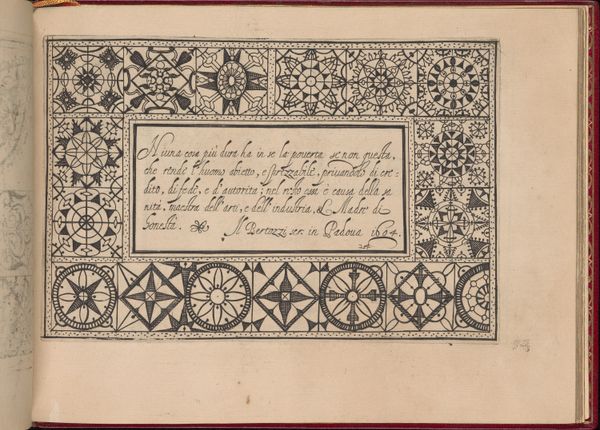
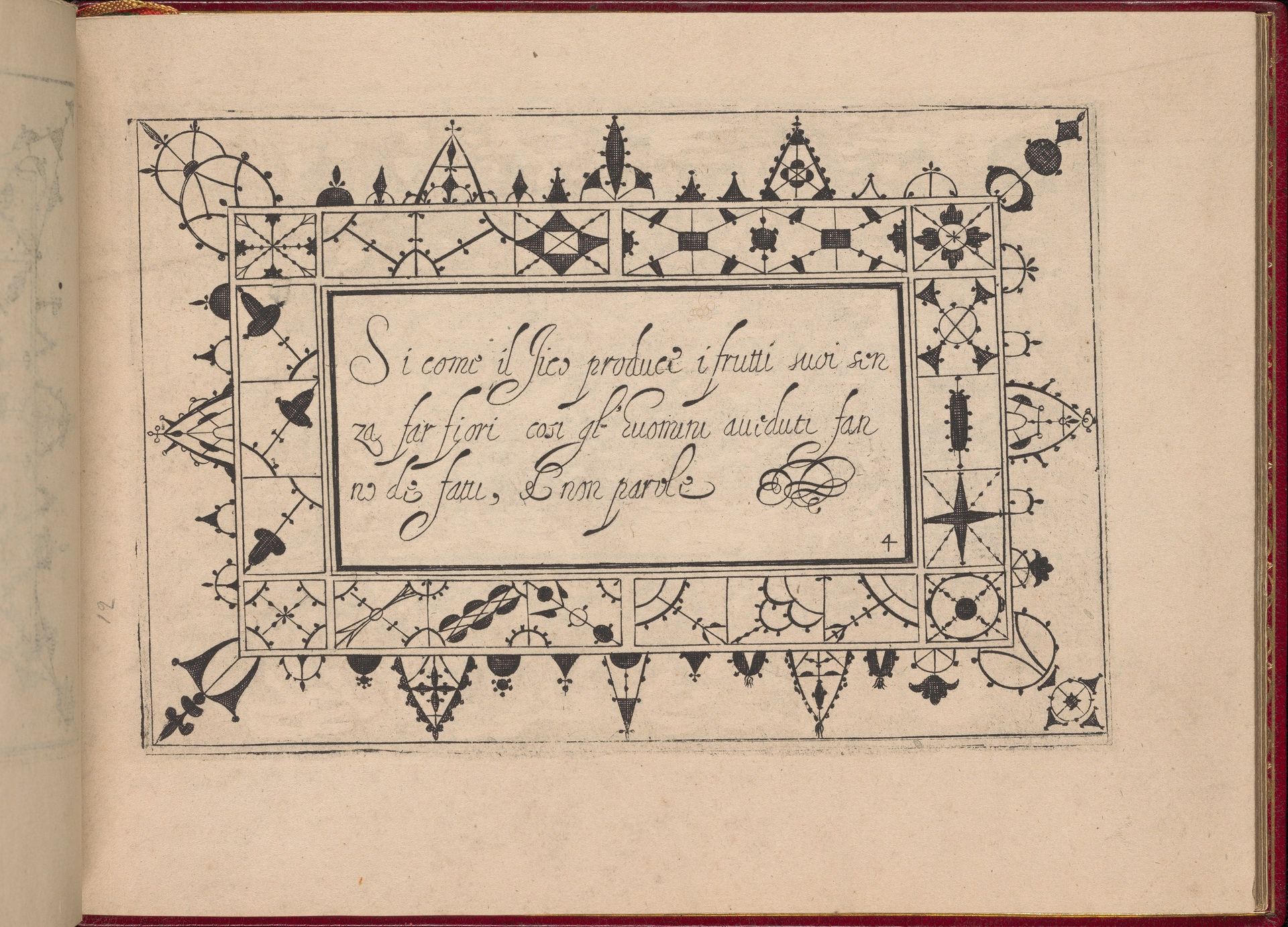
This is a page from 'Ghirlanda', made by Pietro Paulo Tozzi around 1600, using pen and brown ink on paper. The design features a frame of geometric shapes that seems both decorative and architectural, with a tension created by its black ink against the parchment white. Each shape is meticulously crafted, forming a grid-like structure that surrounds the calligraphic text. The frame is constructed from modular units, each containing a pattern or motif that is geometric. This modularity lends itself to structuralist interpretations, where underlying patterns and systems of organization yield meaning. Notice how the symmetry is broken by the text itself, which is organic and free-flowing, set against the rigidity of the border. This contrast highlights how the artwork destabilizes the established norms, creating a dialogue between text and image and disrupting any singular, fixed interpretation. The overall effect is not just aesthetic, but a complex play of signs and structures.
Ghirlanda: Di sei vaghi fiori scielti da piu famosi Giardini d'Italia, page 12 (recto)
1604


Artwork details
- Medium
- drawing, graphic-art, ornament, print, ink
- Dimensions
- Overall: 5 7/8 x 7 7/8 in. (15 x 20 cm)
- Location
- Metropolitan Museum of Art, New York, NY
- Copyright
- Public Domain
Tags
Comments
Share your thoughts
About this artwork
This is a page from 'Ghirlanda', made by Pietro Paulo Tozzi around 1600, using pen and brown ink on paper. The design features a frame of geometric shapes that seems both decorative and architectural, with a tension created by its black ink against the parchment white. Each shape is meticulously crafted, forming a grid-like structure that surrounds the calligraphic text. The frame is constructed from modular units, each containing a pattern or motif that is geometric. This modularity lends itself to structuralist interpretations, where underlying patterns and systems of organization yield meaning. Notice how the symmetry is broken by the text itself, which is organic and free-flowing, set against the rigidity of the border. This contrast highlights how the artwork destabilizes the established norms, creating a dialogue between text and image and disrupting any singular, fixed interpretation. The overall effect is not just aesthetic, but a complex play of signs and structures.
Comments
Share your thoughts