About this artwork
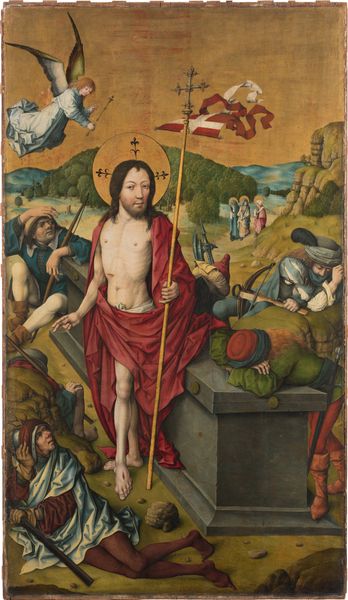
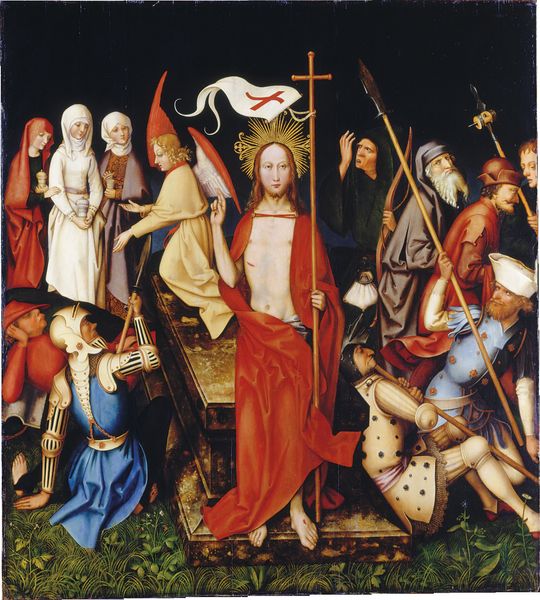
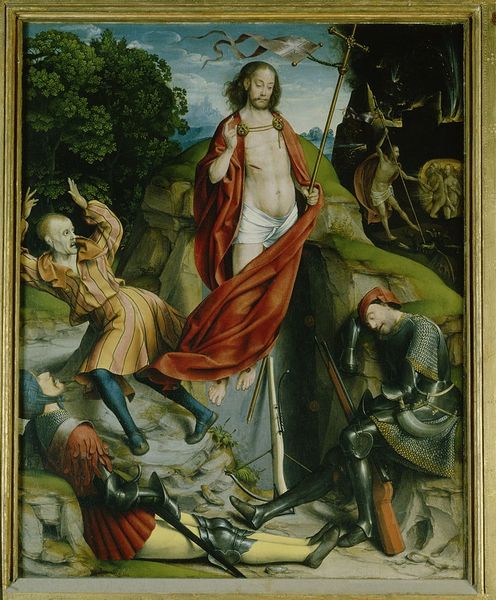
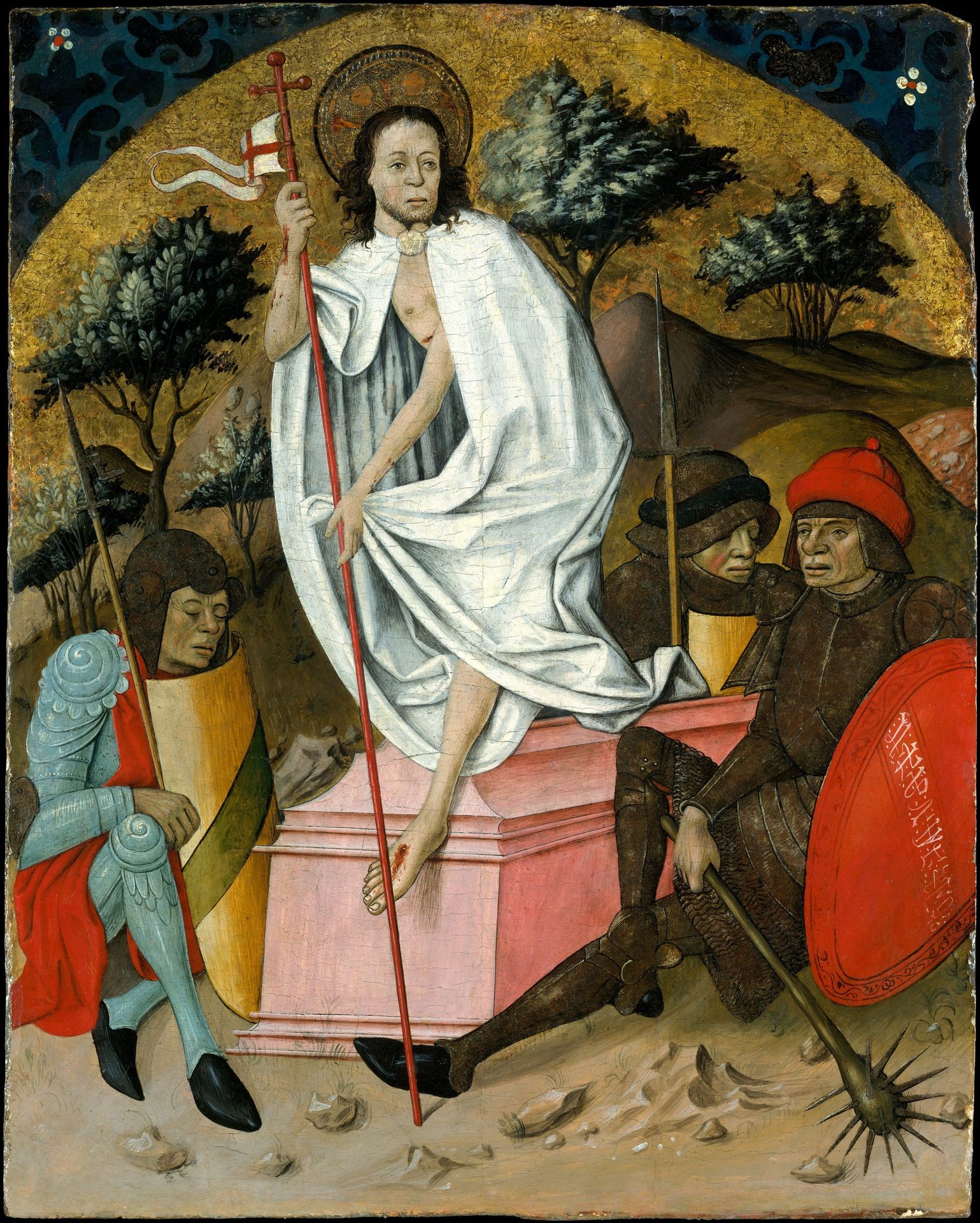
This painted panel depicts the Resurrection with the risen Christ emerging triumphant from his tomb. He holds a staff bearing a white flag with a red cross. This emblem symbolizes victory over death, a motif that has echoes in ancient Roman military standards, adapted to signify Christian triumph. Observe the guards, slumped in disarray, their weapons cast aside – a stark contrast to Christ’s serene and powerful stance. This echoes imagery of defeated figures found in classical art, repurposed here to emphasize the transformative power of resurrection. The symbol of the cross, once an instrument of torture, now signifies salvation. It recalls ancient symbols of sacrifice and renewal, reborn here with new meaning. This image taps into a collective memory, evoking deep emotional responses, where the agony of loss transforms into the joy of rebirth. The motifs within continue to evolve, resurfacing across time, each adaptation layering new meanings onto ancient foundations.
The Resurrection
1470 - 1499


Artwork details
- Medium
- tempera, painting
- Dimensions
- 31 x 24 7/8 in. (78.7 x 63.2 cm)
- Location
- Metropolitan Museum of Art, New York, NY
- Copyright
- Public Domain
Tags
Comments
Share your thoughts
About this artwork
This painted panel depicts the Resurrection with the risen Christ emerging triumphant from his tomb. He holds a staff bearing a white flag with a red cross. This emblem symbolizes victory over death, a motif that has echoes in ancient Roman military standards, adapted to signify Christian triumph. Observe the guards, slumped in disarray, their weapons cast aside – a stark contrast to Christ’s serene and powerful stance. This echoes imagery of defeated figures found in classical art, repurposed here to emphasize the transformative power of resurrection. The symbol of the cross, once an instrument of torture, now signifies salvation. It recalls ancient symbols of sacrifice and renewal, reborn here with new meaning. This image taps into a collective memory, evoking deep emotional responses, where the agony of loss transforms into the joy of rebirth. The motifs within continue to evolve, resurfacing across time, each adaptation layering new meanings onto ancient foundations.
Comments
Share your thoughts