About this artwork
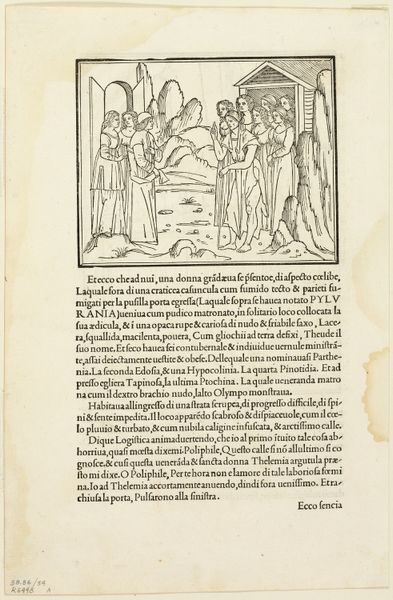
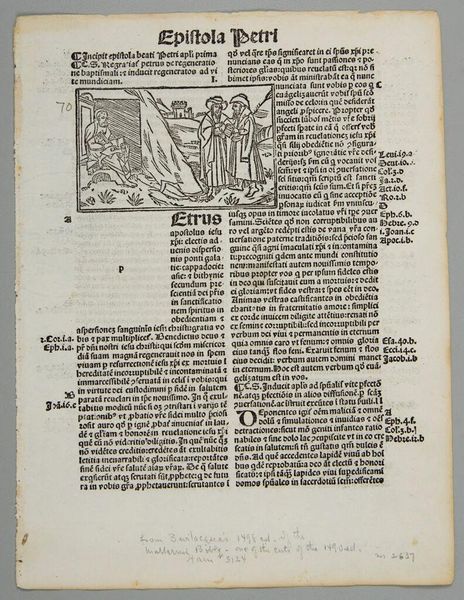
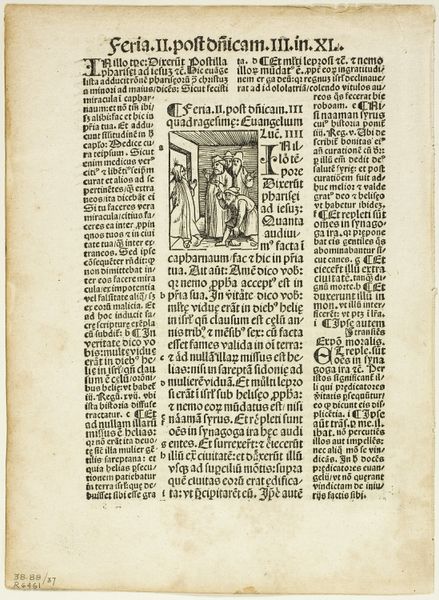
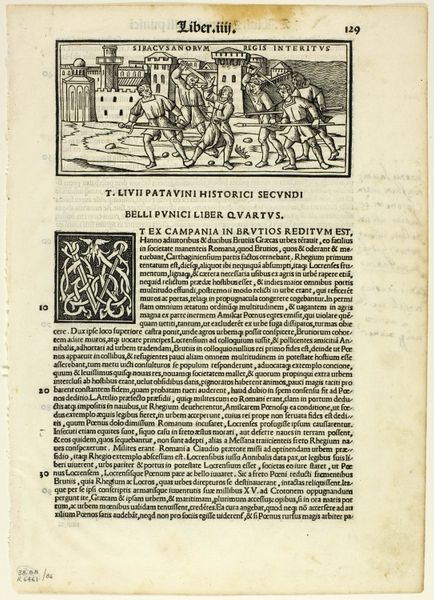
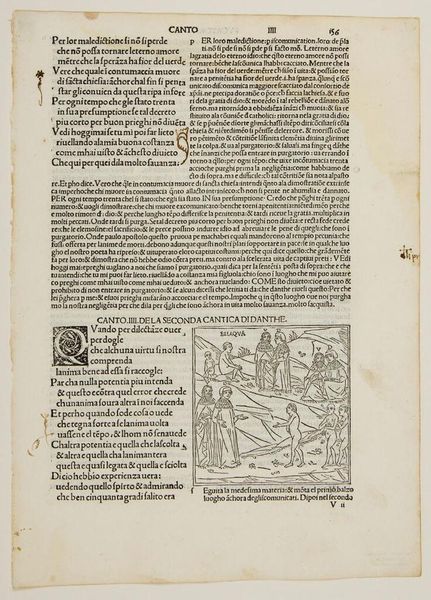
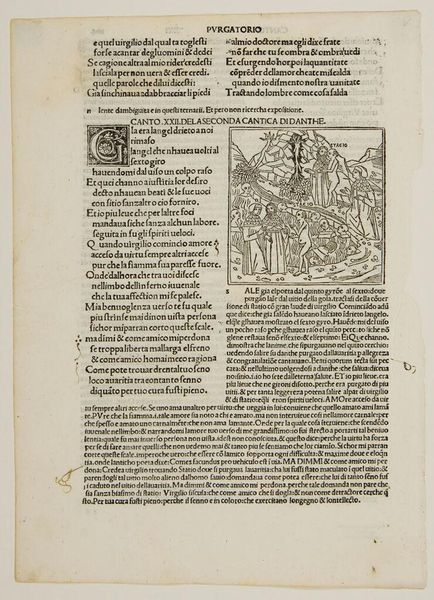
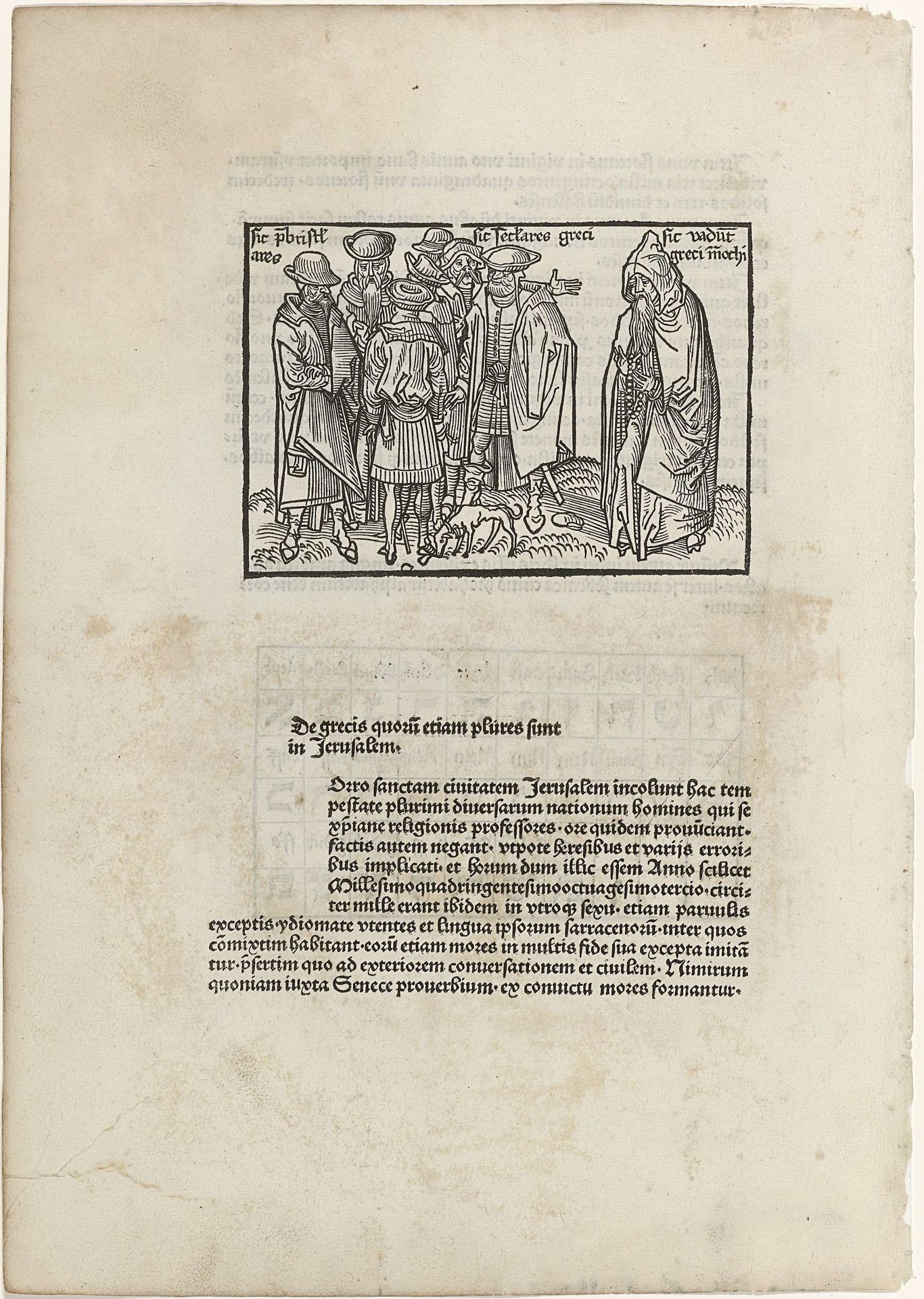
This anonymous woodcut, titled "Greeks in Jerusalem", was likely made in Germany in the late 15th century. The image depicts a group of figures, presumably Greeks, in conversation, while the text below offers commentary on their presence in Jerusalem. In this period, the Holy Land was a site of pilgrimage and political interest for Europeans, and images like this reflect a growing awareness of cultural diversity. The woodcut's style, with its stark lines and simple forms, suggests its purpose was for mass consumption, perhaps as an illustration in a book. The image creates a sense of otherness, inviting viewers to reflect on the cultural and religious differences between Europeans and those inhabiting the Holy Land. To fully understand this work, we could consult travelogues, religious texts, and other printed materials from the period, which would shed light on the complex relationship between Europe and the Middle East. Art, we see, is inseparable from the social and institutional context in which it’s produced.

Artwork details
- Medium
- print, ink, woodcut, engraving
- Dimensions
- height mm, width mm
- Copyright
- Rijks Museum: Open Domain
Tags
Comments
Share your thoughts
About this artwork
This anonymous woodcut, titled "Greeks in Jerusalem", was likely made in Germany in the late 15th century. The image depicts a group of figures, presumably Greeks, in conversation, while the text below offers commentary on their presence in Jerusalem. In this period, the Holy Land was a site of pilgrimage and political interest for Europeans, and images like this reflect a growing awareness of cultural diversity. The woodcut's style, with its stark lines and simple forms, suggests its purpose was for mass consumption, perhaps as an illustration in a book. The image creates a sense of otherness, inviting viewers to reflect on the cultural and religious differences between Europeans and those inhabiting the Holy Land. To fully understand this work, we could consult travelogues, religious texts, and other printed materials from the period, which would shed light on the complex relationship between Europe and the Middle East. Art, we see, is inseparable from the social and institutional context in which it’s produced.
Comments
Share your thoughts