About this artwork
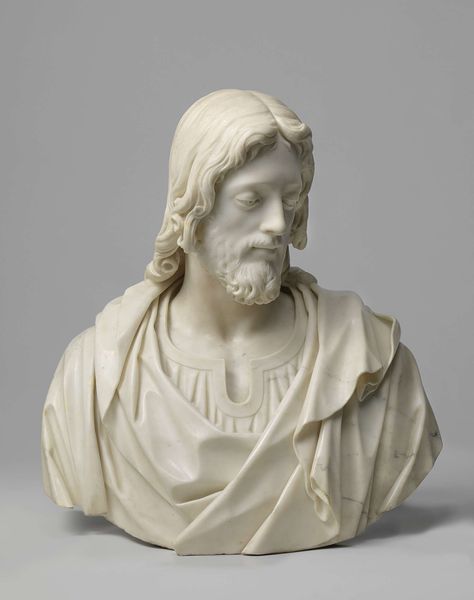
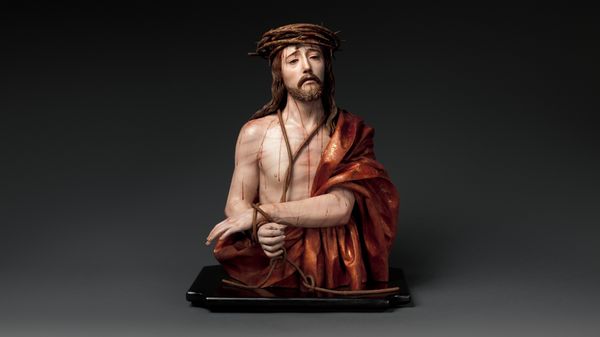
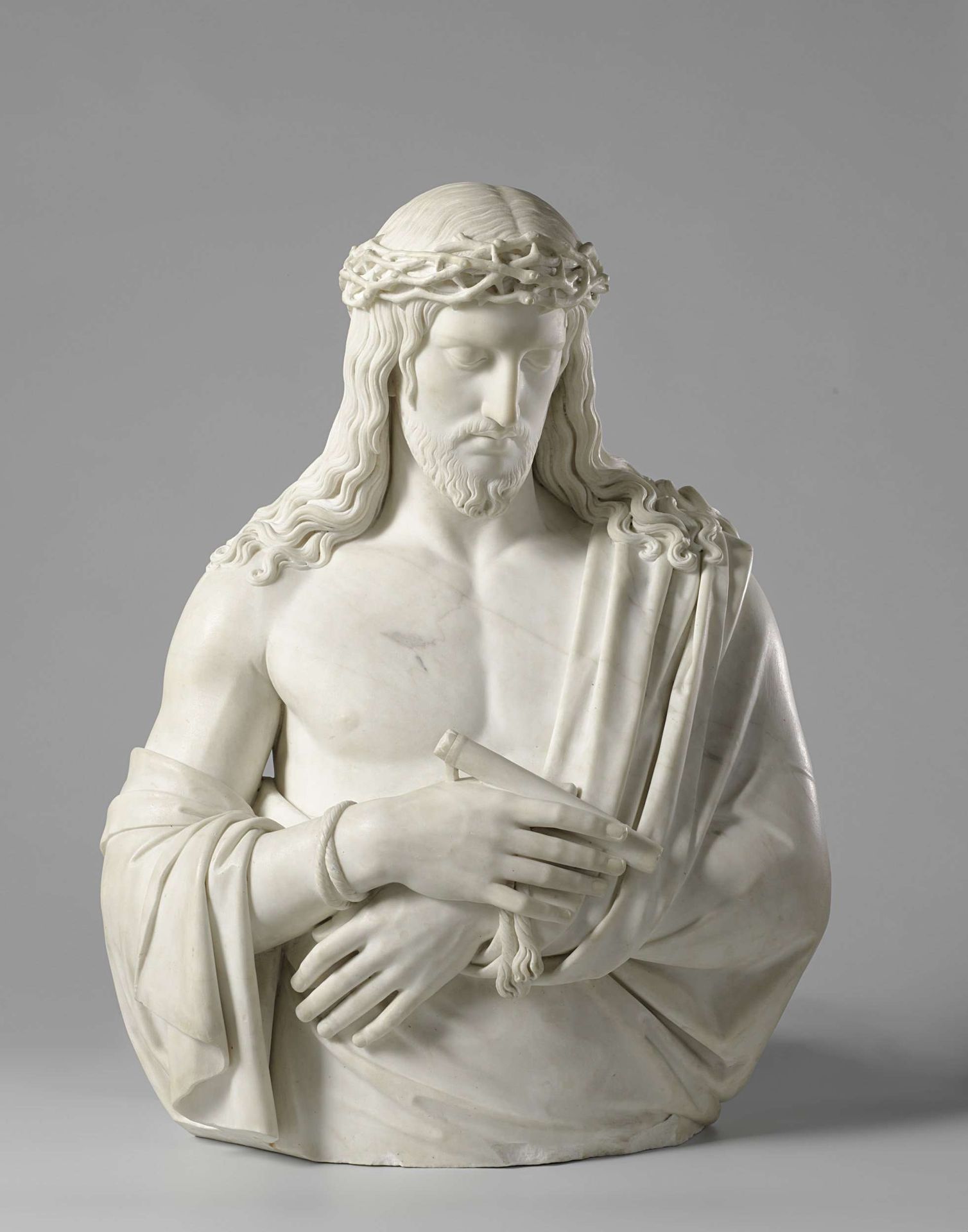
Louis Royer created this marble bust of “Ecce Homo”, sometime in the 19th century. Notice the overwhelming whiteness of the marble, which is only interrupted by the intricate carvings and lines of Christ’s face, hair, and crown of thorns. The sculpture evokes a quiet, somber mood through its classical composition. The lines of Christ’s face, particularly his downward gaze, create a sense of humility. Royer’s meticulous attention to the texture of the marble—rough in the thorns, smooth in the skin— adds layers to the visual narrative. These carefully considered surfaces are not just aesthetic choices; they engage with broader philosophical themes of suffering and redemption that were pervasive in the 19th century. The play of light and shadow across the bust accentuates the form. This is less about religious veneration, and more about how the artwork destabilizes established meanings, inviting us to continuously reinterpret its cultural and philosophical resonance.

Artwork details
- Medium
- sculpture, marble
- Dimensions
- height 88.0 cm, width 67.0 cm, depth 45.0 cm, weight 300 kg, width 34 cm, depth 48 cm
- Location
- Rijksmuseum
- Copyright
- Rijks Museum: Open Domain
Tags
Comments

After the Dutch sculptor Louis Royer won the Prix de Rome, he spent four years studying in Rome, then the leading centre for European sculpture. Among the works he created there was this figure of Christ, crowned with thorns, at the moment of his presentation to the people. Hence the title Ecce homo: ‘Behold the man’.
About this artwork
Louis Royer created this marble bust of “Ecce Homo”, sometime in the 19th century. Notice the overwhelming whiteness of the marble, which is only interrupted by the intricate carvings and lines of Christ’s face, hair, and crown of thorns. The sculpture evokes a quiet, somber mood through its classical composition. The lines of Christ’s face, particularly his downward gaze, create a sense of humility. Royer’s meticulous attention to the texture of the marble—rough in the thorns, smooth in the skin— adds layers to the visual narrative. These carefully considered surfaces are not just aesthetic choices; they engage with broader philosophical themes of suffering and redemption that were pervasive in the 19th century. The play of light and shadow across the bust accentuates the form. This is less about religious veneration, and more about how the artwork destabilizes established meanings, inviting us to continuously reinterpret its cultural and philosophical resonance.
Comments
After the Dutch sculptor Louis Royer won the Prix de Rome, he spent four years studying in Rome, then the leading centre for European sculpture. Among the works he created there was this figure of Christ, crowned with thorns, at the moment of his presentation to the people. Hence the title Ecce homo: ‘Behold the man’.