About this artwork
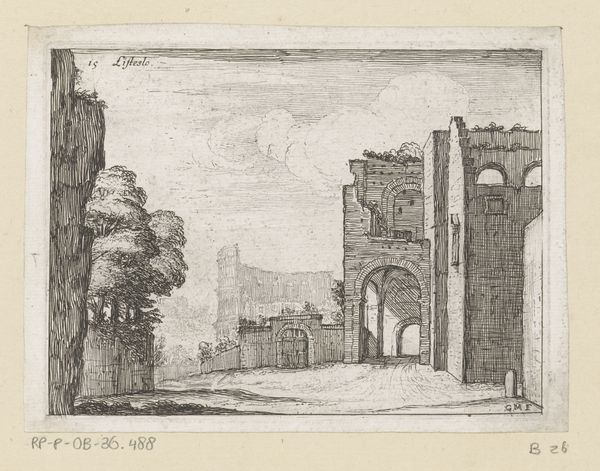
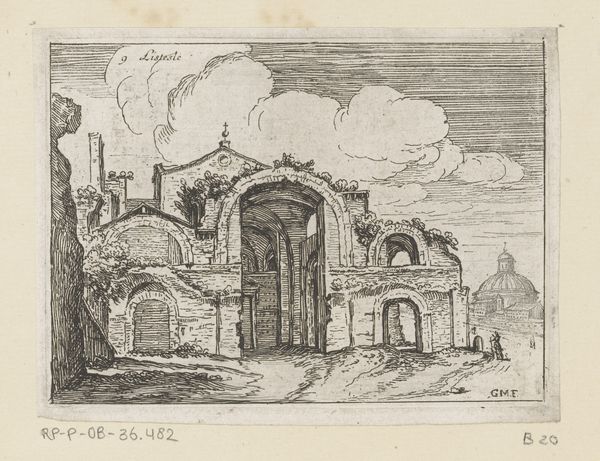
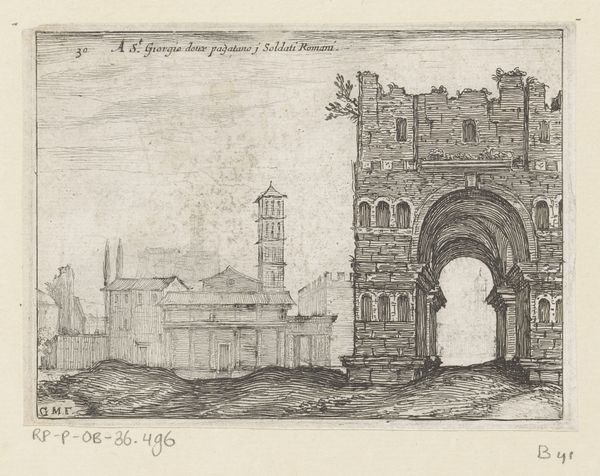
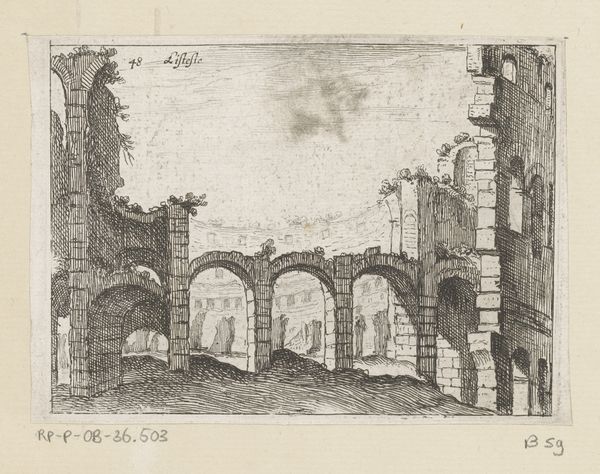
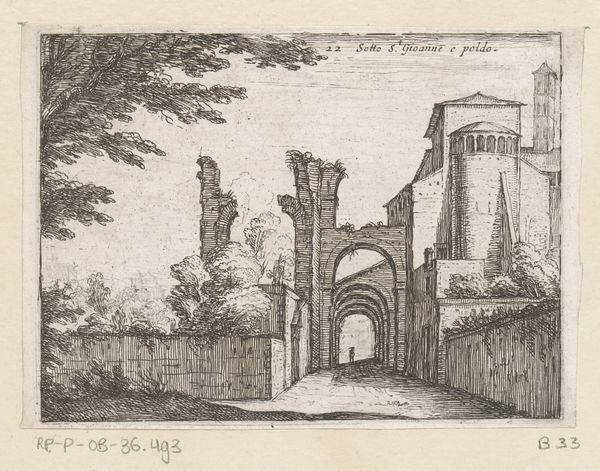
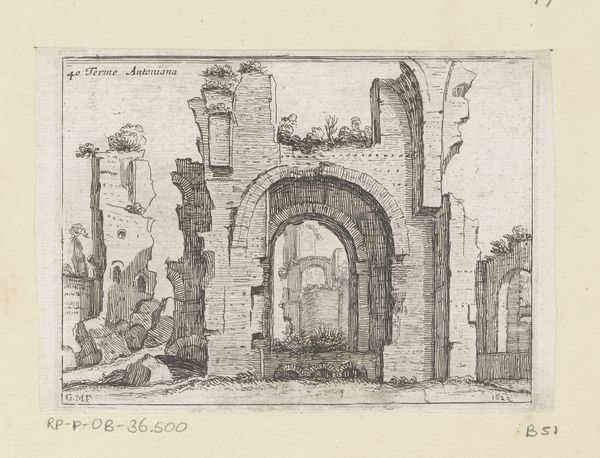
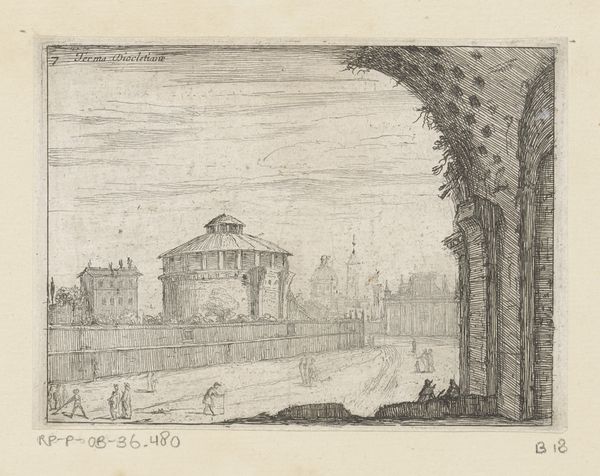
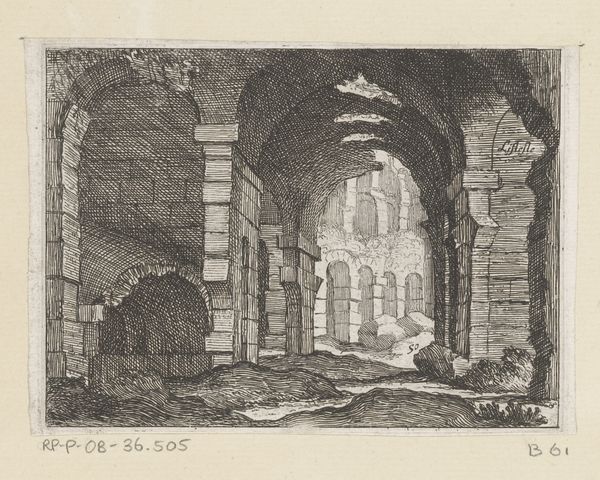
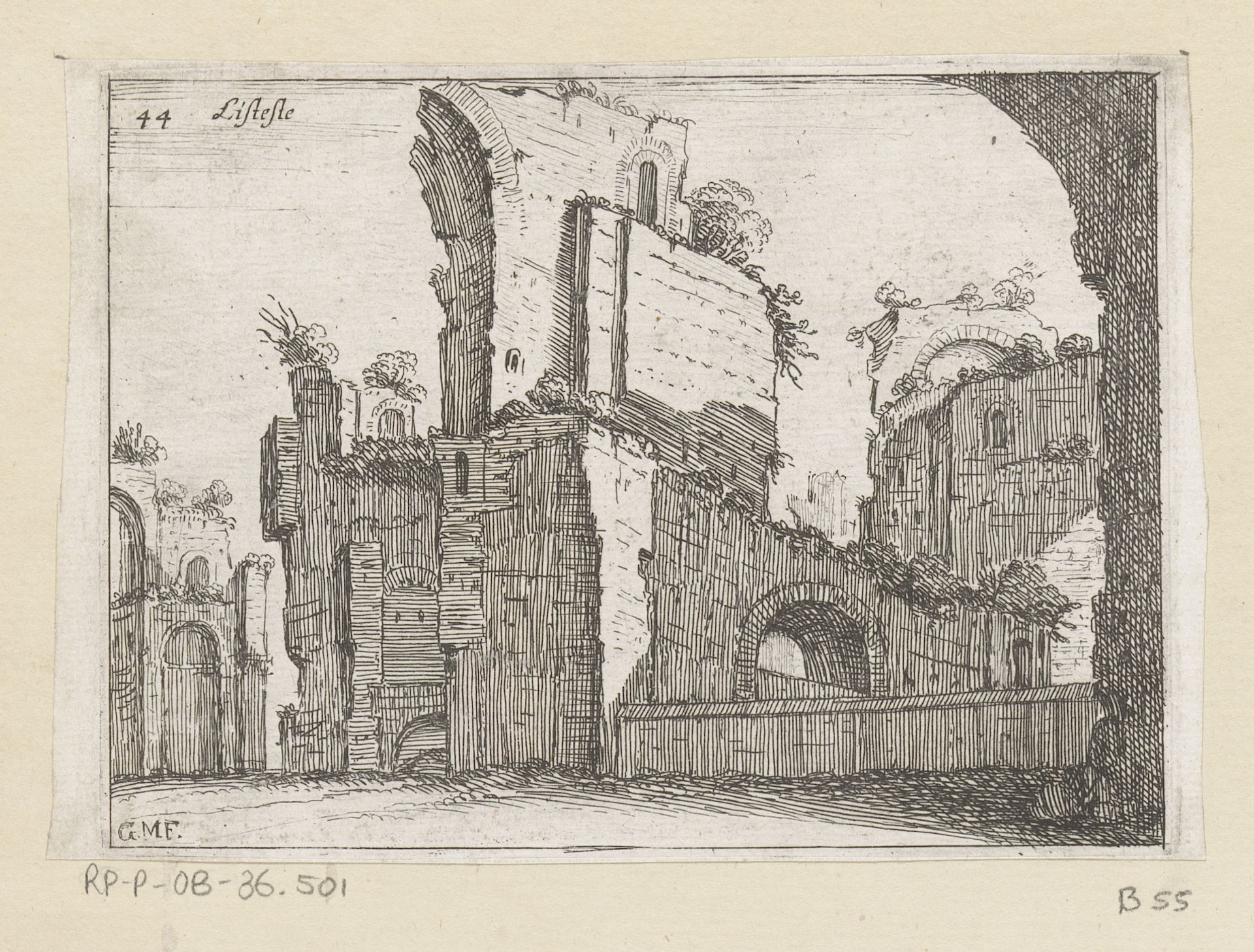
Giovanni Battista Mercati created this print, "Remains of the Baths of Caracalla in Rome," in the 17th century. During this period, Rome was both a site of pilgrimage and one of artistic exploration, attracting artists who sought to capture its antique grandeur. Mercati's print invites us to reflect on the passage of time and the transience of human achievement. The Baths of Caracalla were once a symbol of Roman power, culture, and social life, but here they are shown in decay. We see how nature reclaims what was once built and bustling with life. Mercati’s detailed rendering, with its delicate lines, captures the textures of crumbling stone and the overgrowth of vegetation. The print also evokes a sense of melancholy, a meditation on the fate of civilizations. It invites viewers to contemplate the layers of history embedded in the Roman landscape and consider their own place in the continuum of time. This image serves as a reminder of the complex relationship between humanity and its environment.

Artwork details
- Medium
- print, etching, engraving, architecture
- Dimensions
- height 95 mm, width 130 mm
- Copyright
- Rijks Museum: Open Domain
Tags
Comments
Share your thoughts
About this artwork
Giovanni Battista Mercati created this print, "Remains of the Baths of Caracalla in Rome," in the 17th century. During this period, Rome was both a site of pilgrimage and one of artistic exploration, attracting artists who sought to capture its antique grandeur. Mercati's print invites us to reflect on the passage of time and the transience of human achievement. The Baths of Caracalla were once a symbol of Roman power, culture, and social life, but here they are shown in decay. We see how nature reclaims what was once built and bustling with life. Mercati’s detailed rendering, with its delicate lines, captures the textures of crumbling stone and the overgrowth of vegetation. The print also evokes a sense of melancholy, a meditation on the fate of civilizations. It invites viewers to contemplate the layers of history embedded in the Roman landscape and consider their own place in the continuum of time. This image serves as a reminder of the complex relationship between humanity and its environment.
Comments
Share your thoughts