About this artwork
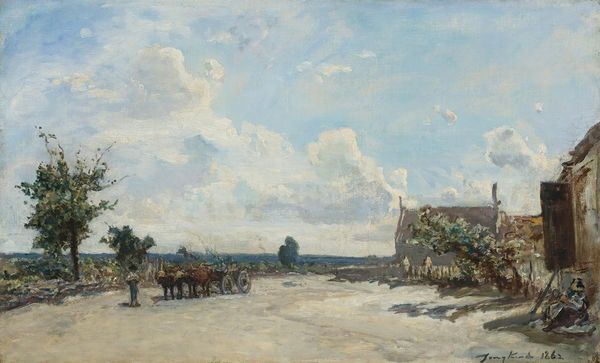
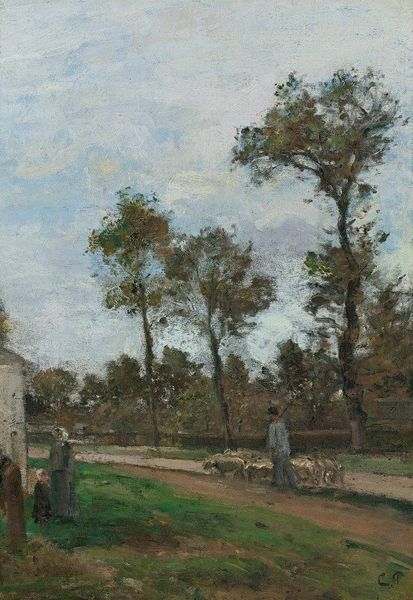
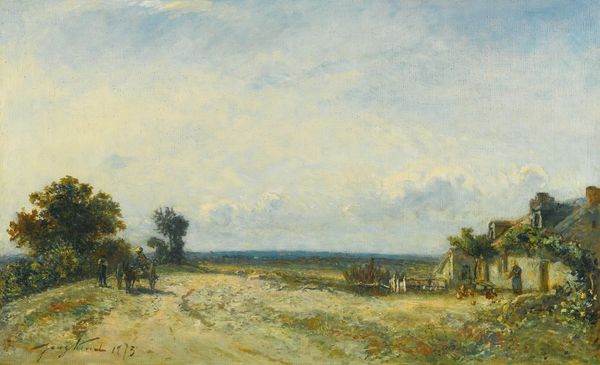
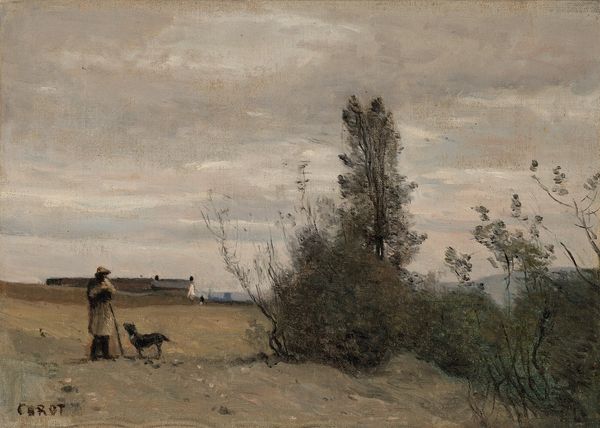
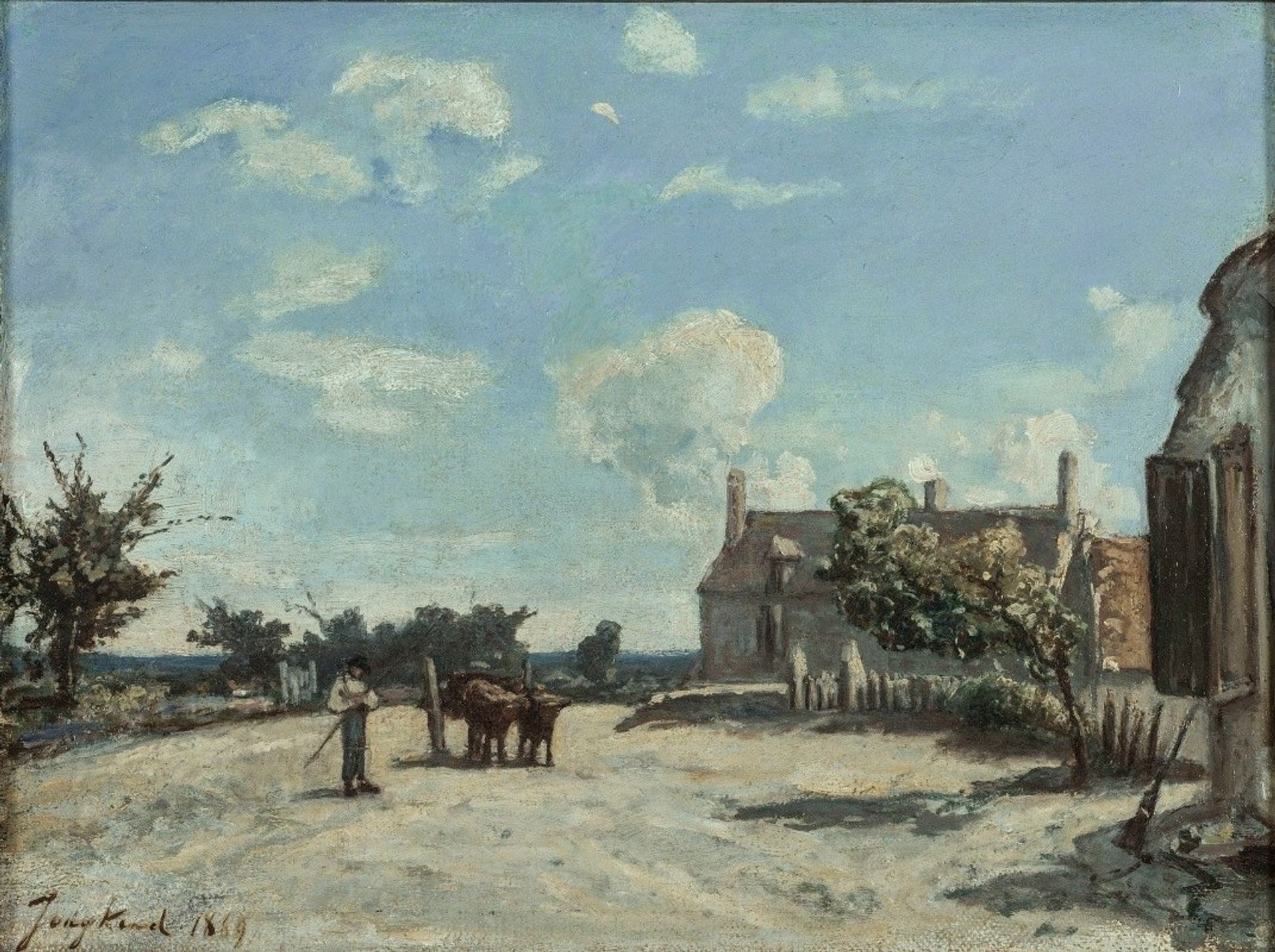
Johan Barthold Jongkind painted “Saint-Parize-le-Châtel” in 1869. The painting's charm lies in its tranquil depiction of rural life, dominated by a vast sky. Observe how Jongkind captures the eternal dance between light and shadow. The peasant with his cattle and staff, rendered with understated grace, stands as a timeless symbol of humanity's connection to nature. The staff, a simple tool, echoes the scepter of power, but here, it's grounded in the earth, a symbol of stewardship rather than dominion. Consider its appearance in ancient pastoral scenes, where shepherds lean on their crooks, or even the bishop’s crosier, each iteration carrying echoes of authority, guidance, and connection to a simpler, perhaps idealized, past. Such images tap into a deep well of collective memory, evoking feelings of nostalgia. The staff reminds us that symbols resonate through time, evolving in meaning yet forever tied to their origins.

Artwork details
- Medium
- painting, plein-air, oil-paint
- Copyright
- Public Domain: Artvee
Tags
painting
impressionism
plein-air
oil-paint
landscape
oil painting
realism
Comments
No comments
About this artwork
Johan Barthold Jongkind painted “Saint-Parize-le-Châtel” in 1869. The painting's charm lies in its tranquil depiction of rural life, dominated by a vast sky. Observe how Jongkind captures the eternal dance between light and shadow. The peasant with his cattle and staff, rendered with understated grace, stands as a timeless symbol of humanity's connection to nature. The staff, a simple tool, echoes the scepter of power, but here, it's grounded in the earth, a symbol of stewardship rather than dominion. Consider its appearance in ancient pastoral scenes, where shepherds lean on their crooks, or even the bishop’s crosier, each iteration carrying echoes of authority, guidance, and connection to a simpler, perhaps idealized, past. Such images tap into a deep well of collective memory, evoking feelings of nostalgia. The staff reminds us that symbols resonate through time, evolving in meaning yet forever tied to their origins.
Comments
No comments