About this artwork
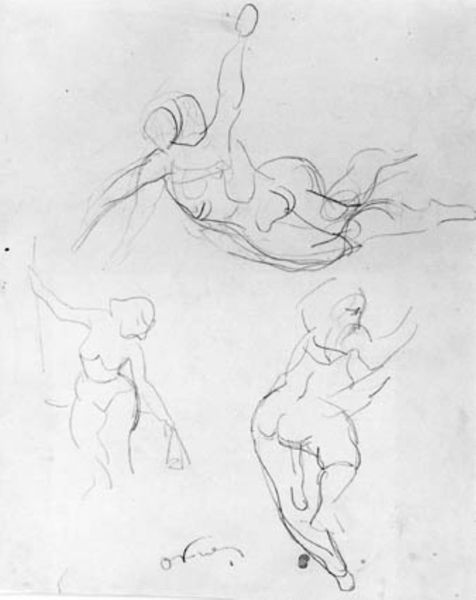
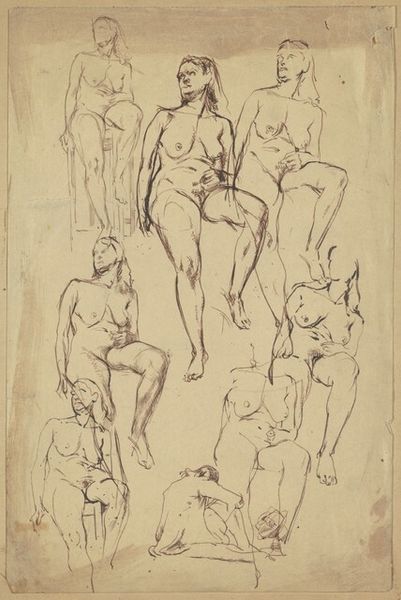
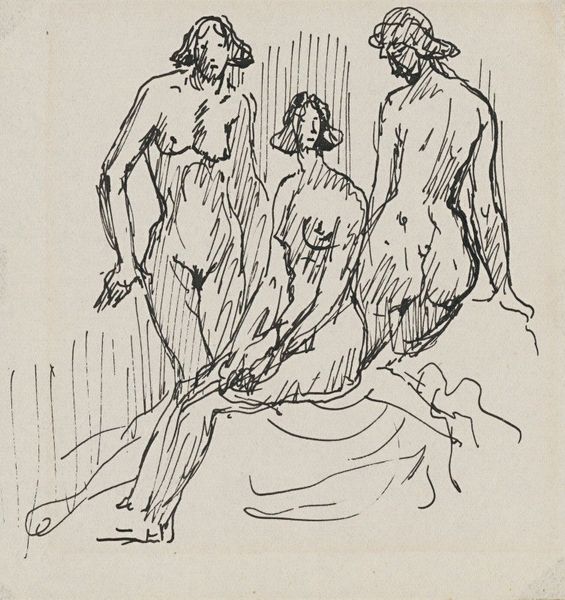
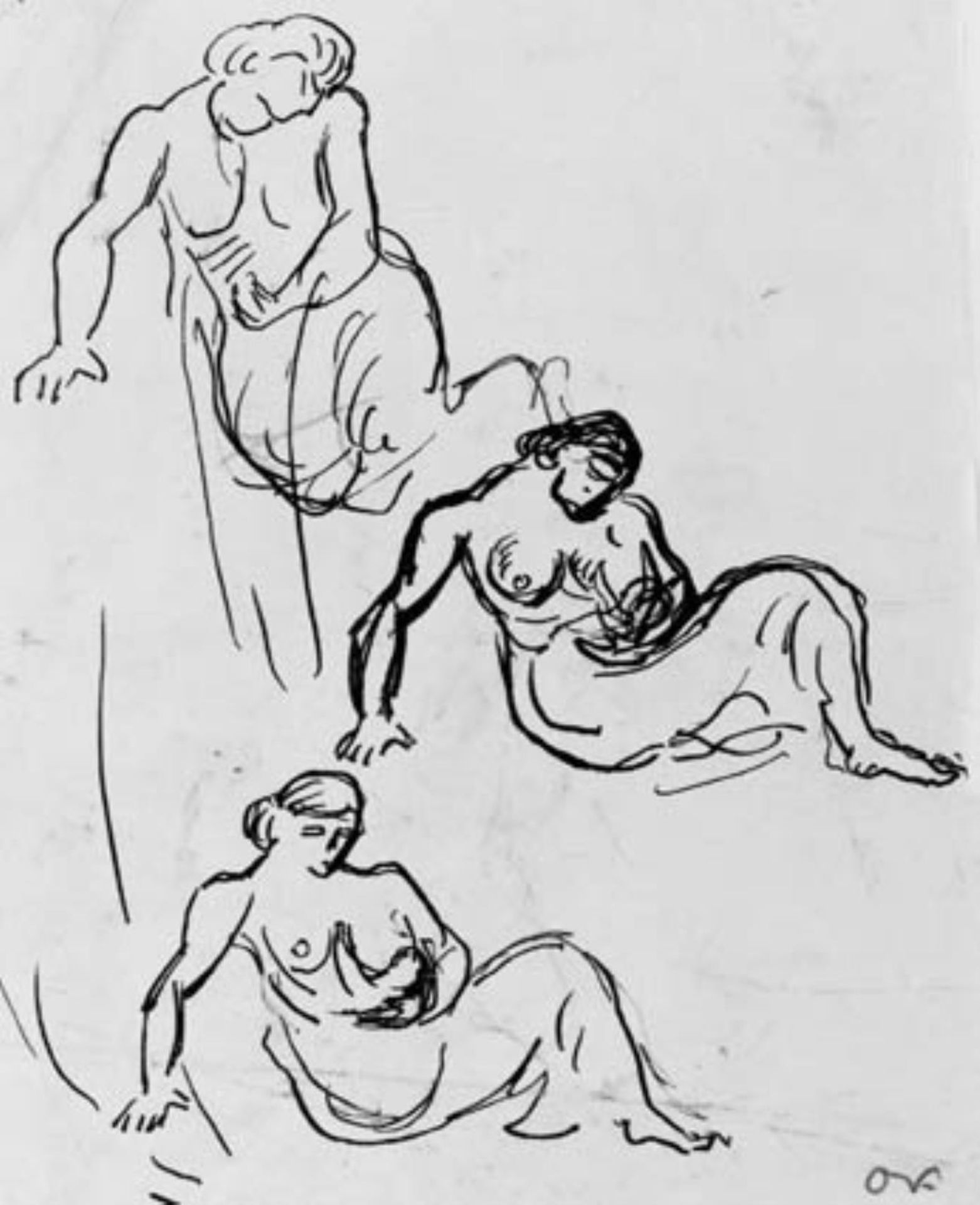
Othon Friesz made this study of a draped woman with ink on paper; we don't know exactly when, but probably sometime in the first half of the 20th century. It's a sketch, a try-out of different ways of seeing the same form, all on one page. I love this idea of showing the process. There's something so free about the line, which seems to delight in the curves of the body. The marks are thin, quick, and confident. The ink is dark, almost black, but it doesn't feel heavy because there's so much open space around each figure. You can almost feel the artist moving the pen across the page, deciding where to put the weight of the line, which lines to leave out. Notice how in the central figure, he loops the line around the abdomen in a continuous stroke. It’s so simple, but it gives the figure a sense of volume and movement. For me, this piece is in conversation with other artists who drew the nude like Matisse, but with an added earthiness. It shows us that art is less about capturing something perfectly and more about the ongoing exchange of ideas through time.
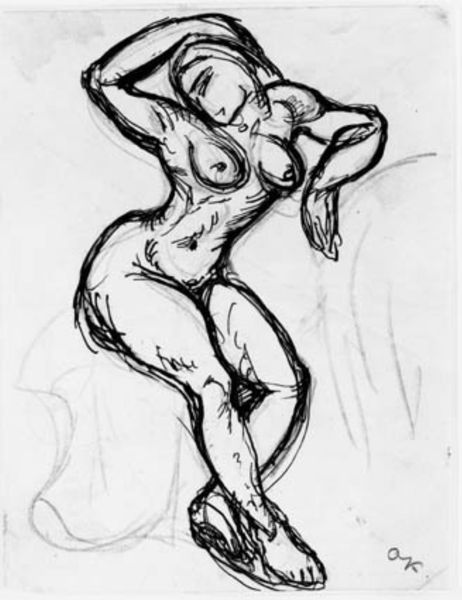
Tre studier af draperet kvinde, hvilende på højre arm.
1907


Artwork details
- Medium
- drawing, paper, pencil
- Dimensions
- 167 mm (height) x 133 mm (width) (bladmaal)
- Location
- SMK - Statens Museum for Kunst
Tags
portrait
drawing
fauvism
figuration
paper
pencil
nude
modernism
Comments
Be the first to share your thoughts about this work.
About this artwork
Othon Friesz made this study of a draped woman with ink on paper; we don't know exactly when, but probably sometime in the first half of the 20th century. It's a sketch, a try-out of different ways of seeing the same form, all on one page. I love this idea of showing the process. There's something so free about the line, which seems to delight in the curves of the body. The marks are thin, quick, and confident. The ink is dark, almost black, but it doesn't feel heavy because there's so much open space around each figure. You can almost feel the artist moving the pen across the page, deciding where to put the weight of the line, which lines to leave out. Notice how in the central figure, he loops the line around the abdomen in a continuous stroke. It’s so simple, but it gives the figure a sense of volume and movement. For me, this piece is in conversation with other artists who drew the nude like Matisse, but with an added earthiness. It shows us that art is less about capturing something perfectly and more about the ongoing exchange of ideas through time.
Comments
Be the first to share your thoughts about this work.