About this artwork
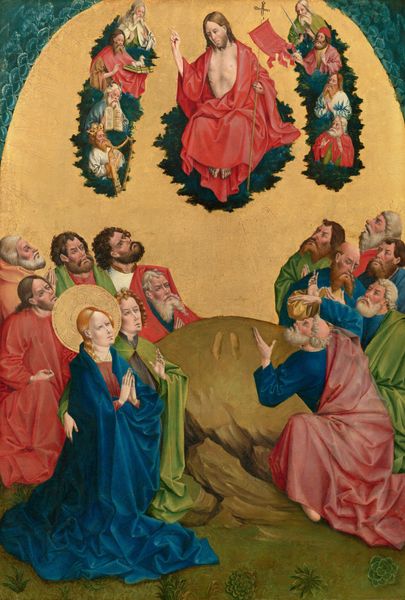
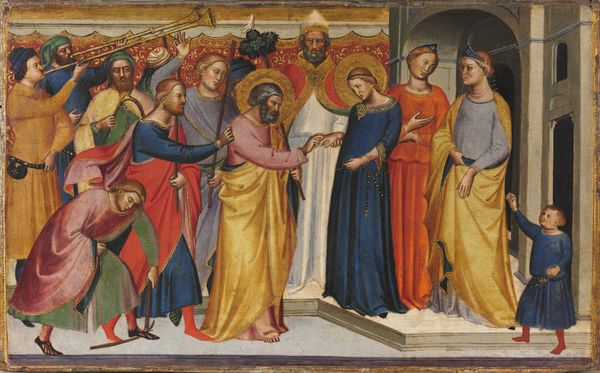
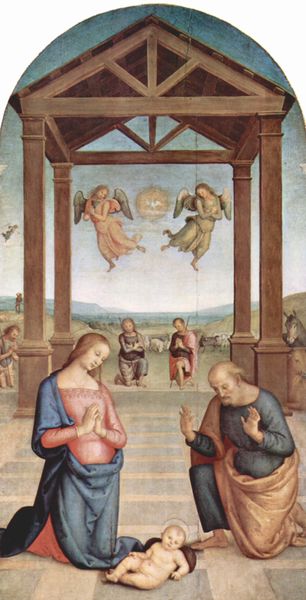
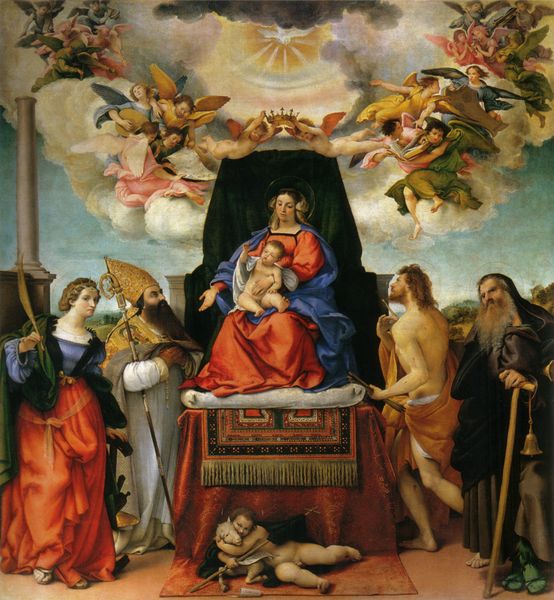
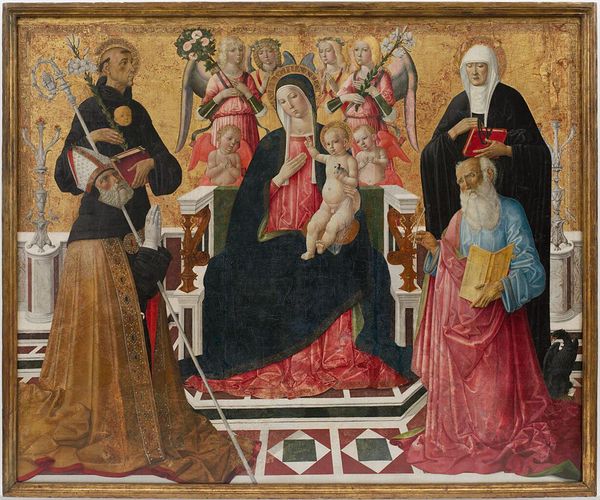
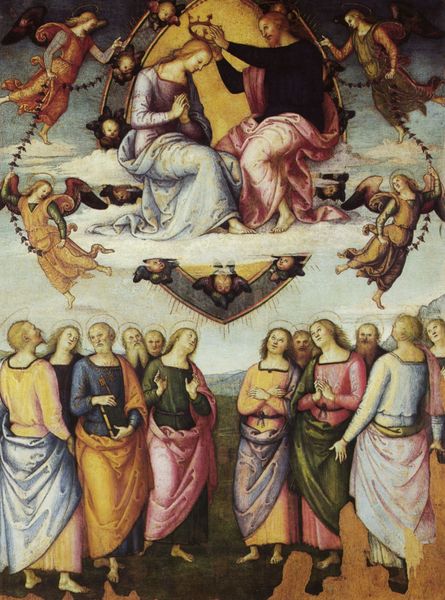
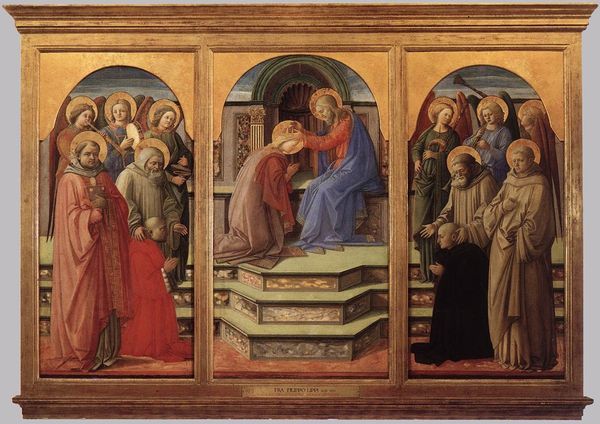
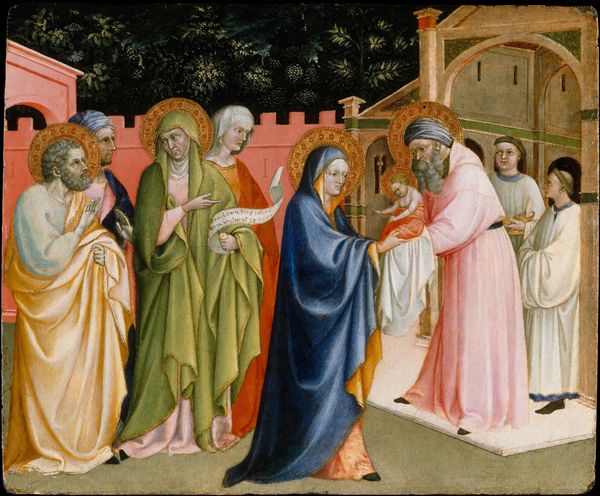
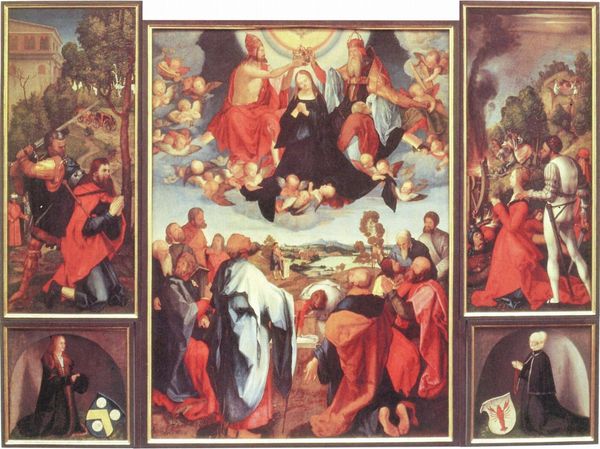
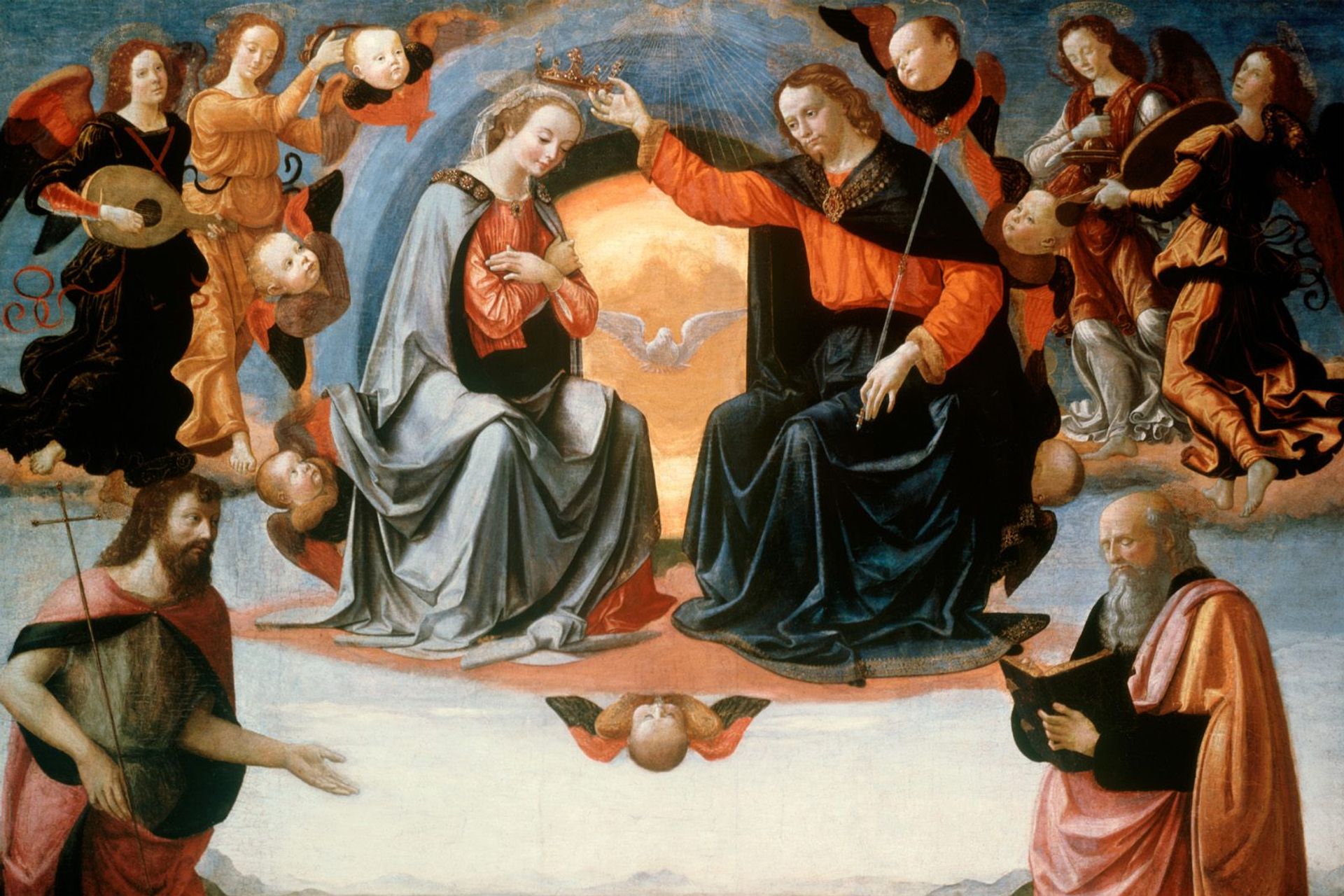
Domenico Ghirlandaio’s “The Coronation of the Virgin” was made using tempera on wood, a common technique in the 15th century. The real magic here lies in the transformation of humble materials into something transcendent. Ghirlandaio would have started with a carefully prepared wood panel, layered with gesso to create a smooth surface. Then, he meticulously applied pigments, ground from minerals and plants, mixed with egg yolk to bind them. The gold leaf highlights, shimmering in the light, are the result of yet another laborious process of hammering gold into incredibly thin sheets, and carefully applying them to the surface. The result is an image of radiant color and remarkable detail, designed to inspire reverence and awe. But it’s important to remember the amount of work that went into it, the skilled hands that transformed raw materials into a vision of the divine. Paying attention to these processes allows us to appreciate the immense skill and labor involved in producing these paintings.

Artwork details
- Medium
- tempera, oil-paint, fresco
- Copyright
- Public domain
Tags
portrait
tempera
oil-paint
figuration
fresco
oil painting
christianity
history-painting
italian-renaissance
virgin-mary
Comments
No comments
About this artwork
Domenico Ghirlandaio’s “The Coronation of the Virgin” was made using tempera on wood, a common technique in the 15th century. The real magic here lies in the transformation of humble materials into something transcendent. Ghirlandaio would have started with a carefully prepared wood panel, layered with gesso to create a smooth surface. Then, he meticulously applied pigments, ground from minerals and plants, mixed with egg yolk to bind them. The gold leaf highlights, shimmering in the light, are the result of yet another laborious process of hammering gold into incredibly thin sheets, and carefully applying them to the surface. The result is an image of radiant color and remarkable detail, designed to inspire reverence and awe. But it’s important to remember the amount of work that went into it, the skilled hands that transformed raw materials into a vision of the divine. Paying attention to these processes allows us to appreciate the immense skill and labor involved in producing these paintings.
Comments
No comments