About this artwork
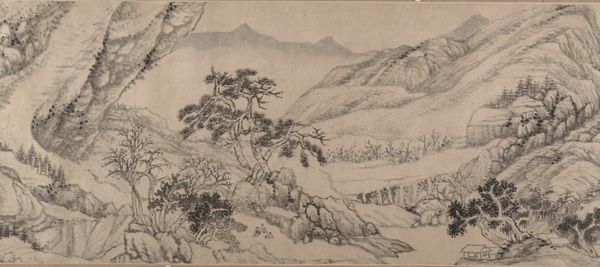
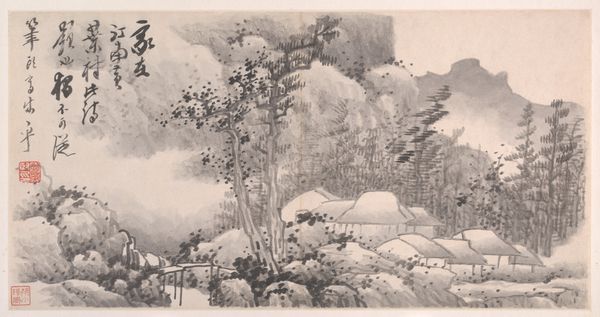
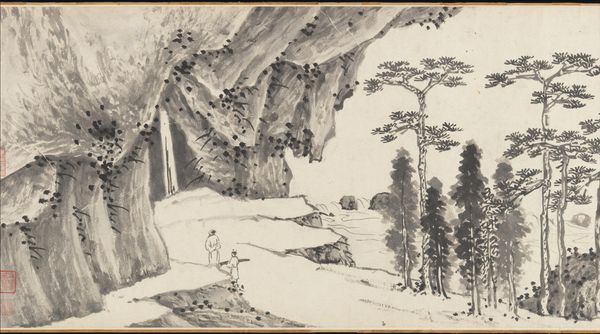
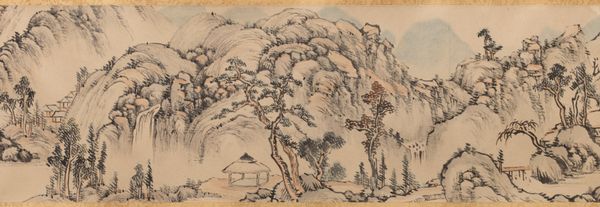
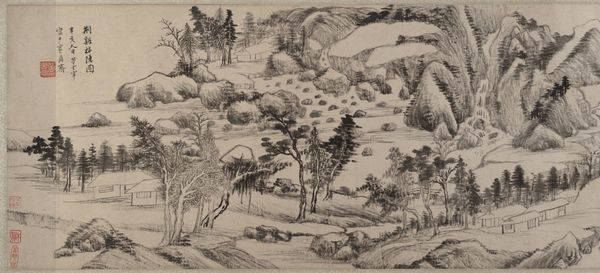
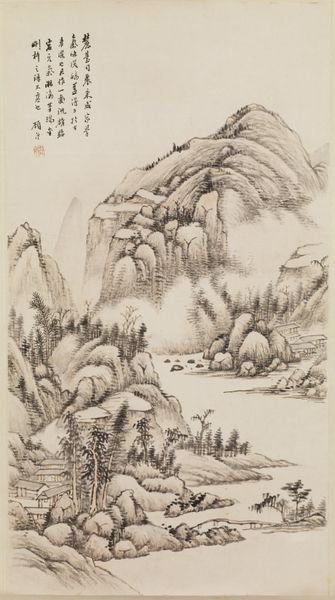
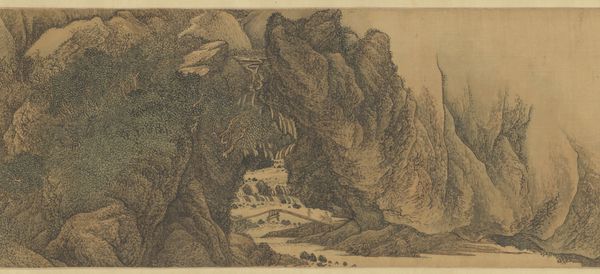
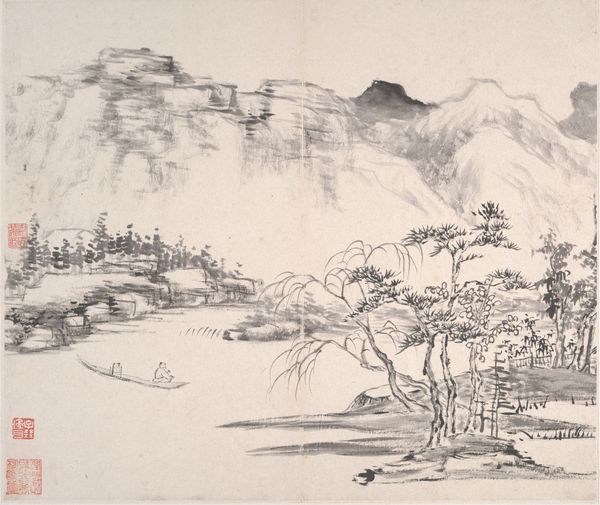
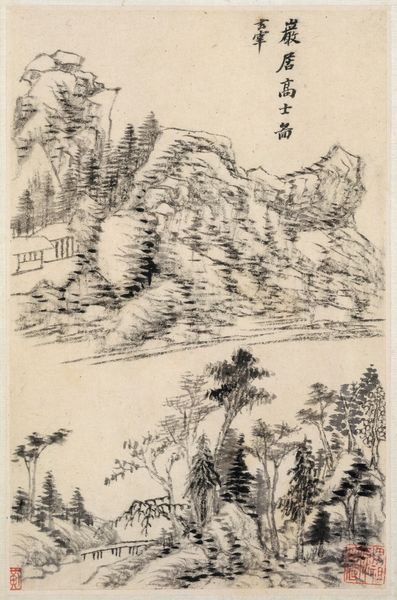
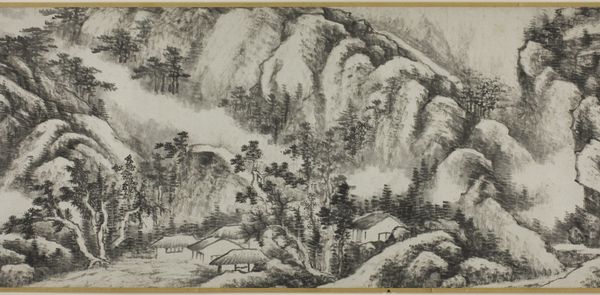
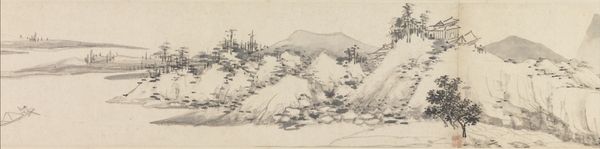
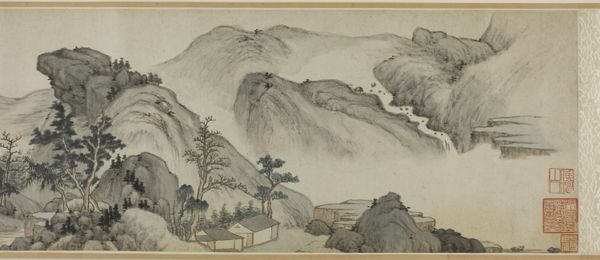
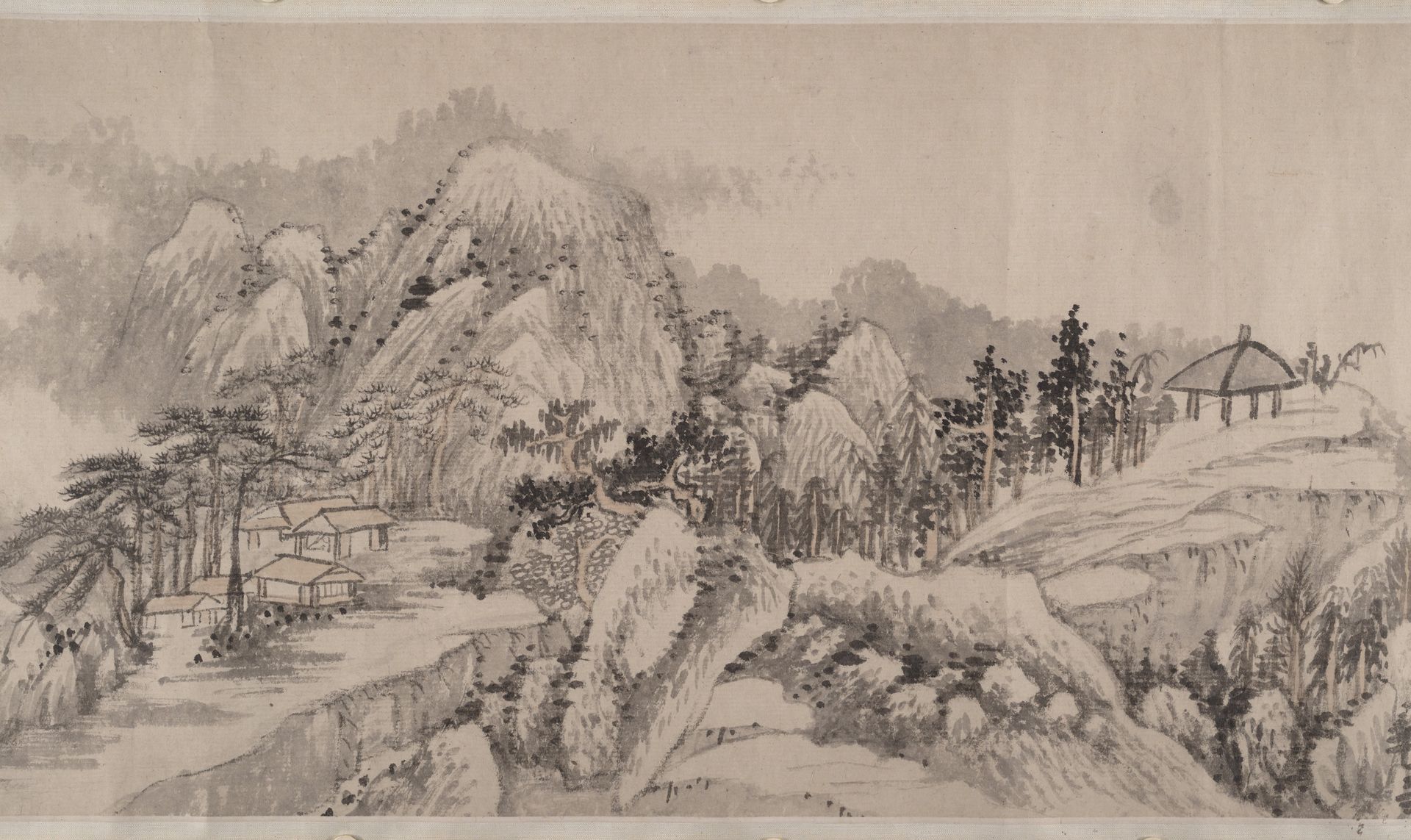
Liu Yu crafted this ink painting, "Remote Valleys and Deep Forests," during the Qing dynasty. The image is dominated by the recurring motif of mountains, which in Chinese culture, have long been imbued with sacred meaning. Mountains represent the dwelling place of immortals, a link between heaven and earth. This symbol, stretching back millennia, appears in countless artworks across Asia. We see it echoed even in the stylized rock gardens of Japan. Think of how these mountainous forms have transcended mere geography; they embody aspirations of transcendence and harmony. Yet, like any ancient symbol, the mountain’s meaning has shifted over time, reflecting societal changes. In some contexts, it represents the power of the emperor; in others, the refuge of the hermit. This painting, with its soaring peaks, taps into our collective memory of nature as both a sanctuary and a source of profound emotional experience, inviting the viewer to engage in the cyclical return to our origins.
Remote Valleys and Deep Forests
1678


Artwork details
- Medium
- drawing, paper, ink
- Dimensions
- 10 5/8 in. × 12 ft. 1/8 in. (27 × 366.1 cm)
- Location
- Metropolitan Museum of Art, New York, NY
- Copyright
- Public Domain
Tags
Comments
Share your thoughts
About this artwork
Liu Yu crafted this ink painting, "Remote Valleys and Deep Forests," during the Qing dynasty. The image is dominated by the recurring motif of mountains, which in Chinese culture, have long been imbued with sacred meaning. Mountains represent the dwelling place of immortals, a link between heaven and earth. This symbol, stretching back millennia, appears in countless artworks across Asia. We see it echoed even in the stylized rock gardens of Japan. Think of how these mountainous forms have transcended mere geography; they embody aspirations of transcendence and harmony. Yet, like any ancient symbol, the mountain’s meaning has shifted over time, reflecting societal changes. In some contexts, it represents the power of the emperor; in others, the refuge of the hermit. This painting, with its soaring peaks, taps into our collective memory of nature as both a sanctuary and a source of profound emotional experience, inviting the viewer to engage in the cyclical return to our origins.
Comments
Share your thoughts