About this artwork
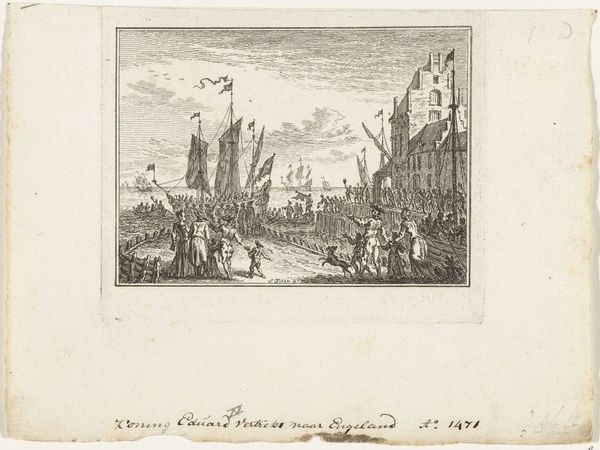
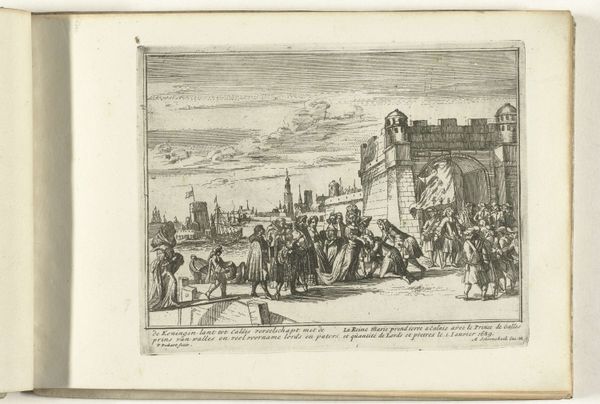
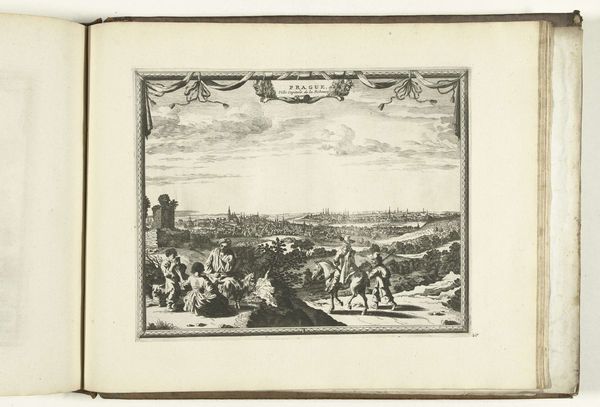
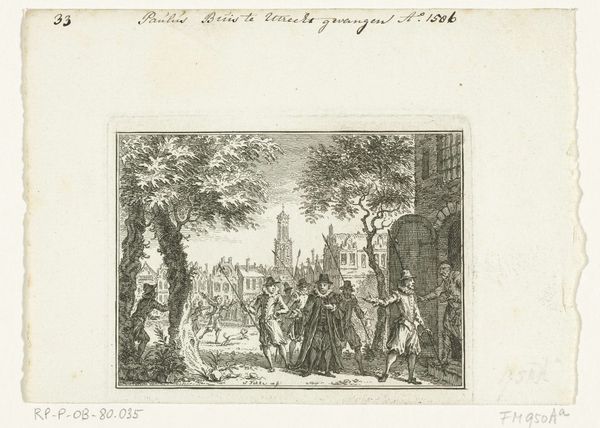
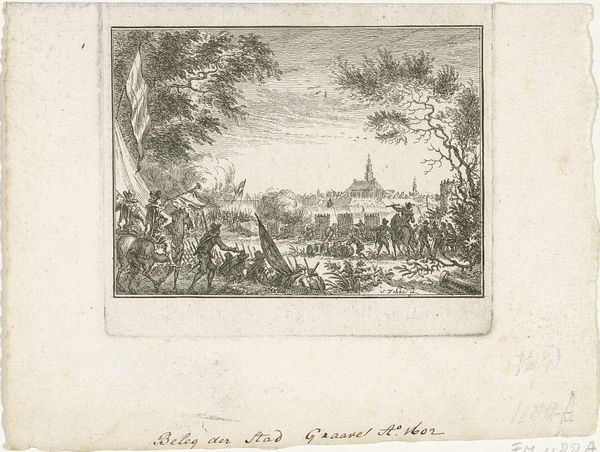
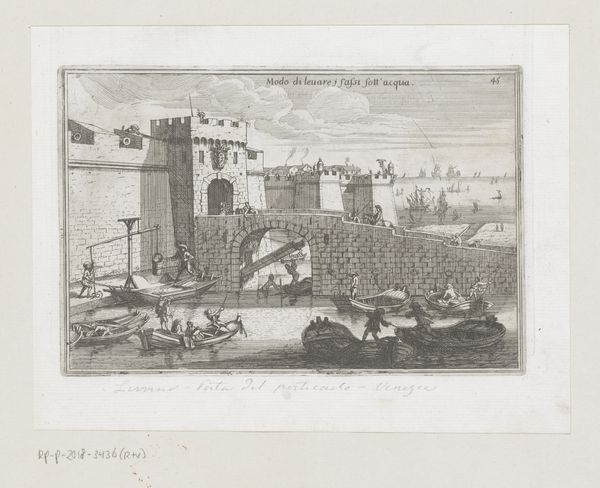
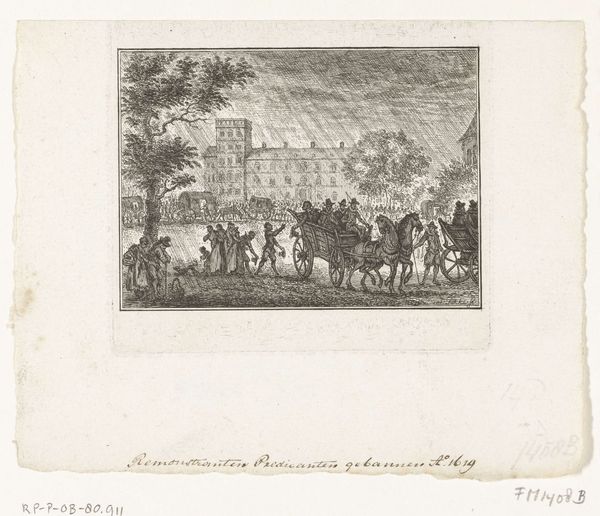
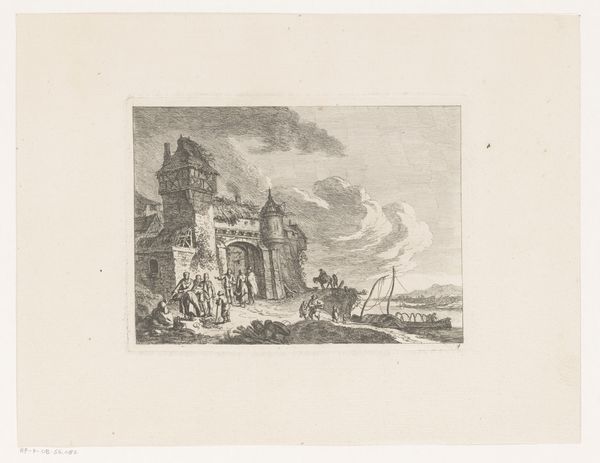
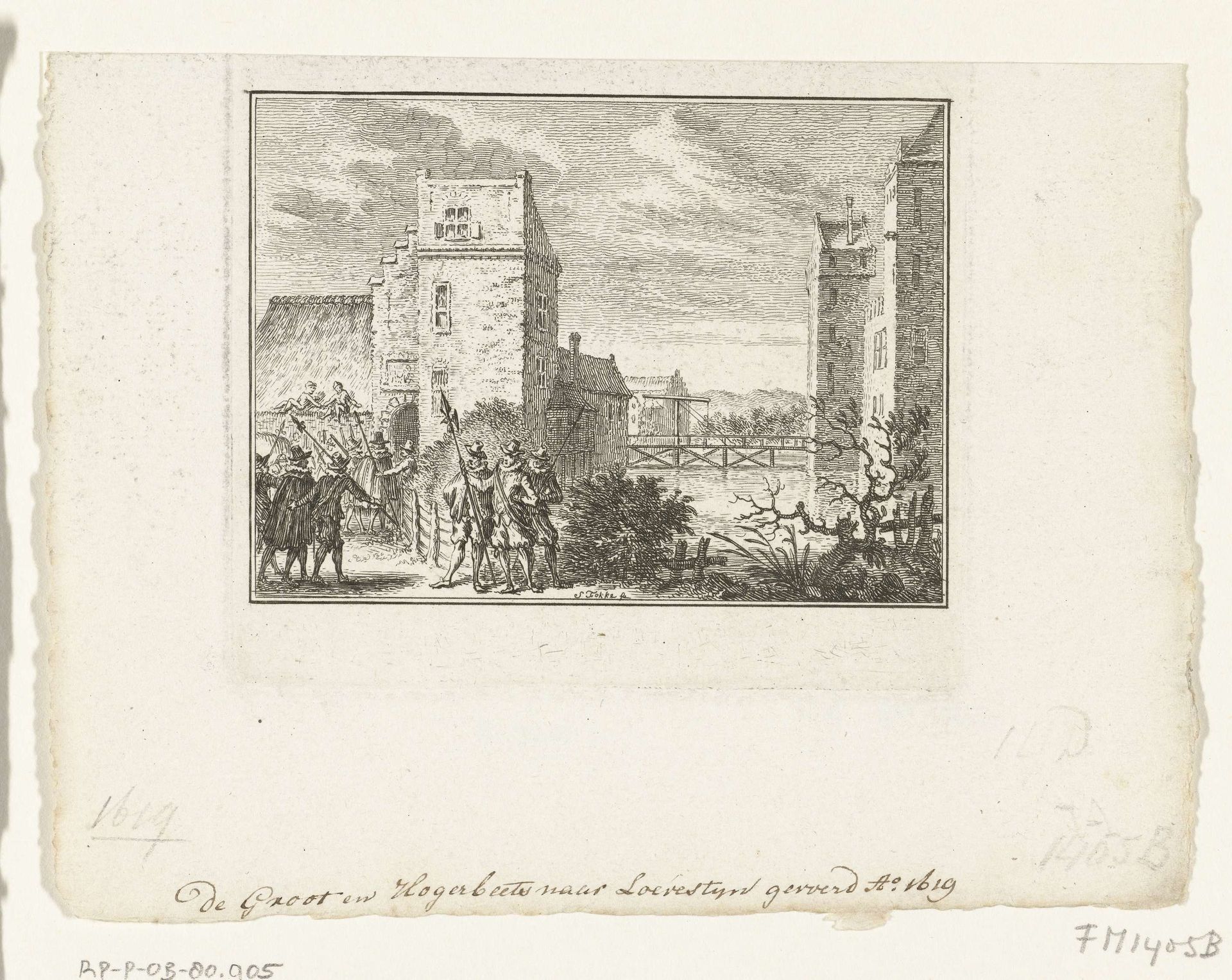
This etching, "Hugo de Groot en Rombout Hogerbeets worden naar Loevestein gevoerd, 1619," was created by Simon Fokke. Notice the composition. Fokke meticulously arranges architectural forms to create a sense of depth, drawing the eye from the immediate figures to the distant towers. This is not merely a depiction of space, but a deliberate construction of it. The stark lines and contrasting textures – from the rough stone of the fortress to the delicate rendering of the figures – serve to emphasize the gravity of the depicted event. The architectural elements are not just background; they are active participants in the narrative. The towers loom, suggestive of enclosure. The bridge, a connection, perhaps represents a passage. Such meticulous construction invites us to consider the deeper structural elements at play – the relationship between power and confinement. The image can be understood as a symbolic representation of authority and control.
Hugo de Groot en Rombout Hogerbeets worden naar Loevestein gevoerd, 1619 1782 - 1784

Simon Fokke
1712 - 1784Location
RijksmuseumArtwork details
- Medium
- print, etching
- Dimensions
- height 91 mm, width 108 mm
- Location
- Rijksmuseum
- Copyright
- Rijks Museum: Open Domain
Tags
dutch-golden-age
ink paper printed
etching
landscape
history-painting
Comments
No comments
About this artwork
This etching, "Hugo de Groot en Rombout Hogerbeets worden naar Loevestein gevoerd, 1619," was created by Simon Fokke. Notice the composition. Fokke meticulously arranges architectural forms to create a sense of depth, drawing the eye from the immediate figures to the distant towers. This is not merely a depiction of space, but a deliberate construction of it. The stark lines and contrasting textures – from the rough stone of the fortress to the delicate rendering of the figures – serve to emphasize the gravity of the depicted event. The architectural elements are not just background; they are active participants in the narrative. The towers loom, suggestive of enclosure. The bridge, a connection, perhaps represents a passage. Such meticulous construction invites us to consider the deeper structural elements at play – the relationship between power and confinement. The image can be understood as a symbolic representation of authority and control.
Comments
No comments