About this artwork
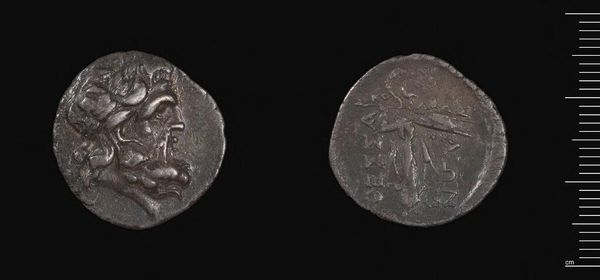
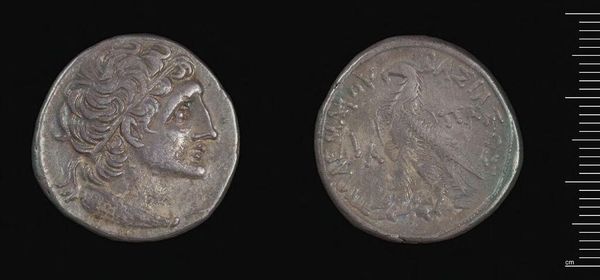
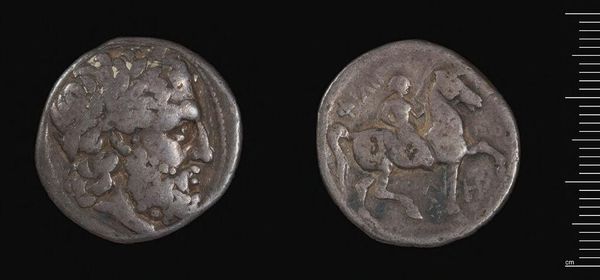
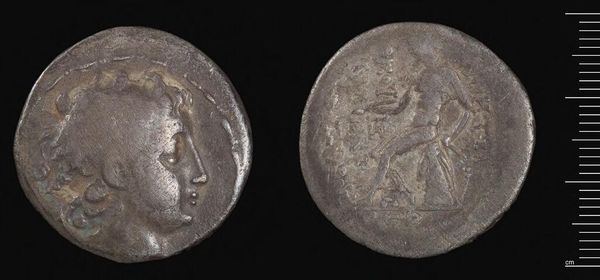
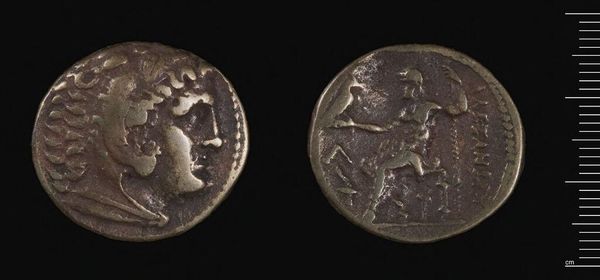
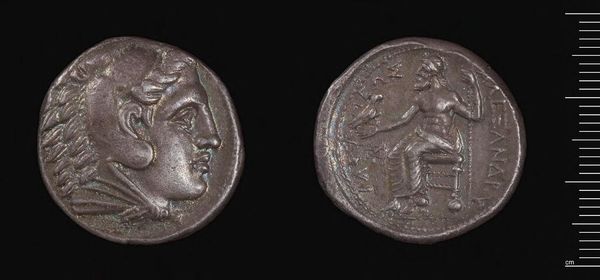
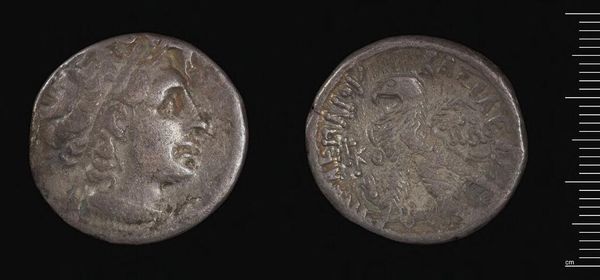
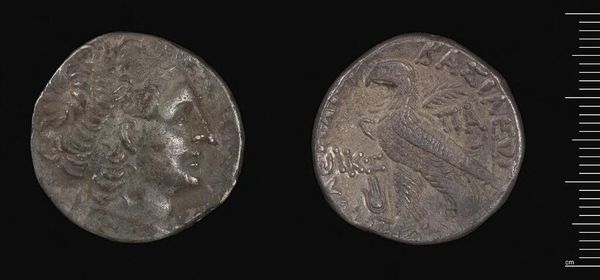
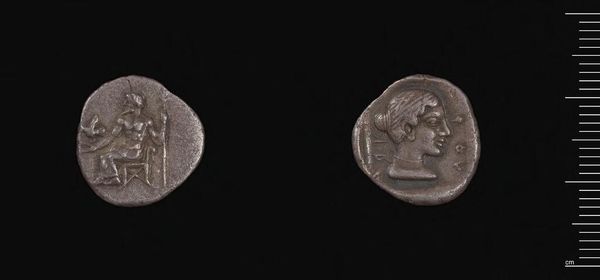
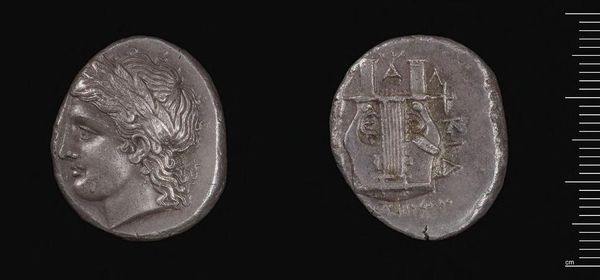
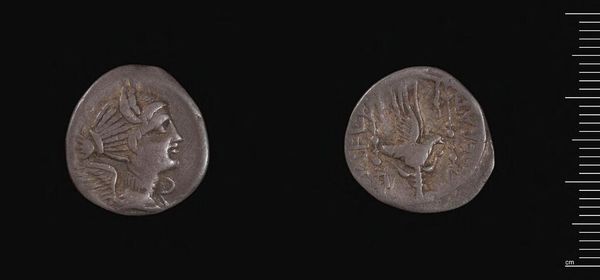
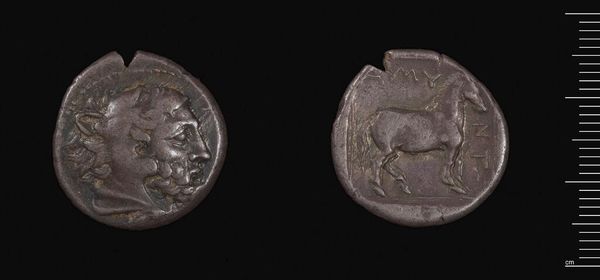
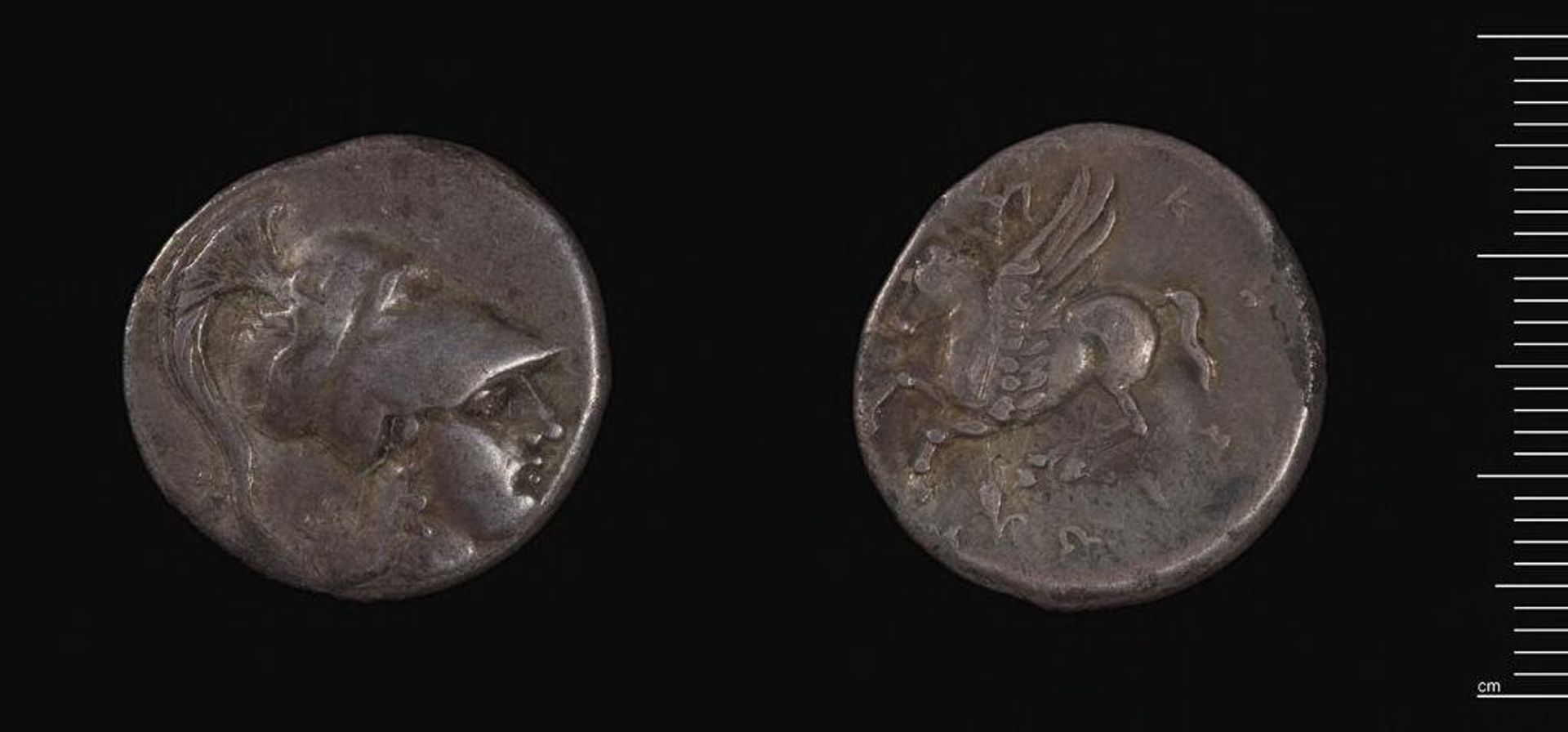
Editor: This is a silver Corinthian Stater, or Attic Didrachm, of Agathokles, Tyrant of Syracuse. It's incredible to think of the stories this coin could tell. What does this coin represent for you? Curator: This coin is more than just currency; it's a powerful statement of identity and authority. Agathokles, a self-made ruler, used coinage to legitimize his power. The imagery, likely Athena and Pegasus, connects him to established narratives of power. How does it make you think about who gets to write history? Editor: That's a great question! I see now that even something as small as a coin could be a propaganda tool. Curator: Exactly. Consider how even today, symbols and images are deployed to shape narratives and reinforce ideologies. It’s a potent reminder that art, even in its most utilitarian forms, is never neutral. Editor: I never thought of it that way before. Thanks for opening my eyes. Curator: My pleasure. It is important to examine the biases present in historical depictions of power.
Corinthian Stater (Attic Didrachm) of Agathokles,Tyrant of Syracuse
c. 317

Artwork details
- Dimensions
- 8.19 g
- Location
- Harvard Art Museums
- Copyright
- CC0 1.0
Comments
Share your thoughts
About this artwork
Editor: This is a silver Corinthian Stater, or Attic Didrachm, of Agathokles, Tyrant of Syracuse. It's incredible to think of the stories this coin could tell. What does this coin represent for you? Curator: This coin is more than just currency; it's a powerful statement of identity and authority. Agathokles, a self-made ruler, used coinage to legitimize his power. The imagery, likely Athena and Pegasus, connects him to established narratives of power. How does it make you think about who gets to write history? Editor: That's a great question! I see now that even something as small as a coin could be a propaganda tool. Curator: Exactly. Consider how even today, symbols and images are deployed to shape narratives and reinforce ideologies. It’s a potent reminder that art, even in its most utilitarian forms, is never neutral. Editor: I never thought of it that way before. Thanks for opening my eyes. Curator: My pleasure. It is important to examine the biases present in historical depictions of power.
Comments
Share your thoughts