About this artwork
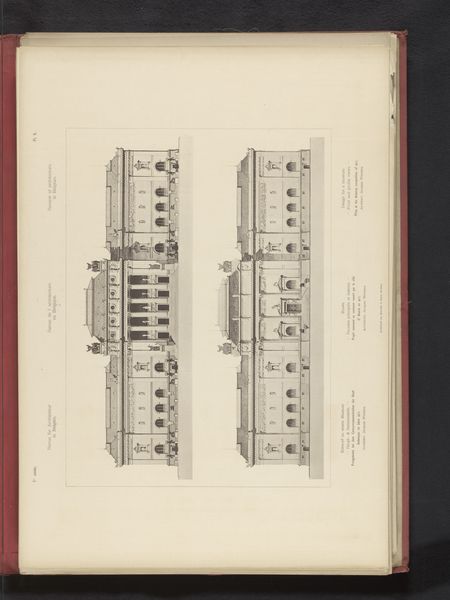
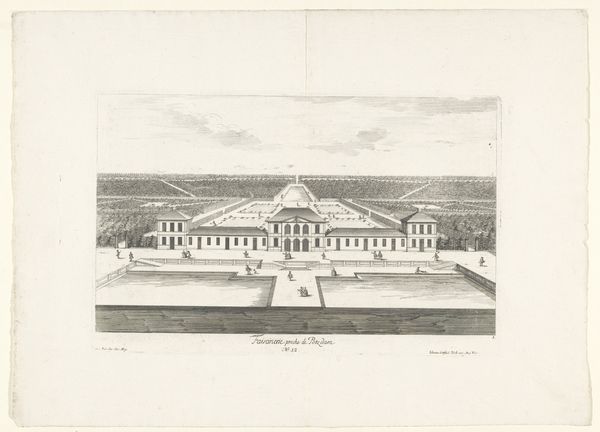
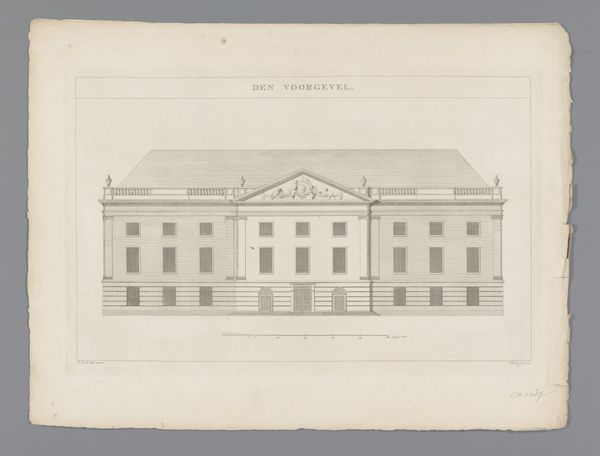
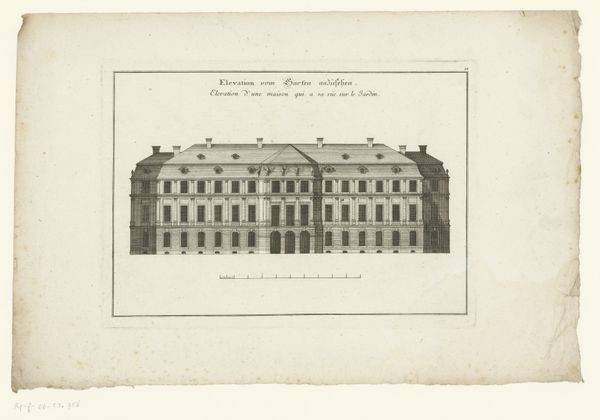
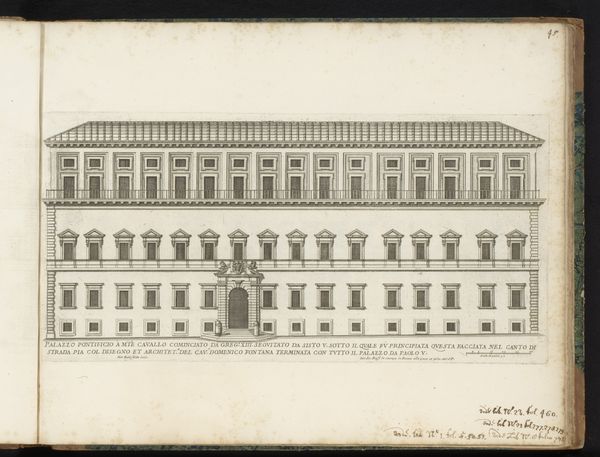
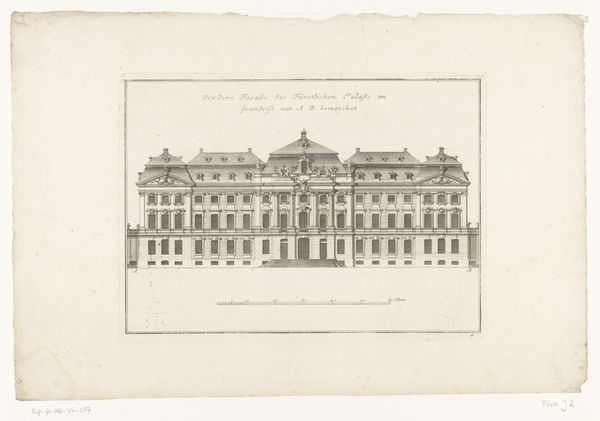
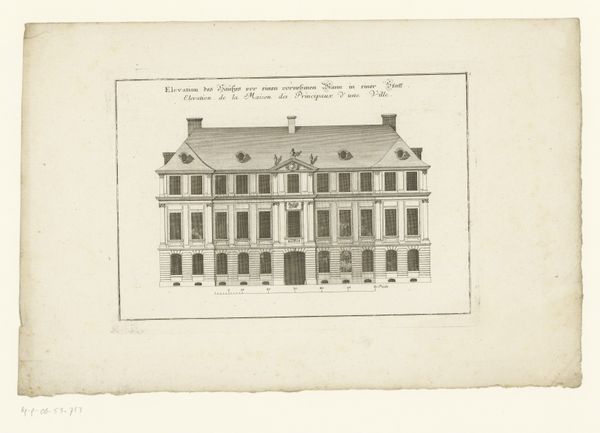
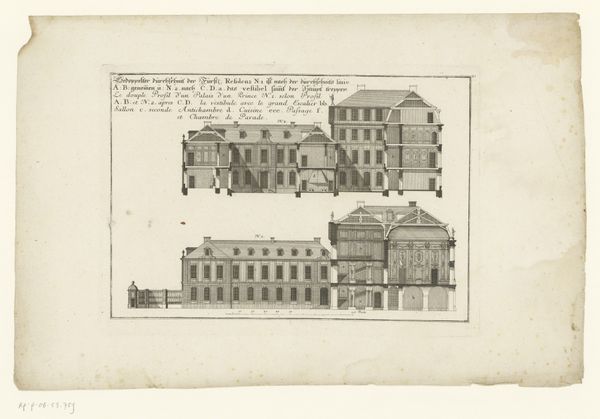
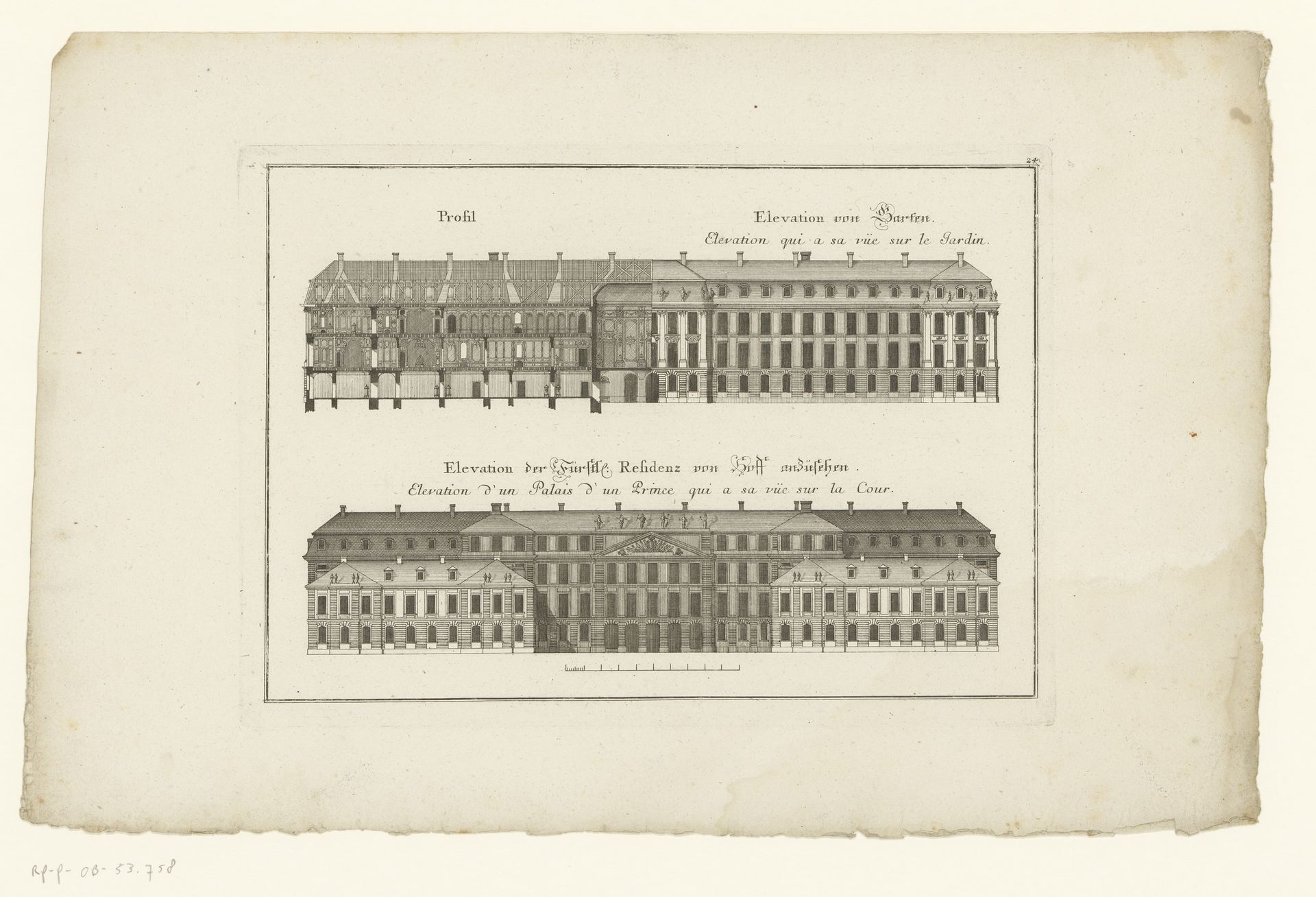
This undated print, “Residentie gezien vanaf de tuin en vanaf de binnenplaats met doorsnede,” was created by Johann Georg Ringlin. Architectural prints such as this were not just technical drawings, but also served to promote the power and grandeur of the elite during the 18th century. This piece offers a look at the spatial dimensions of power. The detailed rendering suggests the wealth and resources required to construct and maintain such a residence. Consider the labor and materials sourced from various places and peoples which are condensed here. As the artist meticulously maps the facade, consider what remains unseen. The dual perspective, from both the garden and the courtyard, invites reflection on the performative aspects of nobility. How does this design dictate movement and interaction, reinforcing social hierarchies? As you consider the building’s design, think about the lives lived within its walls, the echoes of history embedded in its architecture.
Residentie gezien vanaf de tuin en vanaf de binnenplaats met doorsnede 1750

Johann Georg Ringlin
1691 - 1761Location
RijksmuseumArtwork details
- Medium
- drawing, print, paper, engraving, architecture
- Dimensions
- height 225 mm, width 315 mm
- Location
- Rijksmuseum
- Copyright
- Rijks Museum: Open Domain
Tags
drawing
neoclacissism
landscape
paper
engraving
architecture
Comments
No comments
About this artwork
This undated print, “Residentie gezien vanaf de tuin en vanaf de binnenplaats met doorsnede,” was created by Johann Georg Ringlin. Architectural prints such as this were not just technical drawings, but also served to promote the power and grandeur of the elite during the 18th century. This piece offers a look at the spatial dimensions of power. The detailed rendering suggests the wealth and resources required to construct and maintain such a residence. Consider the labor and materials sourced from various places and peoples which are condensed here. As the artist meticulously maps the facade, consider what remains unseen. The dual perspective, from both the garden and the courtyard, invites reflection on the performative aspects of nobility. How does this design dictate movement and interaction, reinforcing social hierarchies? As you consider the building’s design, think about the lives lived within its walls, the echoes of history embedded in its architecture.
Comments
No comments