About this artwork
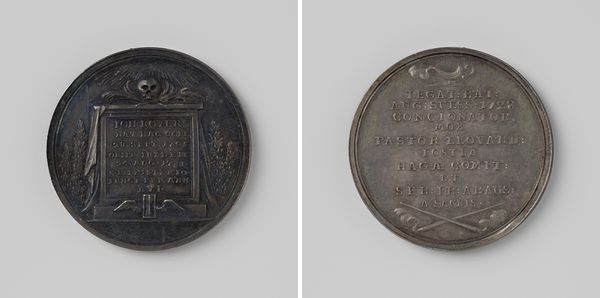
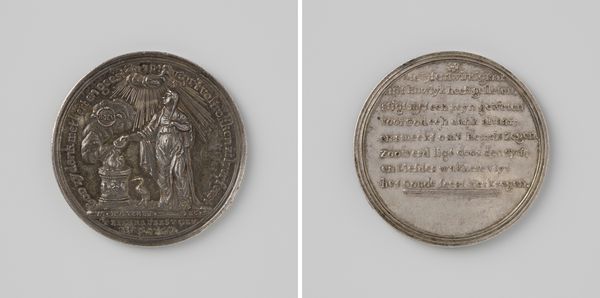
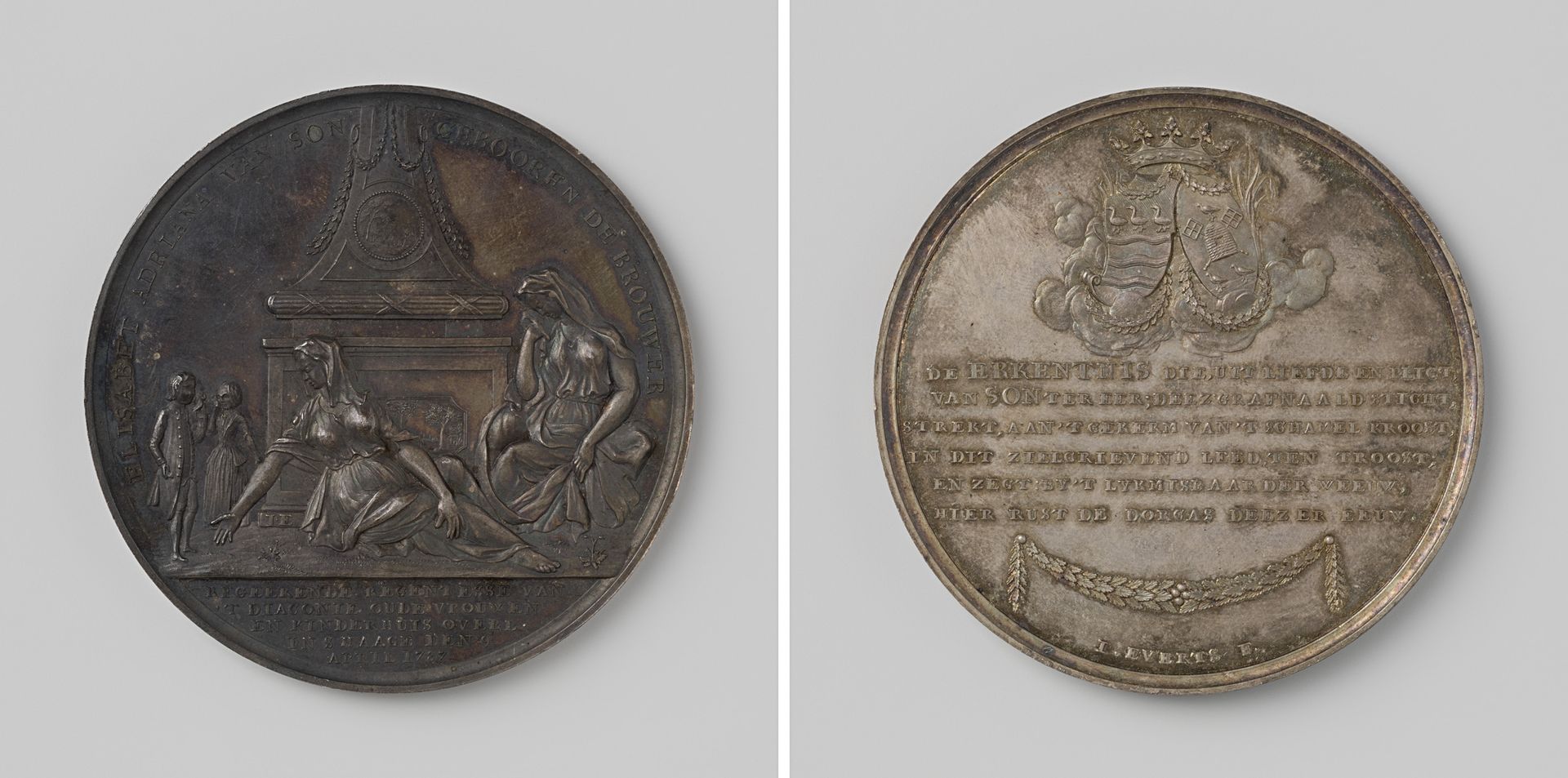
This is a silver medal commemorating the death of Elisabet Adriana van Son-de Brouwer, made by Joseph Jansz. Everts. Although undated, it memorializes a woman who was a regent of the Diaconie Oude Vrouwen- en Kinderenhuis, an old women’s and children’s home in The Hague. The medal encapsulates the complex social dynamics of 18th-century Dutch society. It reflects the power and status afforded to women, like Elisabet, through their roles in charitable organizations. These positions, however, were often dependent on their marital status or familial connections. On one side, we see a grieving woman next to a tomb, alongside two children, perhaps representing the orphans she cared for. This imagery conveys a sense of mourning, but also highlights Elisabet's role as a caregiver and benefactor. Medals like these served not only as personal mementos, but also as public affirmations of social hierarchies and gender roles. The medal invites us to consider the lives of women in the past.
Overlijden van Elisabet Adriana van Son-de Brouwer, regentesse van het Diaconie Oude Vrouwen- en Kinderenhuis te 's-Gravenhage
1787

Artwork details
- Medium
- metal, relief, sculpture
- Dimensions
- diameter 6.4 cm, weight 70.57 gr
- Copyright
- Rijks Museum: Open Domain
Tags
Comments
Share your thoughts
About this artwork
This is a silver medal commemorating the death of Elisabet Adriana van Son-de Brouwer, made by Joseph Jansz. Everts. Although undated, it memorializes a woman who was a regent of the Diaconie Oude Vrouwen- en Kinderenhuis, an old women’s and children’s home in The Hague. The medal encapsulates the complex social dynamics of 18th-century Dutch society. It reflects the power and status afforded to women, like Elisabet, through their roles in charitable organizations. These positions, however, were often dependent on their marital status or familial connections. On one side, we see a grieving woman next to a tomb, alongside two children, perhaps representing the orphans she cared for. This imagery conveys a sense of mourning, but also highlights Elisabet's role as a caregiver and benefactor. Medals like these served not only as personal mementos, but also as public affirmations of social hierarchies and gender roles. The medal invites us to consider the lives of women in the past.
Comments
Share your thoughts