About this artwork
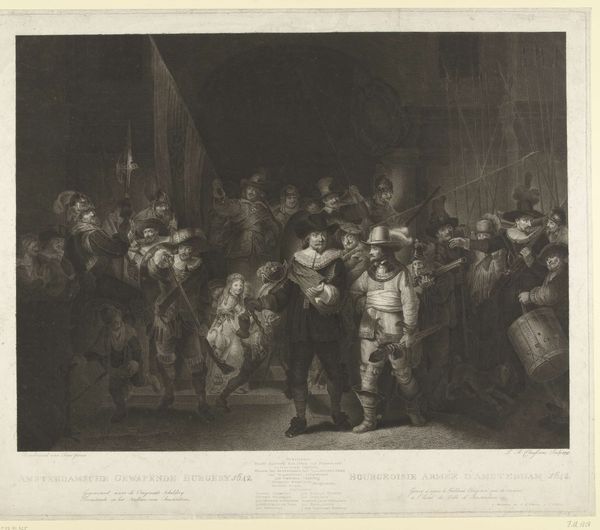
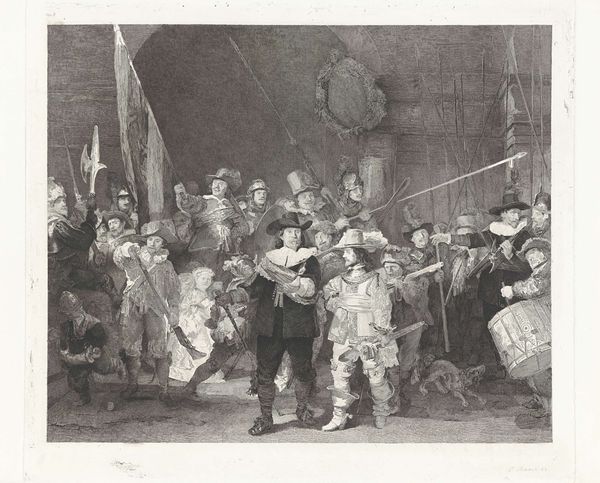
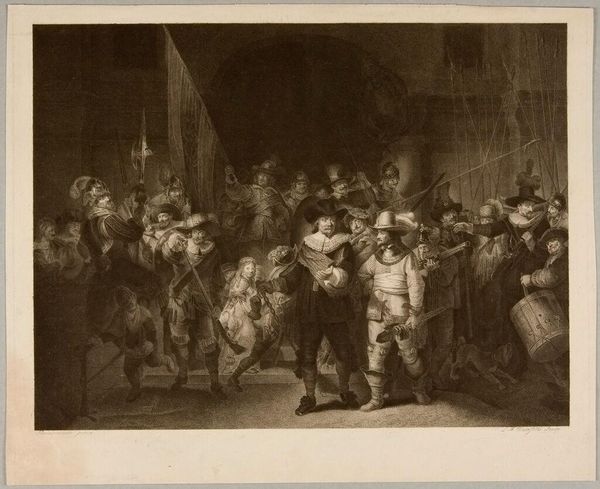
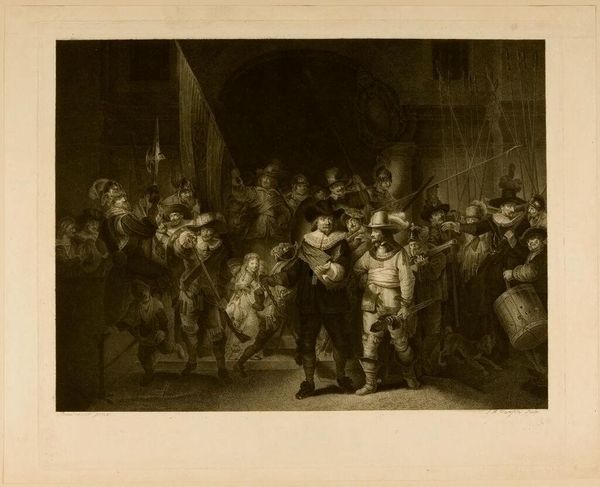
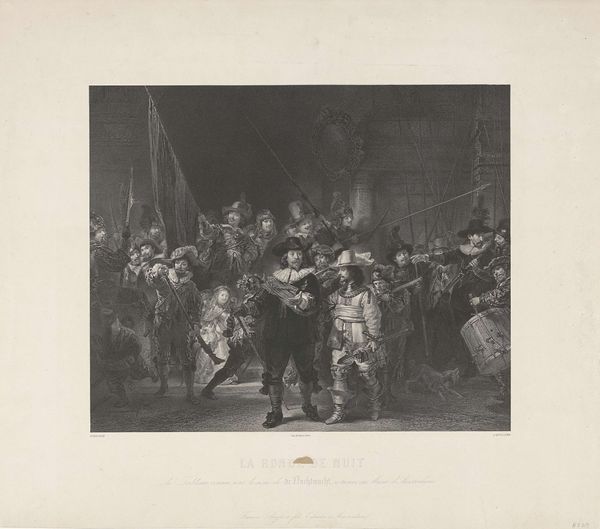
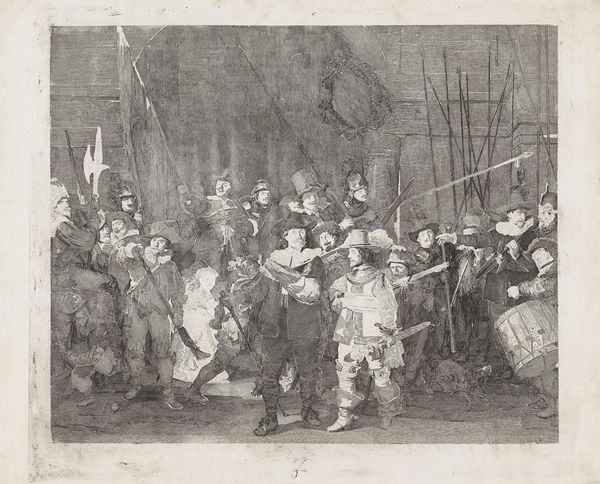
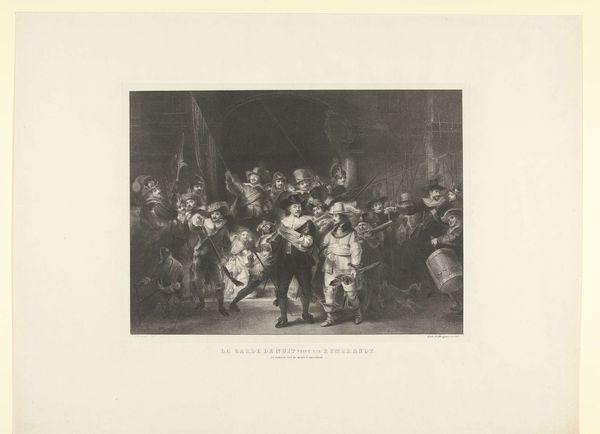
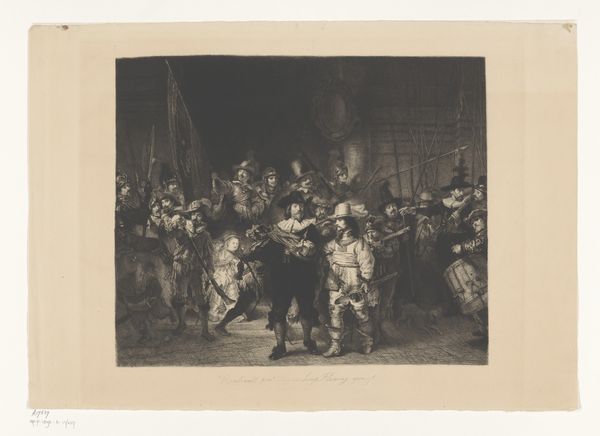
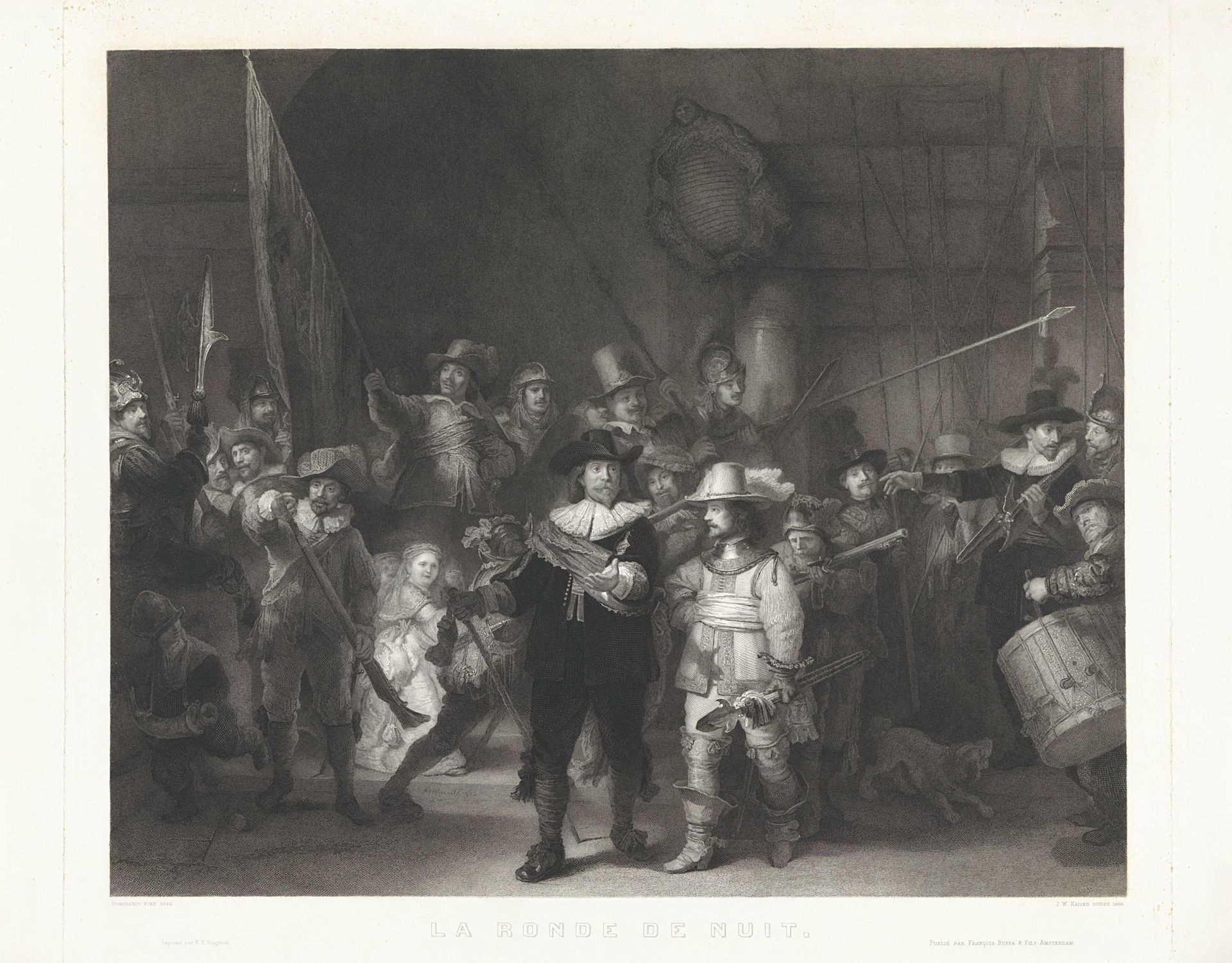
This is Johann Wilhelm Kaiser's rendering of the famous 'Night Watch' by Rembrandt. Kaiser was a Dutch artist born in the early 19th century. During this period, the Netherlands, like much of Europe, was undergoing significant political and social change following the Napoleonic era. In this engraving, Kaiser translates the monumental painting into a more accessible, reproducible format. Note the emphasis on the group dynamic, the bustling energy of the militiamen. This relates to the Dutch civic identity and the historical context of the 'Night Watch' as a representation of a civic guard company. It also emphasizes the value of community and collective action. Kaiser's interpretation captures the nuances of light and shadow that made Rembrandt famous. He offers a window into the Dutch Golden Age, while engaging with 19th-century print culture and its role in disseminating iconic imagery. In his work, historical memory meets the contemporary moment, reminding us that art is always in dialogue with its own time.
Het korporaalschap van kapitein Frans Banninck Cocq en luitenant Willem van Ruytenburch, bekend als de 'Nachtwacht'
1866

Johann Wilhelm (I) Kaiser
1813 - 1900Location
RijksmuseumArtwork details
- Dimensions
- height 582 mm, width 677 mm
- Location
- Rijksmuseum
- Copyright
- Rijks Museum: Open Domain
Comments
Be the first to share your thoughts about this work.
About this artwork
This is Johann Wilhelm Kaiser's rendering of the famous 'Night Watch' by Rembrandt. Kaiser was a Dutch artist born in the early 19th century. During this period, the Netherlands, like much of Europe, was undergoing significant political and social change following the Napoleonic era. In this engraving, Kaiser translates the monumental painting into a more accessible, reproducible format. Note the emphasis on the group dynamic, the bustling energy of the militiamen. This relates to the Dutch civic identity and the historical context of the 'Night Watch' as a representation of a civic guard company. It also emphasizes the value of community and collective action. Kaiser's interpretation captures the nuances of light and shadow that made Rembrandt famous. He offers a window into the Dutch Golden Age, while engaging with 19th-century print culture and its role in disseminating iconic imagery. In his work, historical memory meets the contemporary moment, reminding us that art is always in dialogue with its own time.
Comments
Be the first to share your thoughts about this work.