c. 1875
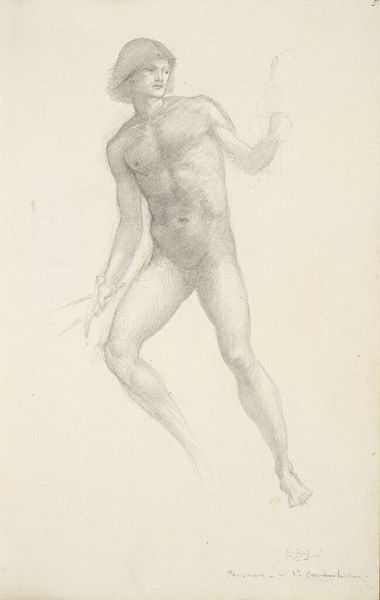
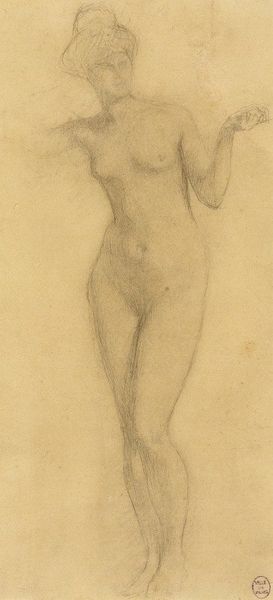
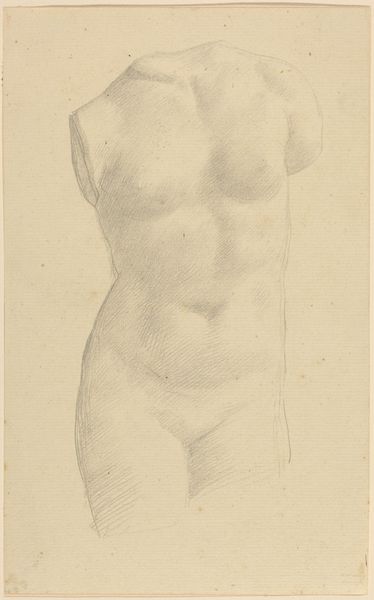
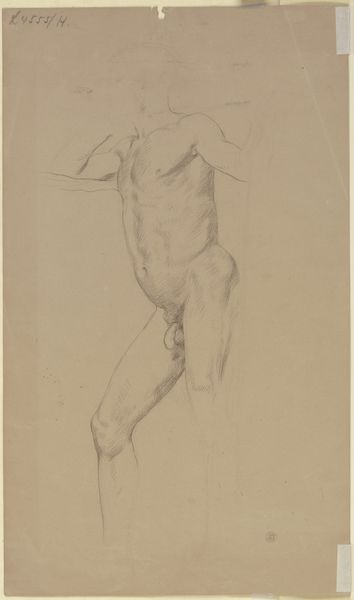
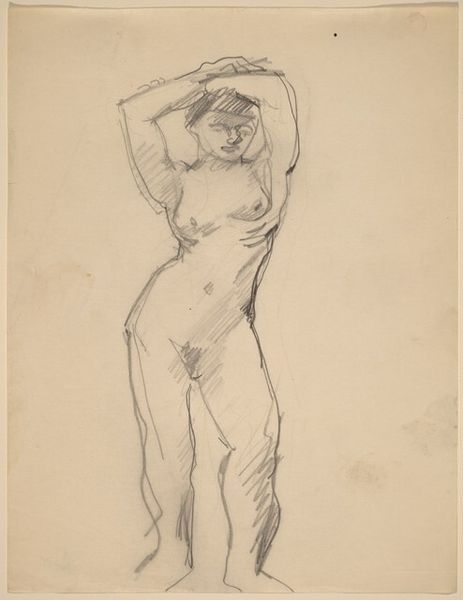
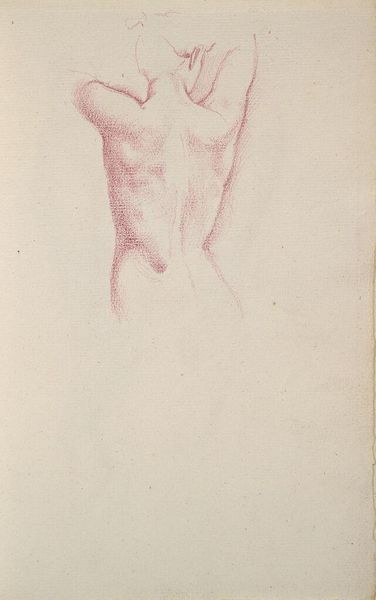
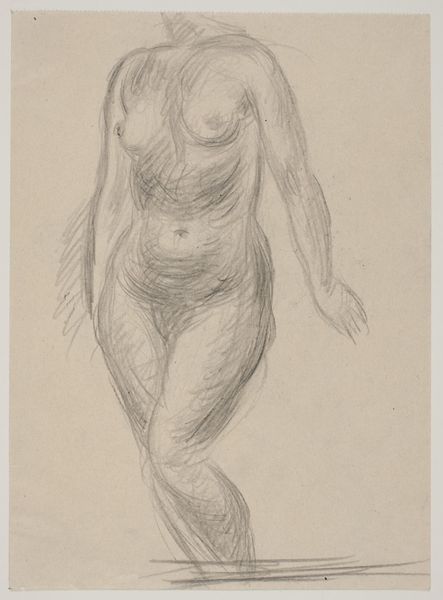
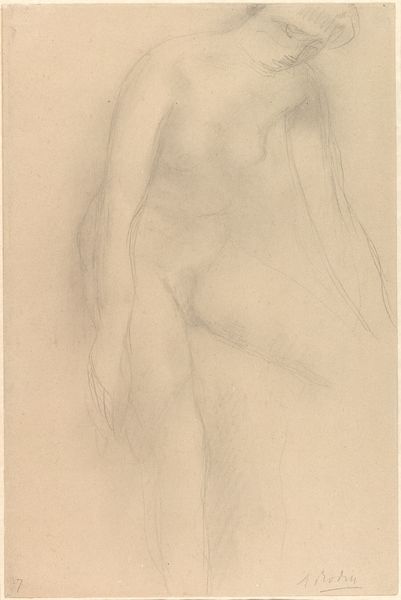
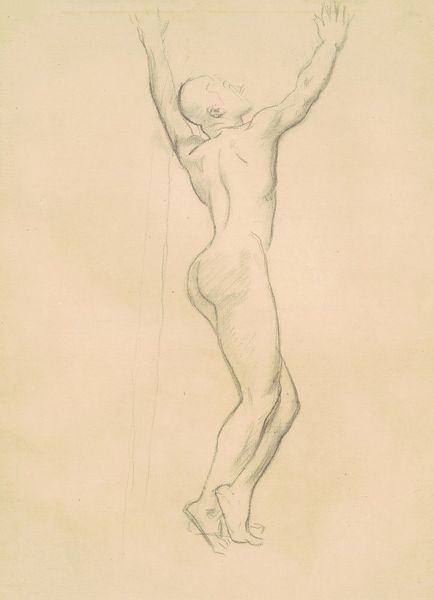
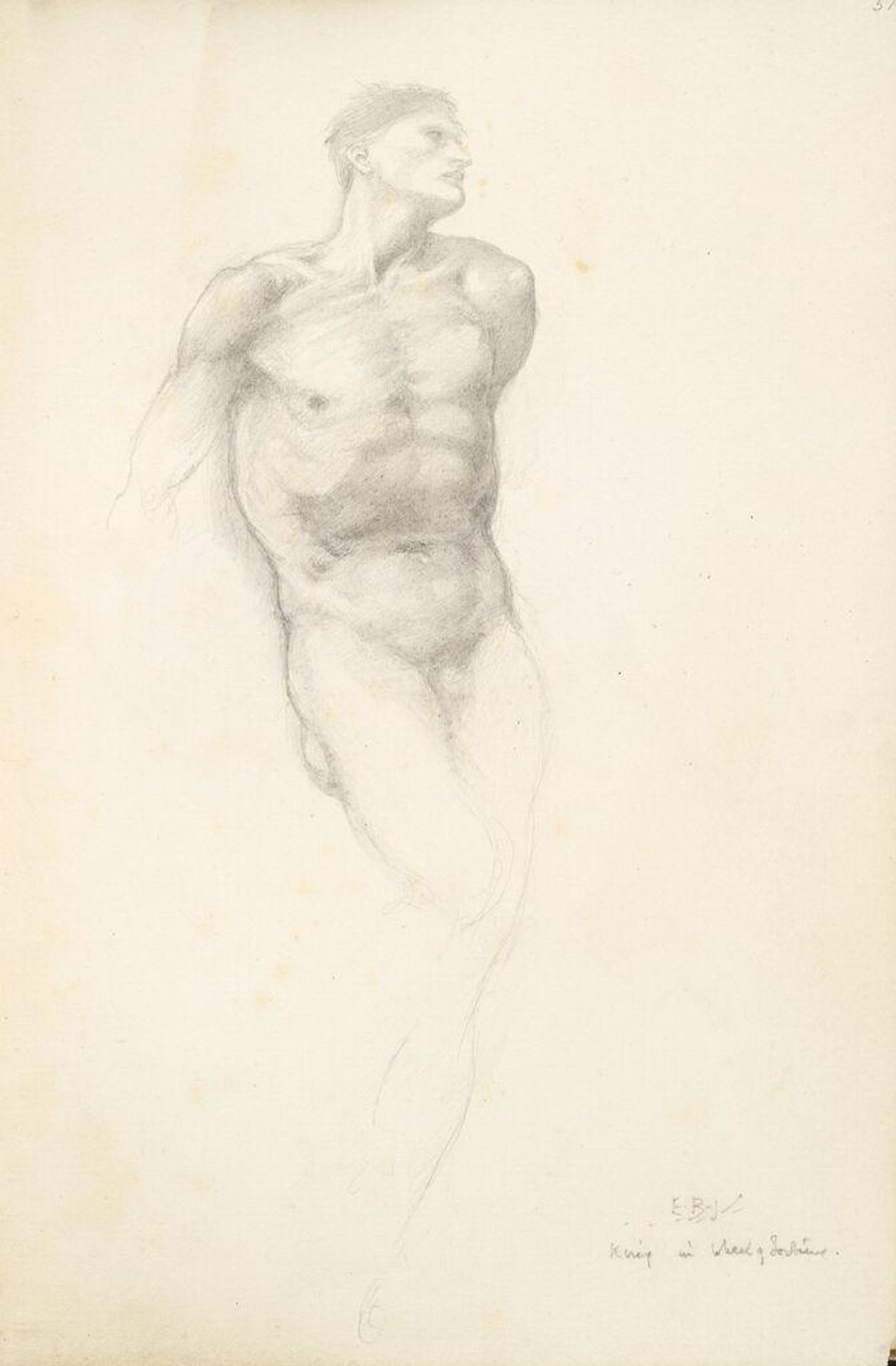
Study for King, for "The Wheel of Fortune"; verso: blank


Listen to curator's interpretation
Curatorial notes
Editor: Here we have Edward Burne-Jones's "Study for King, for 'The Wheel of Fortune'," a pencil drawing. The figure is idealized, almost a classical nude, but there’s a vulnerability in his stance. How do you interpret this work in light of the themes of fortune and power? Curator: It’s crucial to view Burne-Jones through the lens of Victorian anxieties about masculinity and class. The Wheel of Fortune, traditionally a symbol of capricious fate, here seems to implicate the King himself. Is he a victim of circumstance, or complicit in a system of power that perpetuates inequality? Editor: That's a really interesting point! Curator: Consider the Pre-Raphaelite movement's challenge to industrial society and its idealized depictions of the past. This King, beautiful but bound, reflects a deep-seated unease about the role of leadership and the burden of history. Where does agency truly lie? Editor: I never thought about it that way! Thanks. Curator: By questioning these established narratives, we can begin to understand the nuances of power and its representation in art.