About this artwork
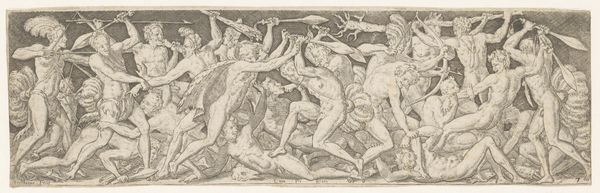
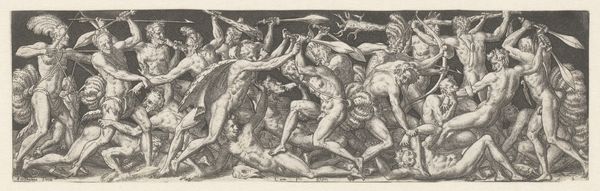
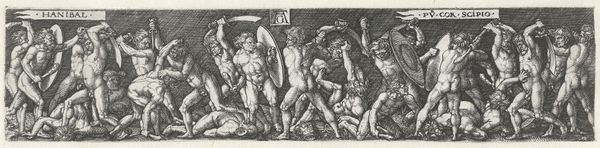
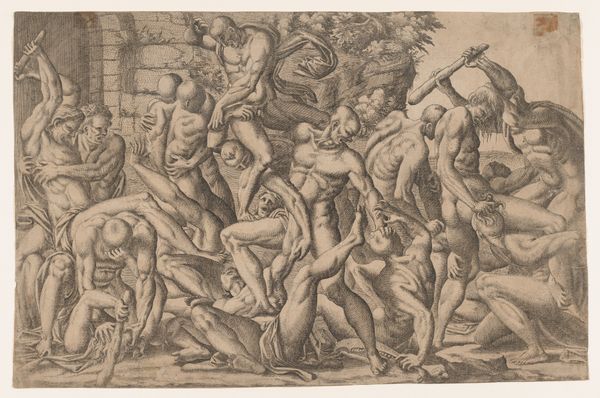
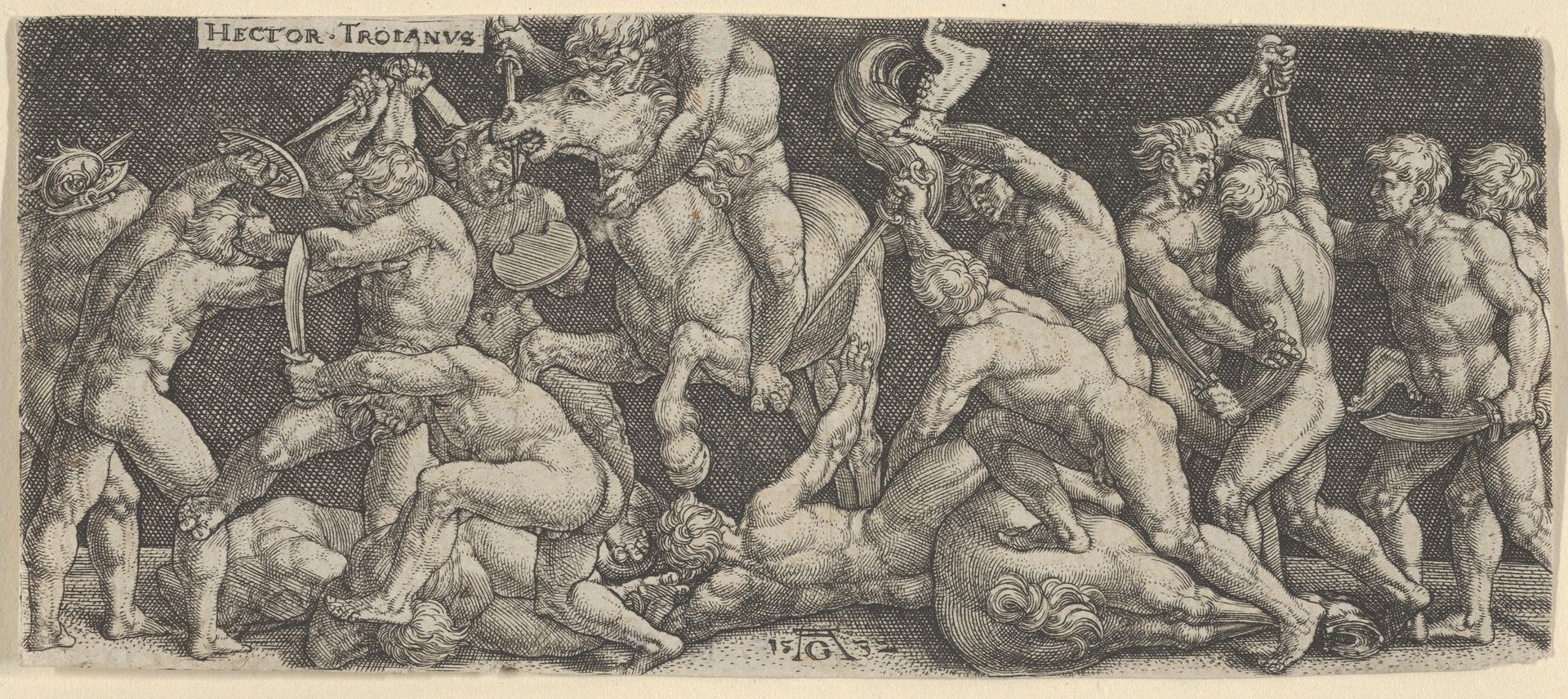
Heinrich Aldegrever crafted this engraving, “Hector Fighting the Greeks,” capturing a frenzied clash of bodies and blades. Here, the symbol of conflict is laid bare, as the figures of Hector and his adversaries become entwined in mortal struggle. Note the motif of the hero in conflict, a powerful figure amidst chaos. Such images resonate across time, from the classical friezes depicting the battles of gods and giants to the Renaissance paintings of heroic martyrdom. Think, for instance, of the Laocoön, its writhing figures expressing a profound sense of anguish and desperation. The raw energy and violence in Aldegrever's work tap into a deep, subconscious fascination with struggle and survival. The chaos in the composition, combined with the figures' heightened emotions, evokes a visceral response. The image of conflict, in this sense, is not merely a representation of historical events. Rather, it serves as a mirror reflecting our innermost fears, desires, and the eternal human struggle for dominance and recognition. It’s a symbol that continually resurfaces, transformed yet eternally potent.
Hector Fighting the Greeks 1532

Heinrich Aldegrever
1502 - 1561
The Metropolitan Museum of Art
Metropolitan Museum of Art, New York, NYArtwork details
- Medium
- drawing, print, engraving
- Dimensions
- Sheet: 2 3/16 × 5 1/16 in. (5.5 × 12.9 cm)
- Location
- Metropolitan Museum of Art, New York, NY
- Copyright
- Public Domain
Tags
action-painting
drawing
figuration
horse
history-painting
italian-renaissance
engraving
male-nude
Comments
No comments
About this artwork
Heinrich Aldegrever crafted this engraving, “Hector Fighting the Greeks,” capturing a frenzied clash of bodies and blades. Here, the symbol of conflict is laid bare, as the figures of Hector and his adversaries become entwined in mortal struggle. Note the motif of the hero in conflict, a powerful figure amidst chaos. Such images resonate across time, from the classical friezes depicting the battles of gods and giants to the Renaissance paintings of heroic martyrdom. Think, for instance, of the Laocoön, its writhing figures expressing a profound sense of anguish and desperation. The raw energy and violence in Aldegrever's work tap into a deep, subconscious fascination with struggle and survival. The chaos in the composition, combined with the figures' heightened emotions, evokes a visceral response. The image of conflict, in this sense, is not merely a representation of historical events. Rather, it serves as a mirror reflecting our innermost fears, desires, and the eternal human struggle for dominance and recognition. It’s a symbol that continually resurfaces, transformed yet eternally potent.
Comments
No comments