About this artwork
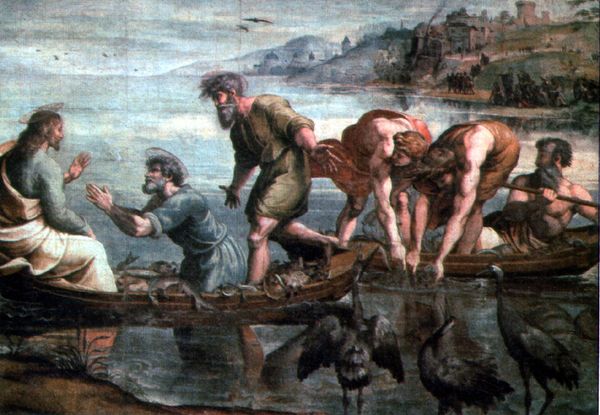
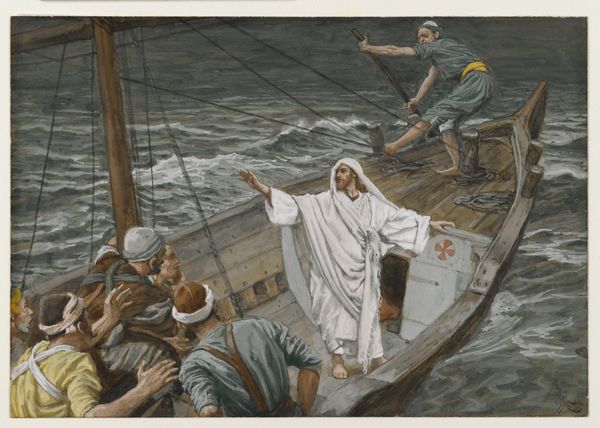
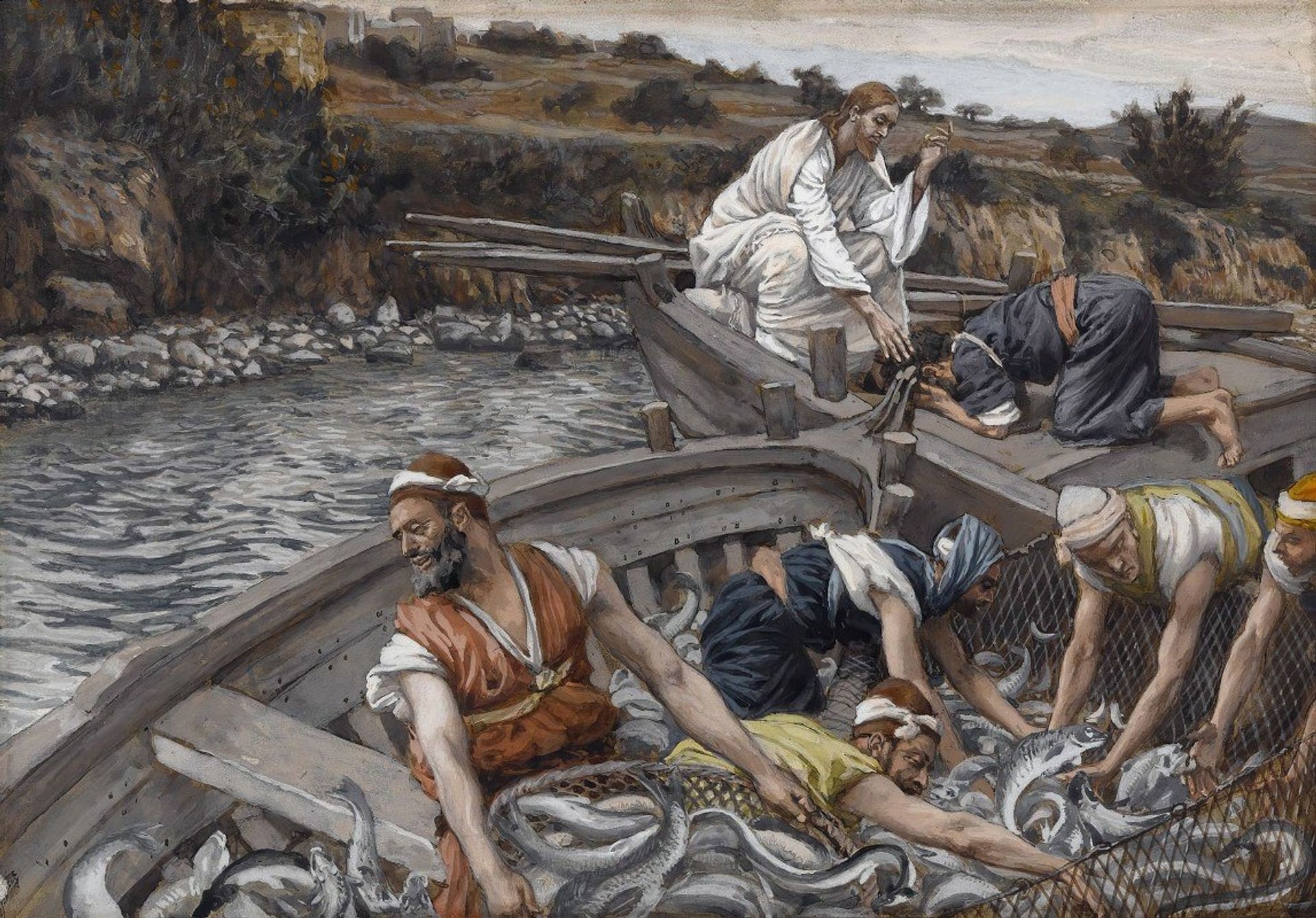
James Tissot, in his painting “The Miraculous Draught of Fishes,” invites us into a scene dominated by the physical exertion and awe of the fishermen, rendered in muted tones that emphasize their earthly existence. The boat, densely packed with figures and an overwhelming catch, creates a sense of enclosure, contrasting with the open space occupied by Jesus. Here, the composition directs our gaze from the laboring fishermen to the serene figure of Christ, set apart by his posture and attire, symbolizing a bridge between the earthly and divine. The gaze of the kneeling figure is a focal point, creating a semiotic dialogue. The tension between the tangible and the intangible serves as a structural commentary on faith, mirroring philosophical questions about belief and the miraculous. Tissot uses form to challenge fixed meanings of the spiritual, inviting ongoing interpretation.

Artwork details
- Medium
- painting, oil-paint
- Copyright
- Public Domain: Artvee
Tags
narrative-art
painting
impressionism
oil-paint
landscape
figuration
oil painting
genre-painting
Comments
Be the first to share your thoughts about this work.
About this artwork
James Tissot, in his painting “The Miraculous Draught of Fishes,” invites us into a scene dominated by the physical exertion and awe of the fishermen, rendered in muted tones that emphasize their earthly existence. The boat, densely packed with figures and an overwhelming catch, creates a sense of enclosure, contrasting with the open space occupied by Jesus. Here, the composition directs our gaze from the laboring fishermen to the serene figure of Christ, set apart by his posture and attire, symbolizing a bridge between the earthly and divine. The gaze of the kneeling figure is a focal point, creating a semiotic dialogue. The tension between the tangible and the intangible serves as a structural commentary on faith, mirroring philosophical questions about belief and the miraculous. Tissot uses form to challenge fixed meanings of the spiritual, inviting ongoing interpretation.
Comments
Be the first to share your thoughts about this work.