About this artwork
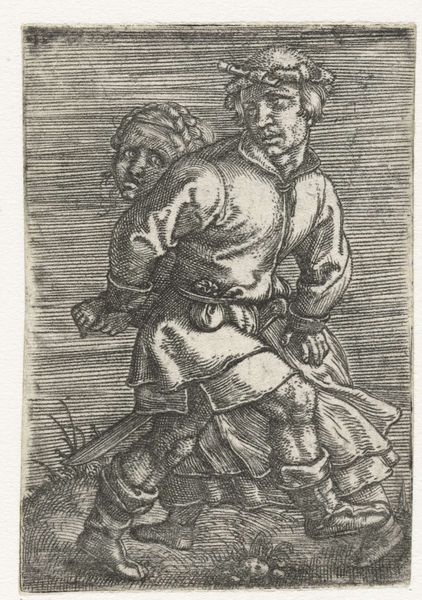
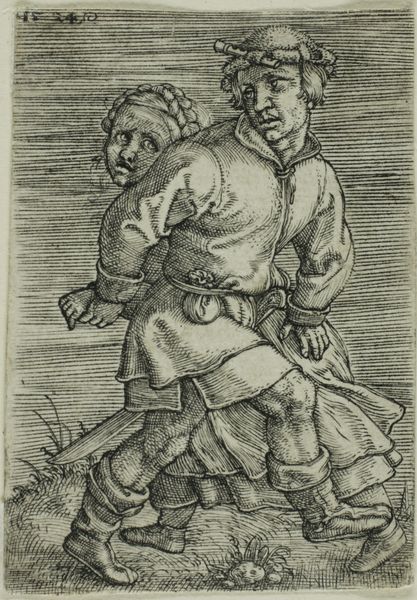
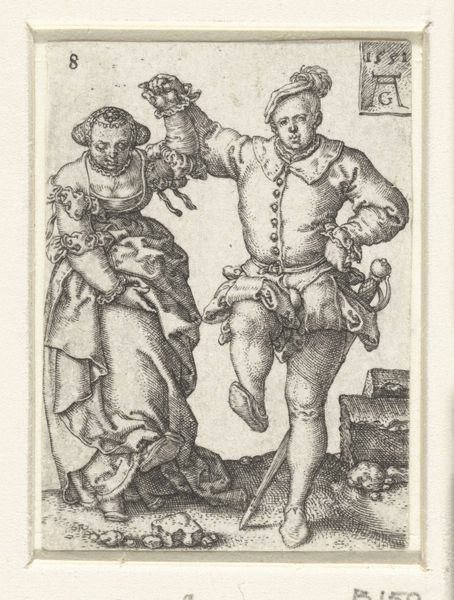
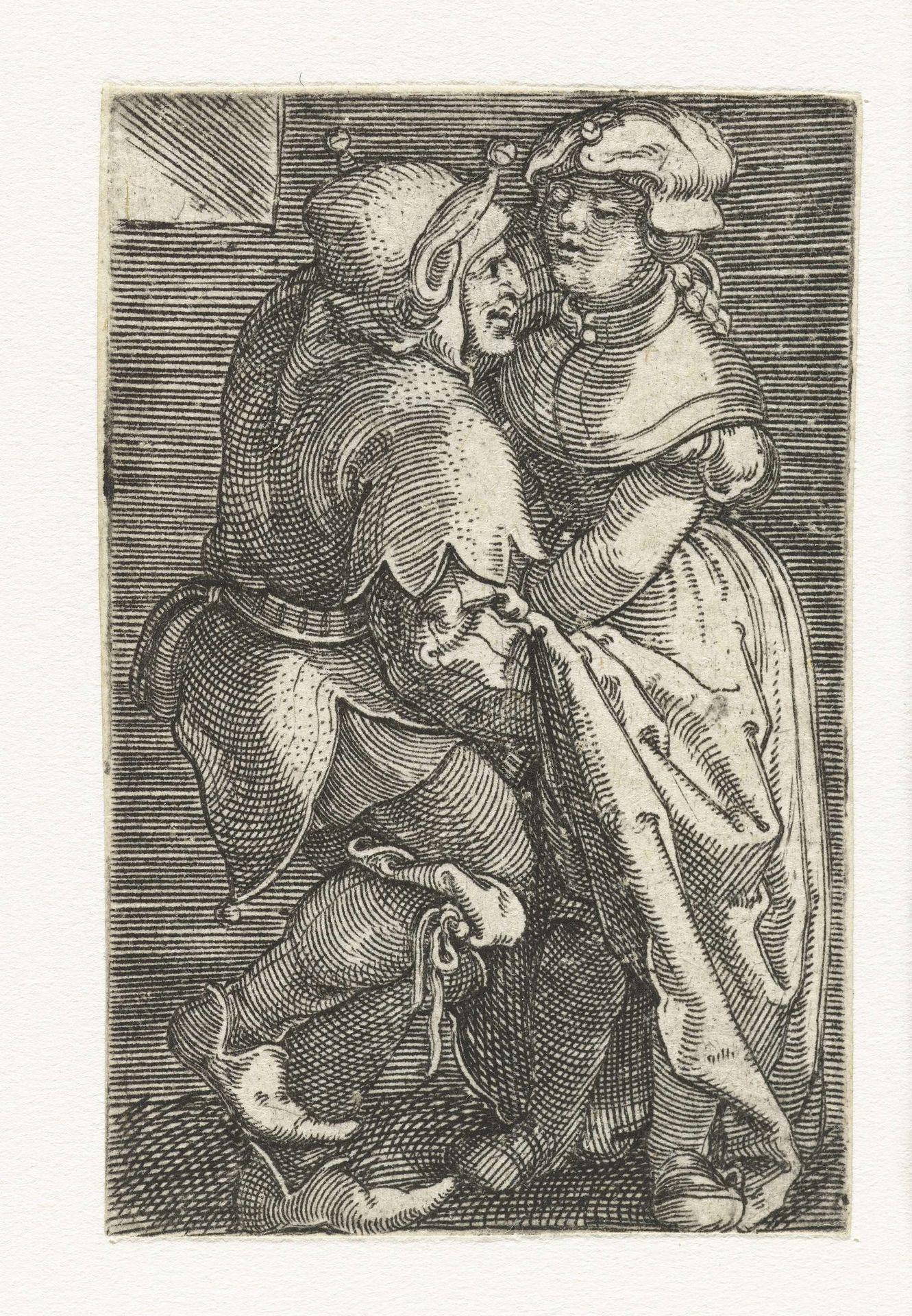
Barthel Beham created this miniature etching, Nar met hand onder rokken van meisje, likely sometime in the 1520s or 30s, during the German Renaissance. Beham was one of the Little Masters, known for their small-scale, intricate prints. This piece depicts a fool, identifiable by his jester’s hat, with his hand under a girl’s skirt. These images were common in the 16th century, reflecting societal anxieties around temptation and morality. The dynamics of power and desire are palpable in the contrast between the fool's furtive actions and the girl's demure expression. Such prints often served as warnings, but also titillated viewers. How does this image reflect the complex intersections of desire, morality, and social commentary in the Renaissance period? What does it tell us about the perception and treatment of women and the role of the fool in society?

Artwork details
- Medium
- print, engraving
- Dimensions
- height 58 mm, width 39 mm
- Copyright
- Rijks Museum: Open Domain
Tags
figuration
11_renaissance
genre-painting
northern-renaissance
engraving
Comments
No comments
About this artwork
Barthel Beham created this miniature etching, Nar met hand onder rokken van meisje, likely sometime in the 1520s or 30s, during the German Renaissance. Beham was one of the Little Masters, known for their small-scale, intricate prints. This piece depicts a fool, identifiable by his jester’s hat, with his hand under a girl’s skirt. These images were common in the 16th century, reflecting societal anxieties around temptation and morality. The dynamics of power and desire are palpable in the contrast between the fool's furtive actions and the girl's demure expression. Such prints often served as warnings, but also titillated viewers. How does this image reflect the complex intersections of desire, morality, and social commentary in the Renaissance period? What does it tell us about the perception and treatment of women and the role of the fool in society?
Comments
No comments