1752
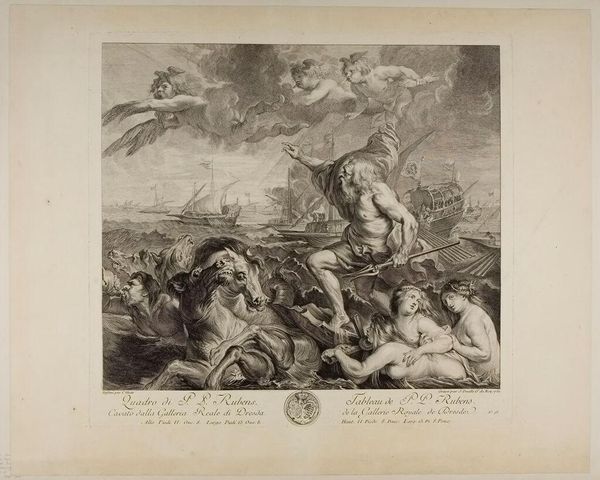
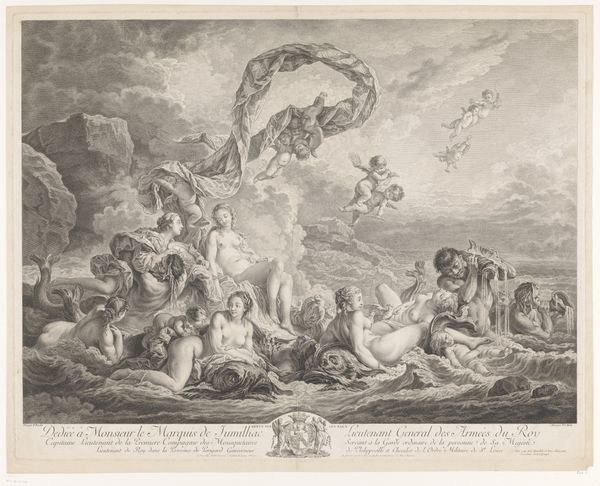
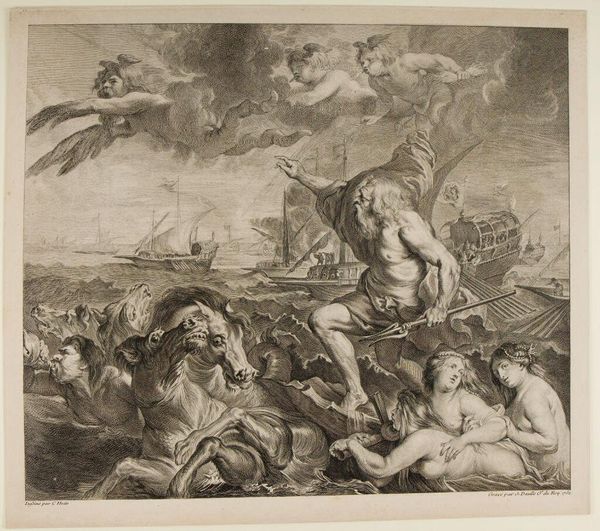
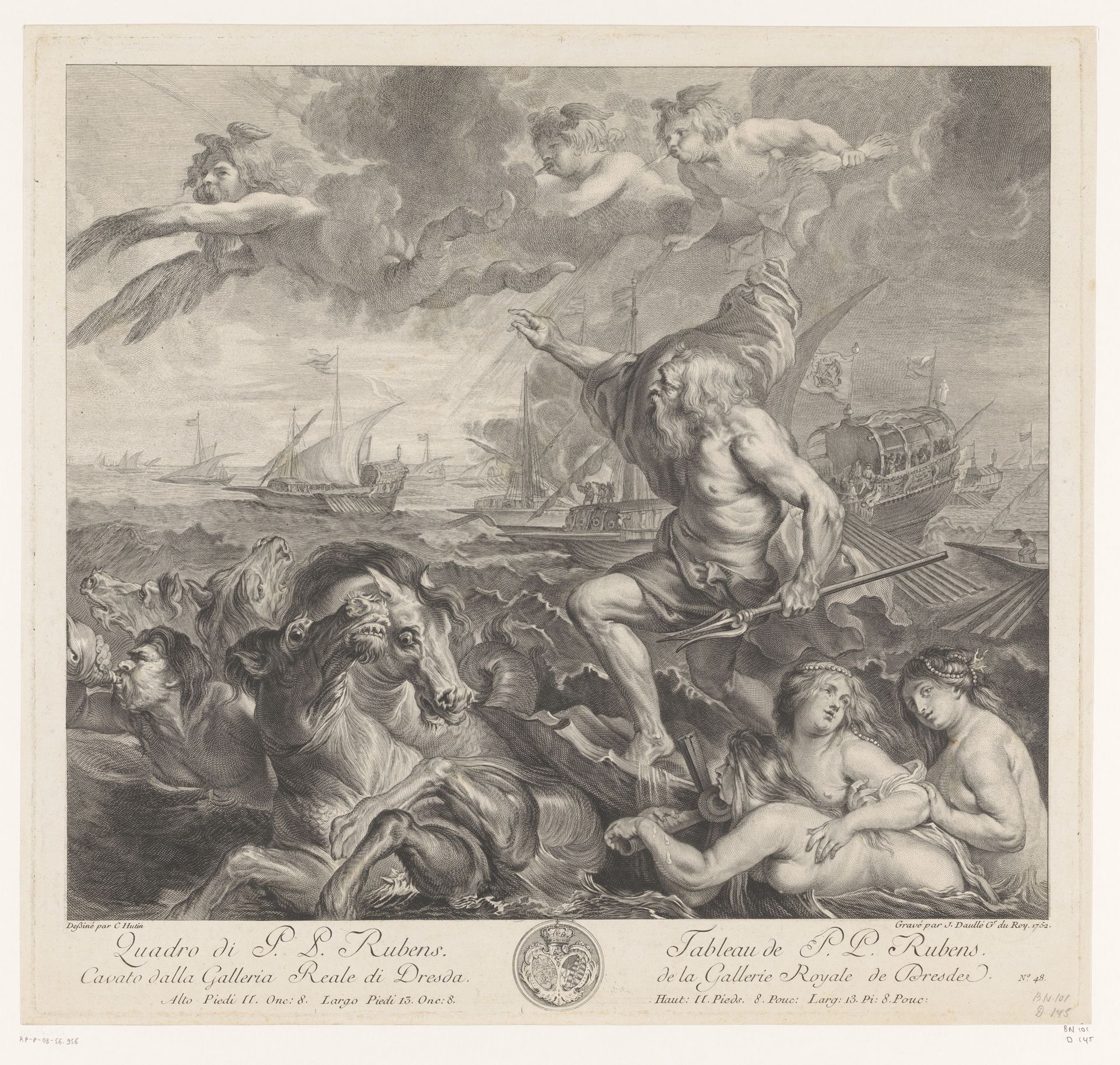
Neptunus bedaart de storm

Jean Daullé
1703 - 1763Location
RijksmuseumListen to curator's interpretation
Curatorial notes
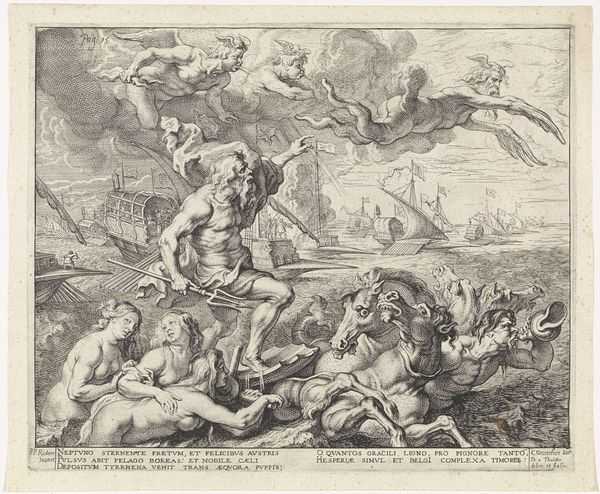
Editor: This is “Neptune Calming the Storm,” an engraving by Jean Daullé, from 1752, after Peter Paul Rubens. All these churning waves and figures create a really dynamic scene. But also…kind of a scary one? What strikes you when you look at it? Curator: "Scary" is a wonderful word to use, yes. This baroque piece seems to me a dance between chaos and order. Daullé is working with strong diagonals that pull your eyes in many directions, don't you think? Look how Neptune, with that assertive trident, brings a muscular command to what would otherwise be utter turbulence. It is as if the Old Testament and the classical world had a love child. Editor: I see that, especially the way he's positioned to dominate the composition. Are the other figures, like the cherubs at the top, also meant to calm things down? Curator: Indeed. Those cherubs offer this airy counterpoint, these little puffs of divine serenity. It's a smart strategy by Daullé, don't you agree? To use these conventional symbols—chubby cherubs, classical nudes, a god—in this theatre of roiling waves to convey an allegorical struggle. It also reminds us how engravers helped disseminate imagery of paintings. I mean, without Daullé, many more of us would never have known about Rubens' painting. Editor: That's a great point, I never thought of the dissemination aspect before. Seeing the piece deconstructed that way makes the moment of calm even more meaningful, and also emphasizes the engraver’s vital role! Thanks! Curator: My pleasure! The magic of art lies not only in the creator but the eyes that find new stories within it.