About this artwork
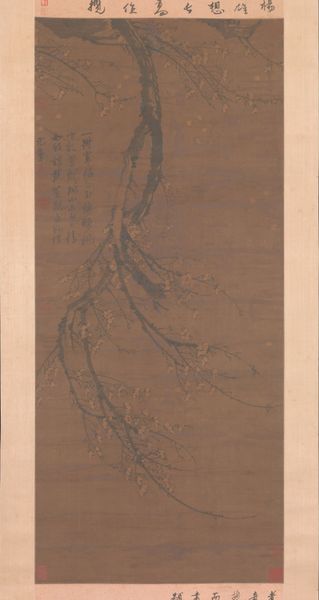
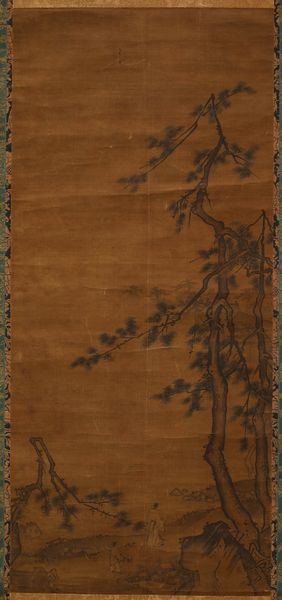
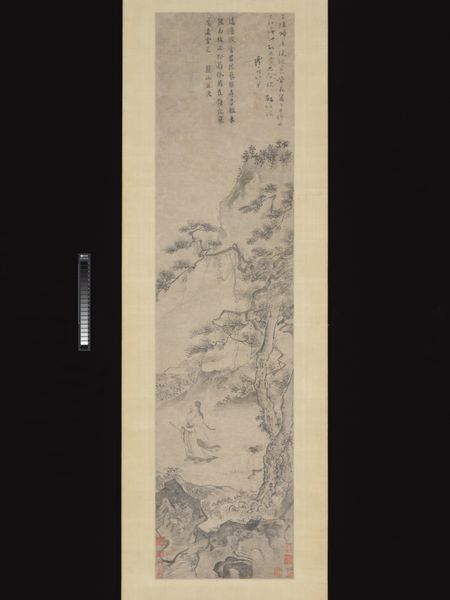
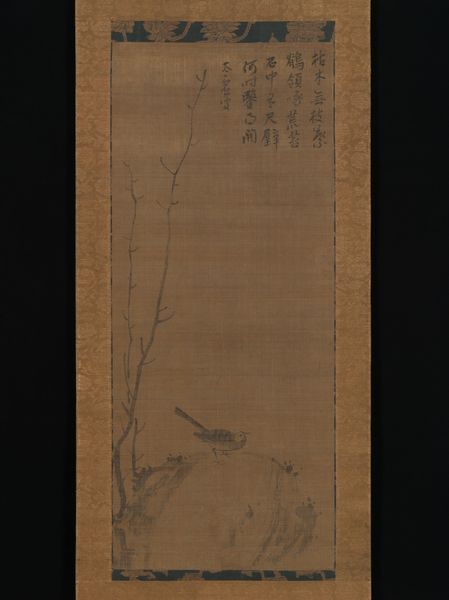
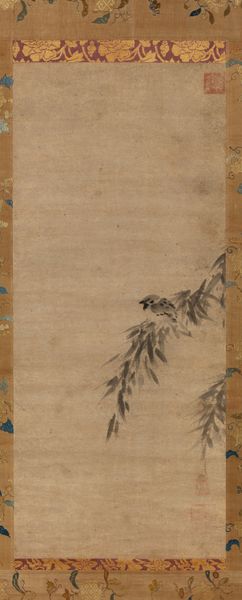
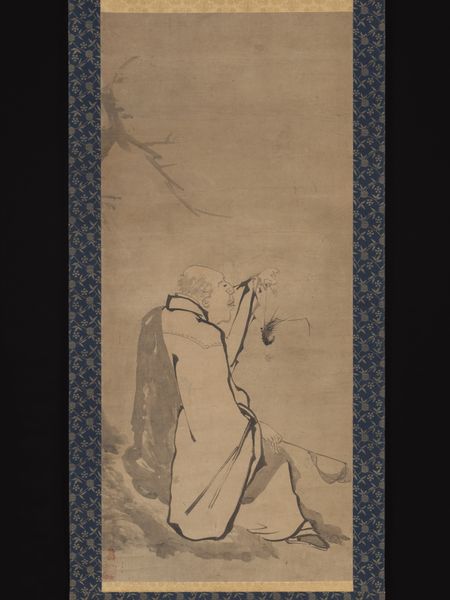
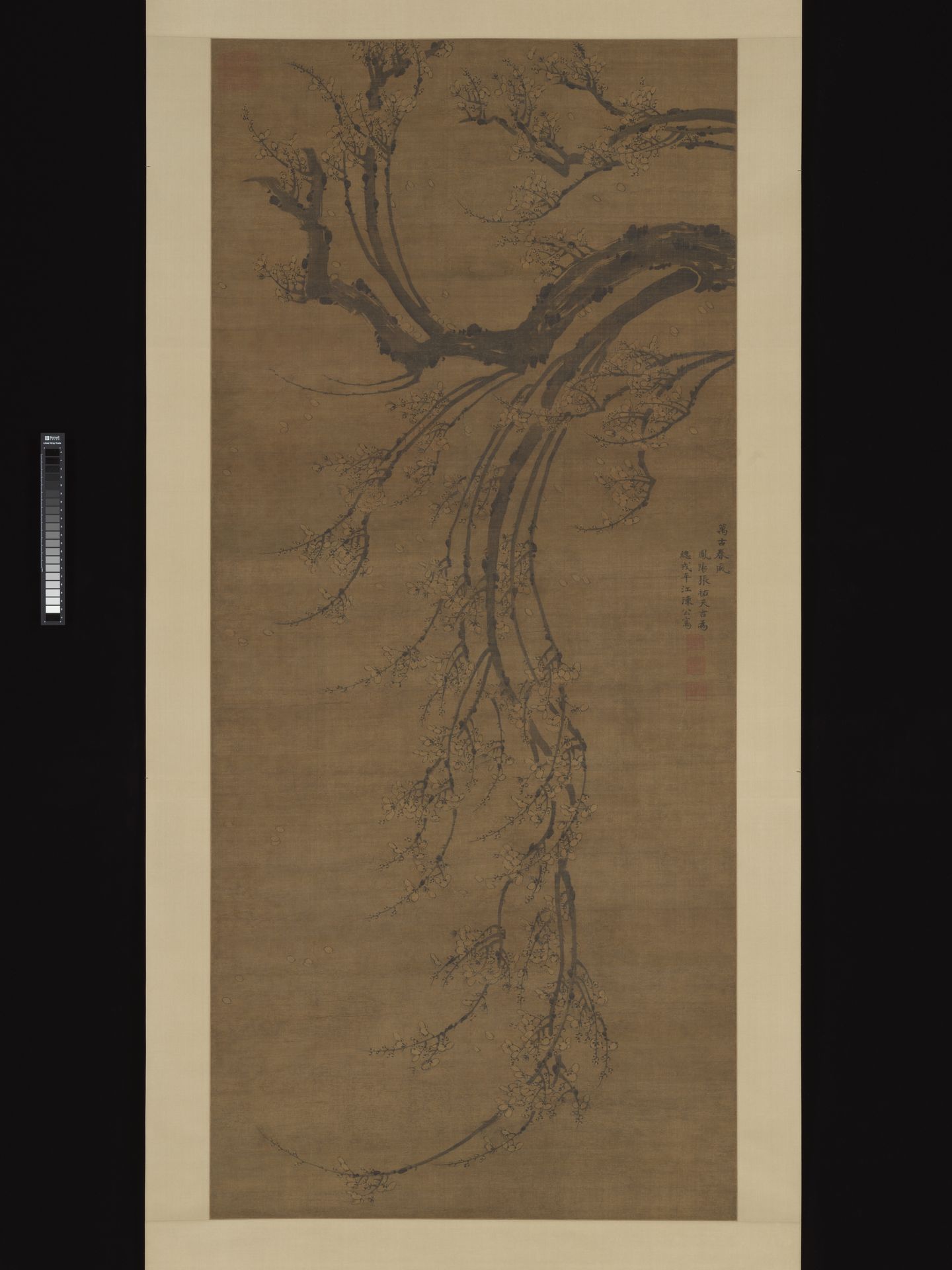
Zhang You painted “Spring Breeze of Myriad Pasts” sometime in the 15th century, using ink on silk. The silk support has a warm tone that provides a subtle contrast to the dark ink. The artist has made use of the absorbent quality of the silk. You can see that the ink bleeds slightly into the surrounding fibres, creating a soft-focus effect, particularly in the delicate plum blossoms. Close inspection reveals the controlled brushstrokes, each one requiring immense skill, precision, and a deep understanding of the materials. The creation of the silk itself would also have involved a complex division of labor. Silkworms had to be cultivated, the silk reeled, spun and woven. The final textile would have been a luxury commodity, a suitable ground for the art of painting. Thinking about the labor involved in the production of both the silk and the painting makes us appreciate the amount of skill and effort that went into this refined artwork. By considering the materiality of this scroll, we can appreciate it as more than just an image, but also as a testament to human ingenuity.
Spring Breeze of Myriad Pasts 1434 - 1466


Artwork details
- Medium
- drawing, ink
- Dimensions
- Image: 61 3/4 x 27 1/2 in. (156.8 x 69.9 cm) Overall with mounting: 102 1/4 x 34 3/4 in. (259.7 x 88.3 cm) Overall with knobs: 102 1/4 x 38 in. (259.7 x 96.5 cm)
- Location
- Metropolitan Museum of Art, New York, NY
- Copyright
- Public Domain
Tags
tree
drawing
natural stone pattern
muted colour palette
asian-art
landscape
22_ming-dynasty-1368-1644
ink
earthy tone
abstraction
china
line
Comments
No comments
About this artwork
Zhang You painted “Spring Breeze of Myriad Pasts” sometime in the 15th century, using ink on silk. The silk support has a warm tone that provides a subtle contrast to the dark ink. The artist has made use of the absorbent quality of the silk. You can see that the ink bleeds slightly into the surrounding fibres, creating a soft-focus effect, particularly in the delicate plum blossoms. Close inspection reveals the controlled brushstrokes, each one requiring immense skill, precision, and a deep understanding of the materials. The creation of the silk itself would also have involved a complex division of labor. Silkworms had to be cultivated, the silk reeled, spun and woven. The final textile would have been a luxury commodity, a suitable ground for the art of painting. Thinking about the labor involved in the production of both the silk and the painting makes us appreciate the amount of skill and effort that went into this refined artwork. By considering the materiality of this scroll, we can appreciate it as more than just an image, but also as a testament to human ingenuity.
Comments
No comments