1967
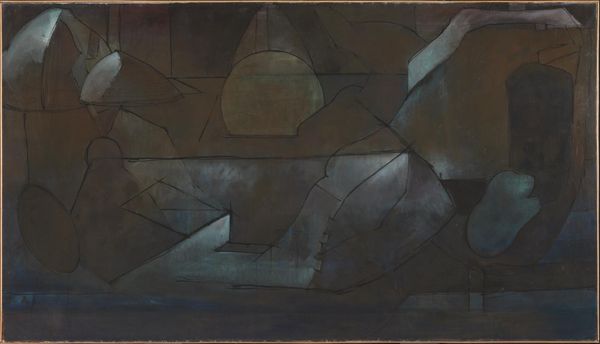
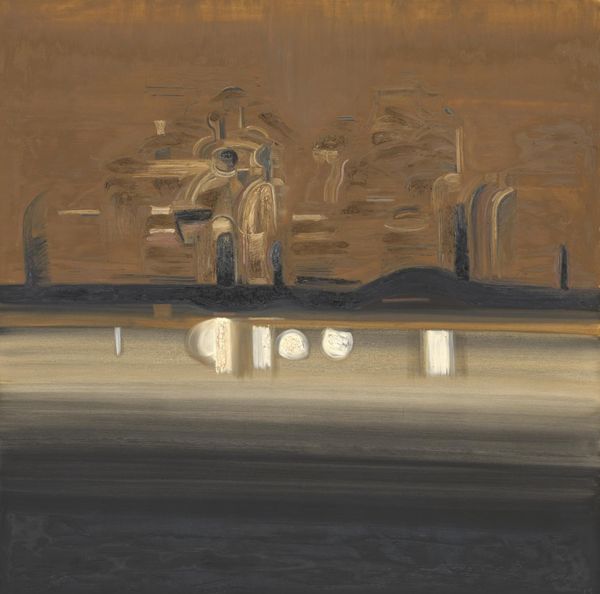
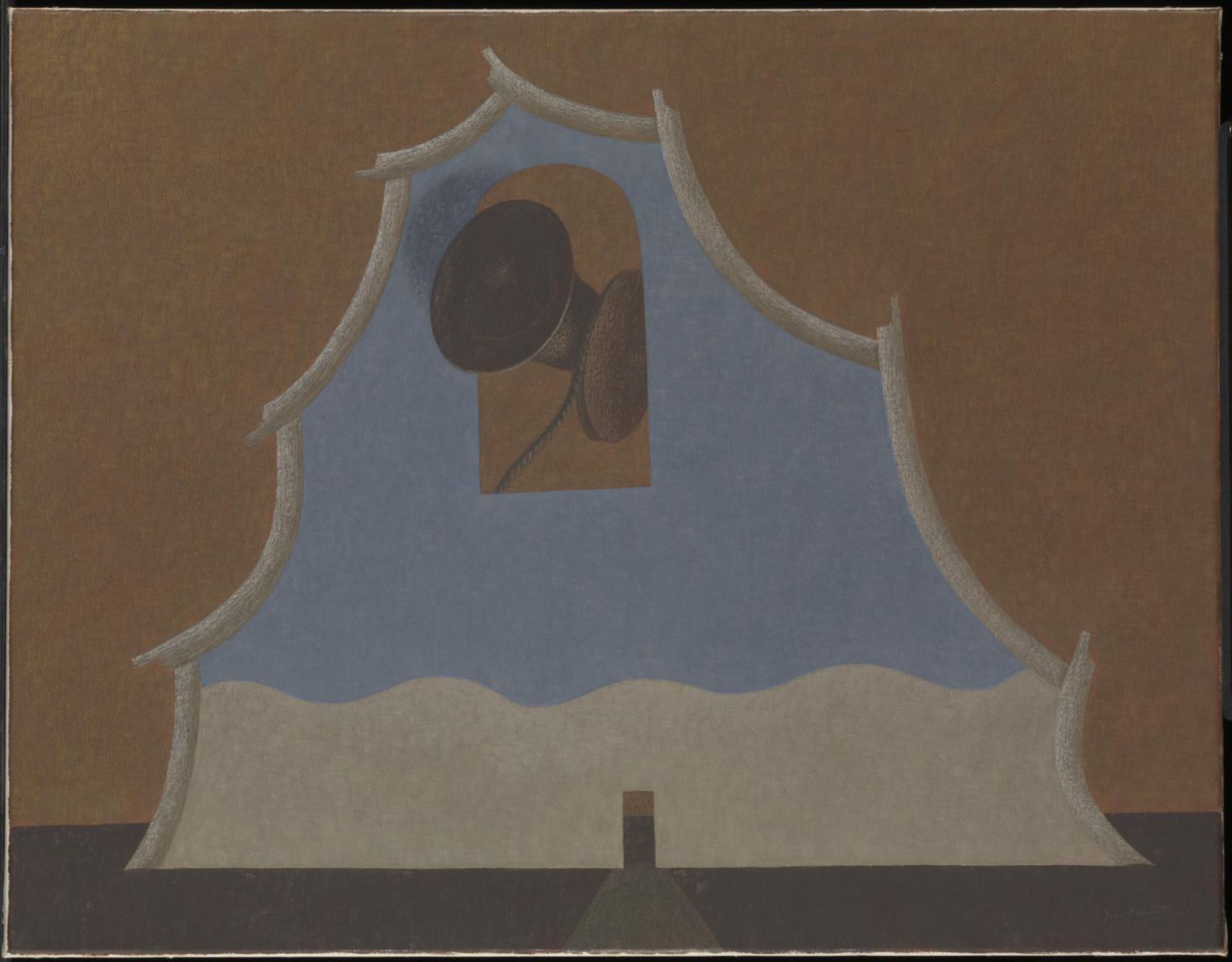
Tocsin III

Listen to curator's interpretation
Curatorial notes
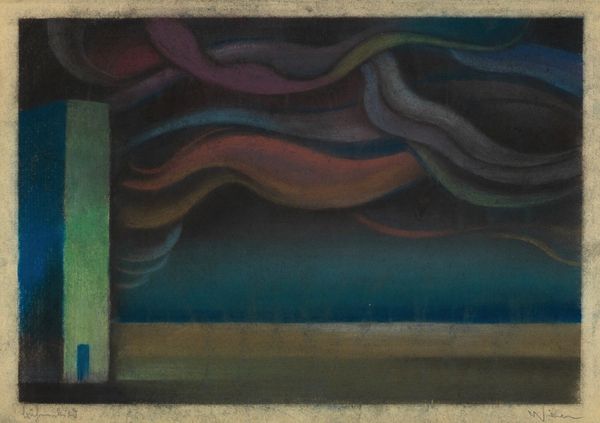
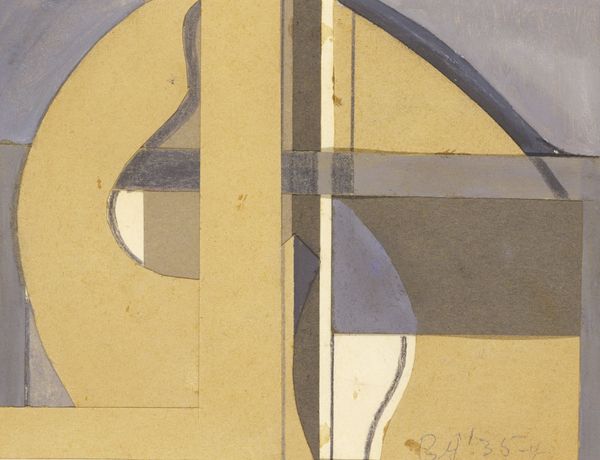
Editor: So, this is John Armstrong's 'Tocsin III' from the Tate Collections, date unknown. It's quite striking. There's a sense of both unease and stillness. What do you see in this piece? Curator: Armstrong painted this in the 1930s, a period riddled with anxiety and dread leading up to World War II. The tocsin, a warning bell, speaks volumes about the looming fear of conflict and societal upheaval. How might the abstract composition further amplify this sense of disquiet? Editor: I see that. The bell is isolated, almost floating. The colors, while muted, feel ominous rather than calming. It's a warning, visually represented. Curator: Exactly. And considering the rise of fascism and the precarity of peace, Armstrong's work becomes a potent symbol of a society on edge. It really makes you think about art's role as a reflection of, and a warning against, the darker aspects of our history. Editor: Definitely food for thought! Thanks for opening my eyes to that.