About this artwork
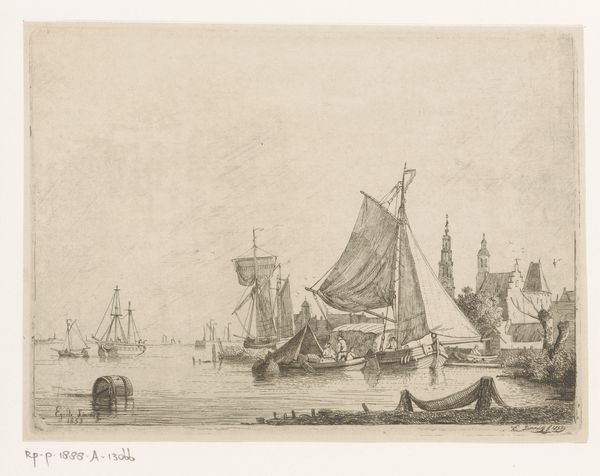
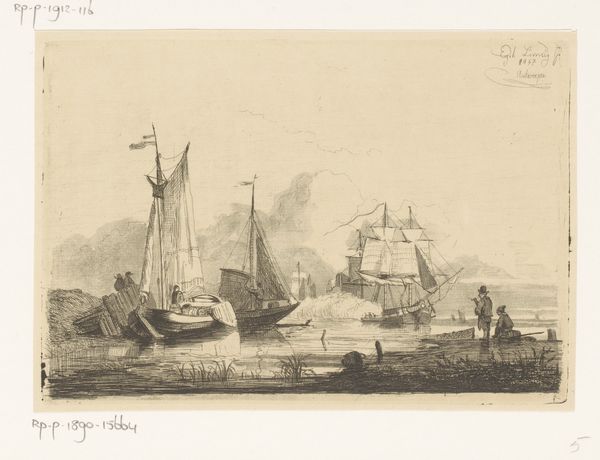
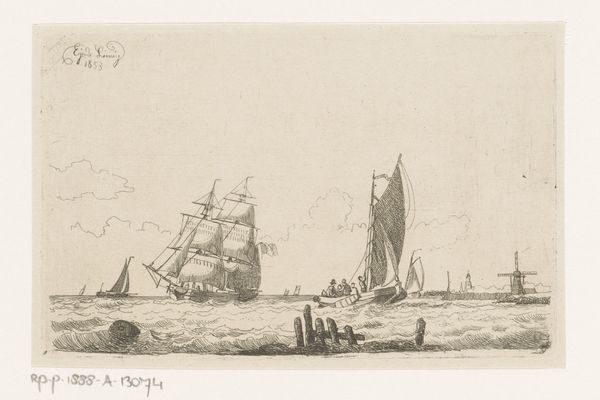
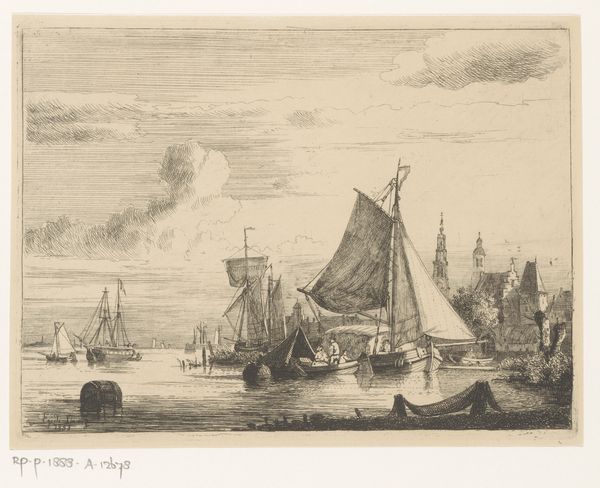
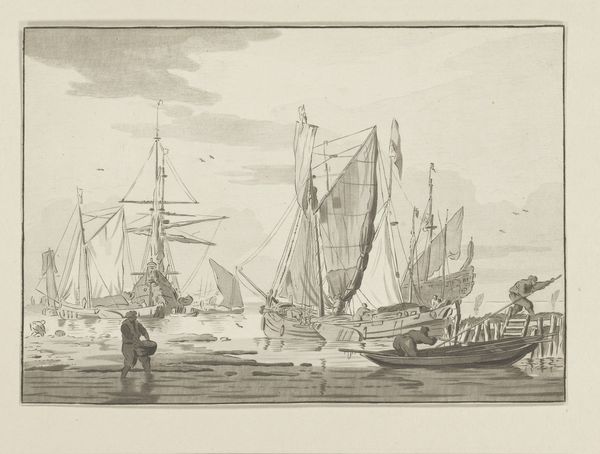
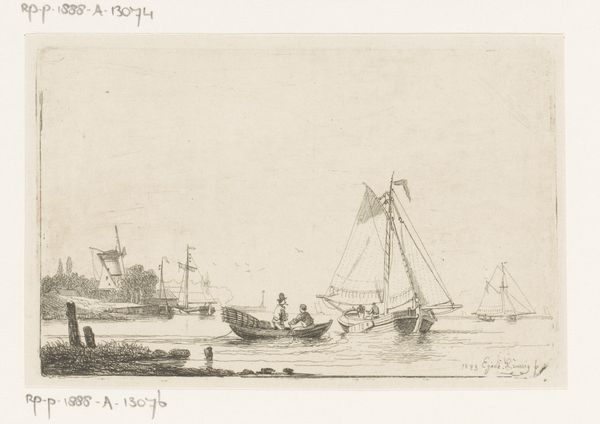
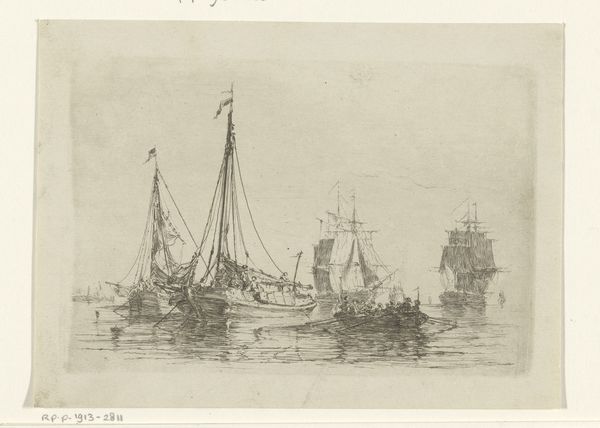
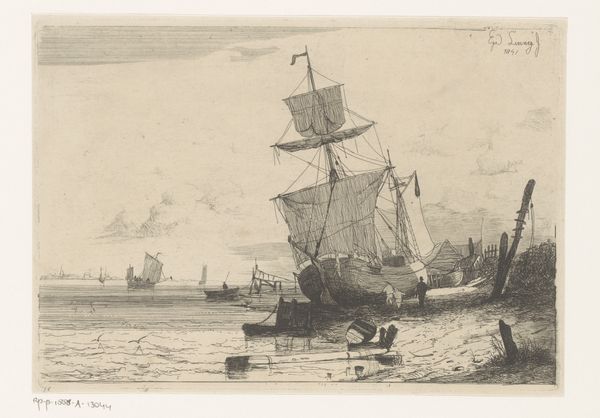
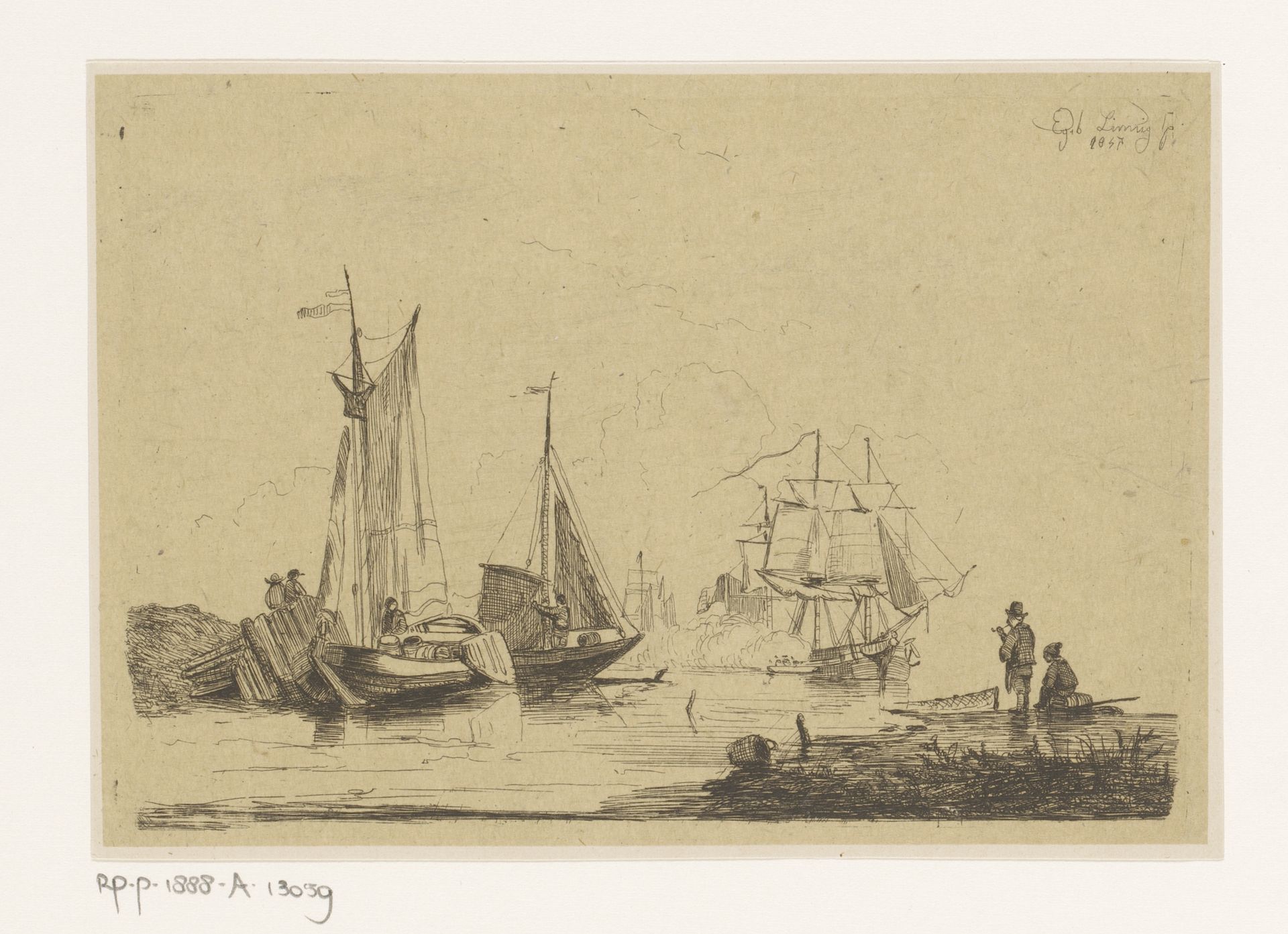
Egidius Linnig made this print of the ‘Saluutschoten bij het uitzeilen van de driemaster Macassar’ using etching. The print shows a three-masted ship sailing, likely from a Dutch port, and firing a salute, a naval tradition to show respect or signal departure. Shipping was a crucial part of Dutch economic and social life, connecting it to its colonies in the East. This print participates in a visual culture that celebrated Dutch mercantile power, but it was also made at a time when that power was being questioned. The etching technique itself, with its precise lines and ability to create multiple impressions, reflects the values of efficiency and reproducibility central to industrializing societies. To understand Linnig’s image more fully, we can look to historical records, trade statistics, and accounts of Dutch maritime culture. In doing so, we can better understand how images shape, and are shaped by, the social and institutional contexts in which they are created and viewed.
Saluutschoten bij het uitzeilen van de driemaster Macassar
1847

Egidius Linnig
1821 - 1860Location
RijksmuseumArtwork details
- Medium
- print, etching
- Dimensions
- height 123 mm, width 178 mm
- Location
- Rijksmuseum
- Copyright
- Rijks Museum: Open Domain
Tags
Comments
Share your thoughts
About this artwork
Egidius Linnig made this print of the ‘Saluutschoten bij het uitzeilen van de driemaster Macassar’ using etching. The print shows a three-masted ship sailing, likely from a Dutch port, and firing a salute, a naval tradition to show respect or signal departure. Shipping was a crucial part of Dutch economic and social life, connecting it to its colonies in the East. This print participates in a visual culture that celebrated Dutch mercantile power, but it was also made at a time when that power was being questioned. The etching technique itself, with its precise lines and ability to create multiple impressions, reflects the values of efficiency and reproducibility central to industrializing societies. To understand Linnig’s image more fully, we can look to historical records, trade statistics, and accounts of Dutch maritime culture. In doing so, we can better understand how images shape, and are shaped by, the social and institutional contexts in which they are created and viewed.
Comments
Share your thoughts