About this artwork
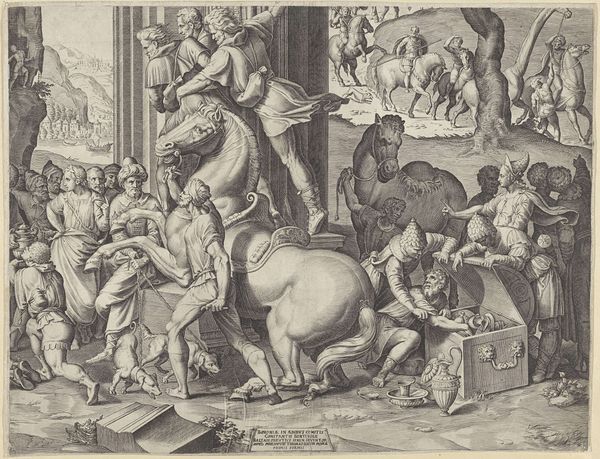
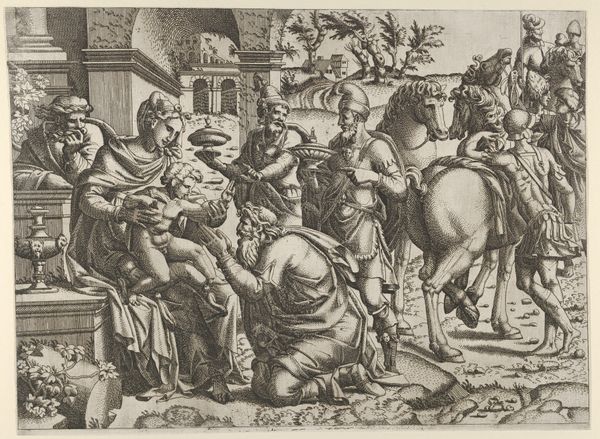
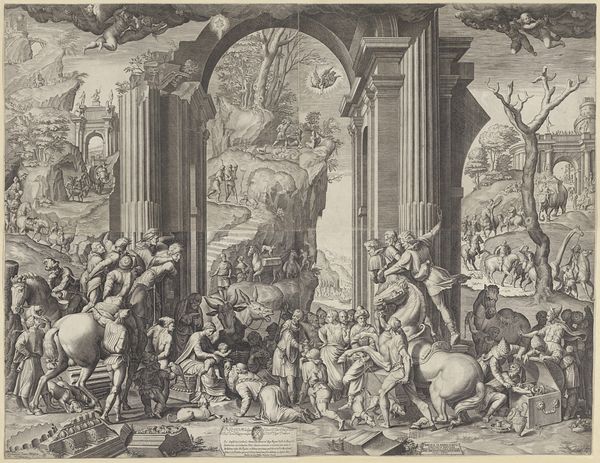
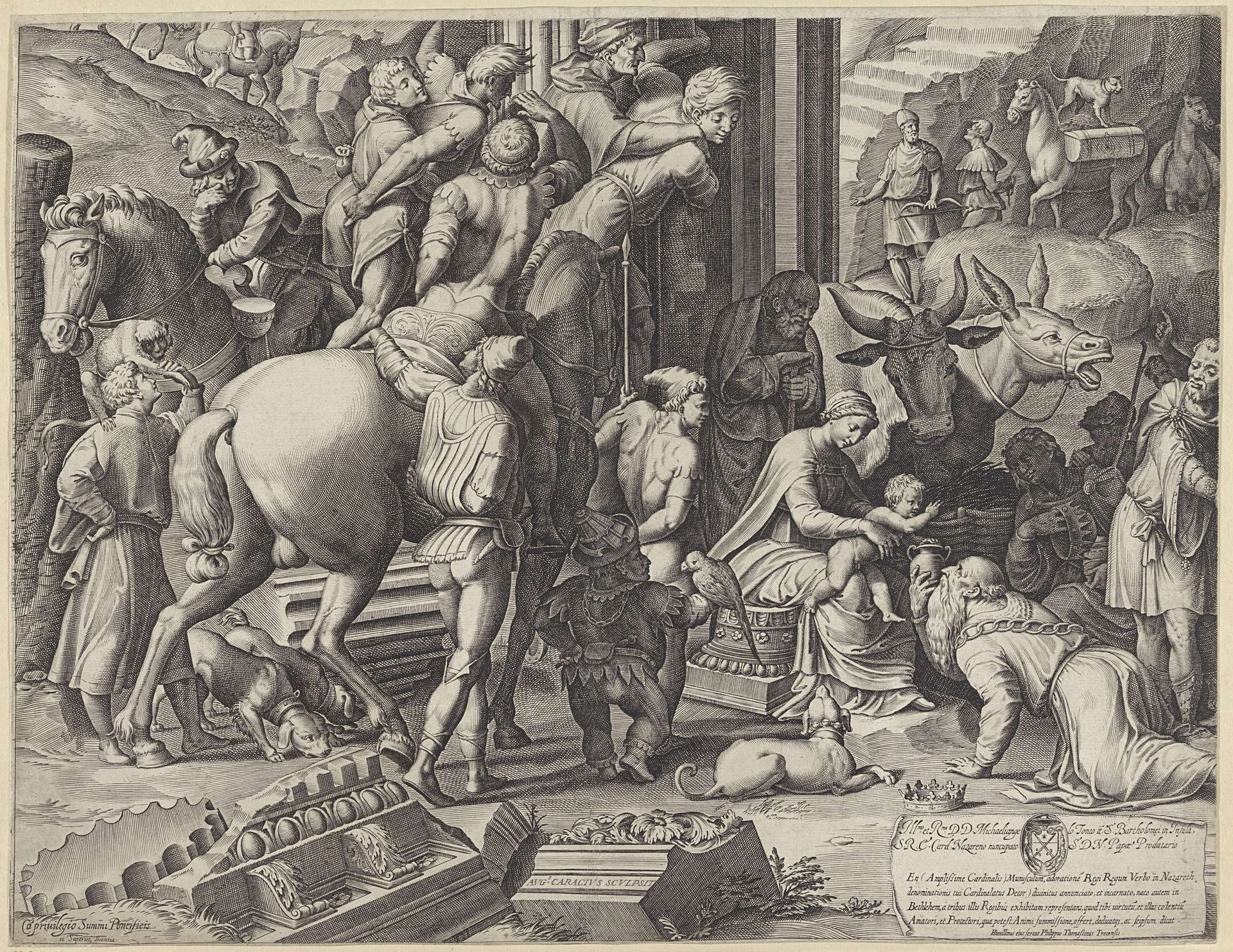
Agostino Carracci etched this segment of "Adoration of the Kings" where symbolic gestures speak volumes. Note the kneeling king, his crown cast aside, a posture echoing supplication seen across cultures, from ancient Roman genuflection to Eastern prostration. This act transcends mere reverence; it embodies the humbling recognition of divine authority, an emotional surrender as potent today as it was centuries ago. Consider, too, the animals present: the ox and ass are not merely barnyard creatures; they are symbols of the old order acknowledging the new dawn. Such motifs are not static; their meanings evolve, influenced by collective memory and the subconscious. These visual cues recur throughout art history, each iteration subtly shifting under the weight of cultural context, yet forever tethered to the primal human need to express awe before the sacred. The power of this image lies in its ability to tap into this deep, shared well of human experience, resonating across time.
Aanbidding door de koningen (deel linksonder)
1567 - 1602

Agostino Carracci
1557 - 1602Location
RijksmuseumArtwork details
- Medium
- print, engraving
- Dimensions
- height 397 mm, width 514 mm
- Location
- Rijksmuseum
- Copyright
- Rijks Museum: Open Domain
Tags
Comments
Share your thoughts
About this artwork
Agostino Carracci etched this segment of "Adoration of the Kings" where symbolic gestures speak volumes. Note the kneeling king, his crown cast aside, a posture echoing supplication seen across cultures, from ancient Roman genuflection to Eastern prostration. This act transcends mere reverence; it embodies the humbling recognition of divine authority, an emotional surrender as potent today as it was centuries ago. Consider, too, the animals present: the ox and ass are not merely barnyard creatures; they are symbols of the old order acknowledging the new dawn. Such motifs are not static; their meanings evolve, influenced by collective memory and the subconscious. These visual cues recur throughout art history, each iteration subtly shifting under the weight of cultural context, yet forever tethered to the primal human need to express awe before the sacred. The power of this image lies in its ability to tap into this deep, shared well of human experience, resonating across time.
Comments
Share your thoughts