About this artwork
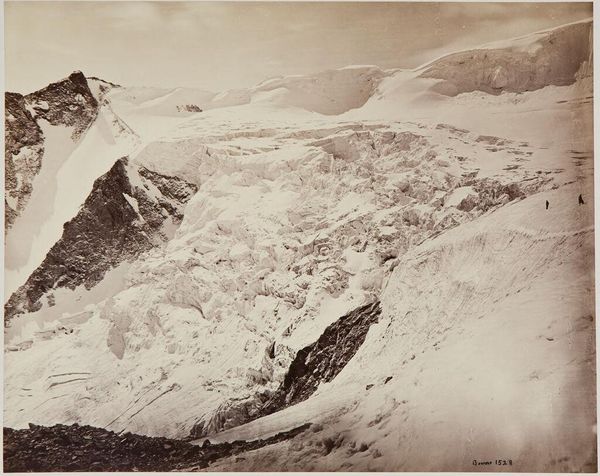
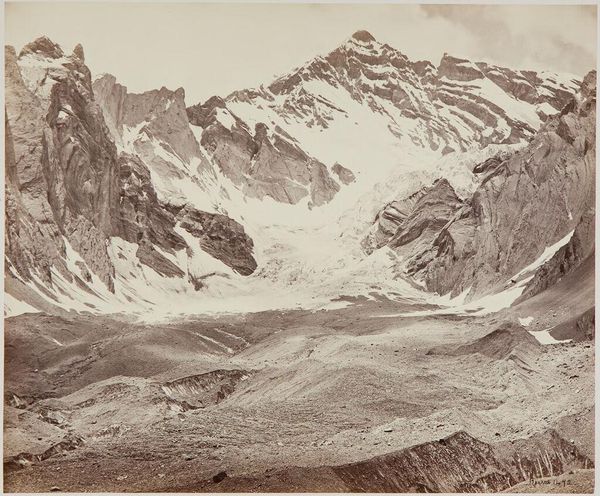
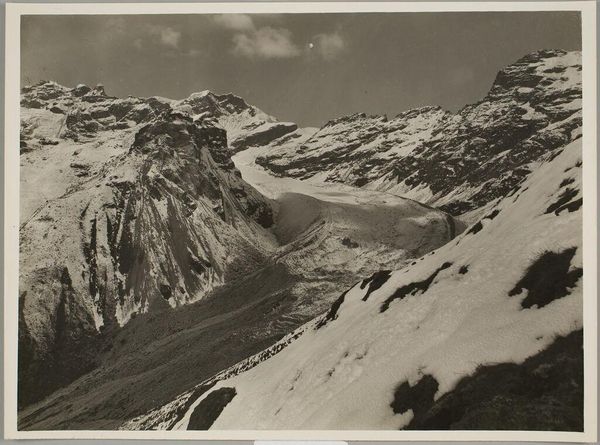
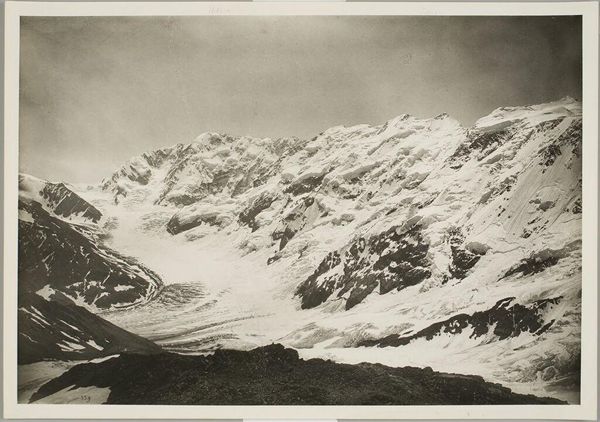
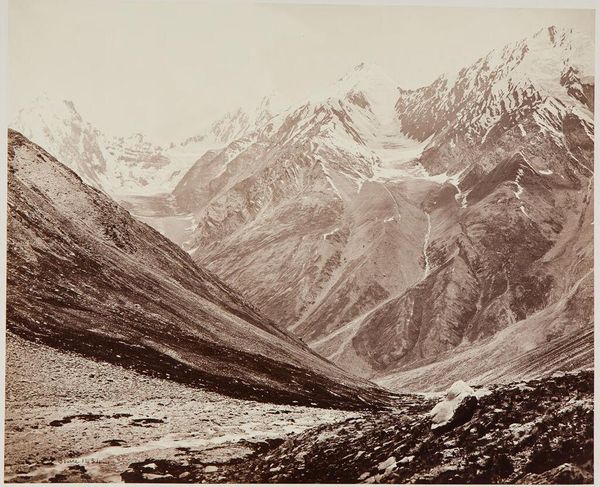
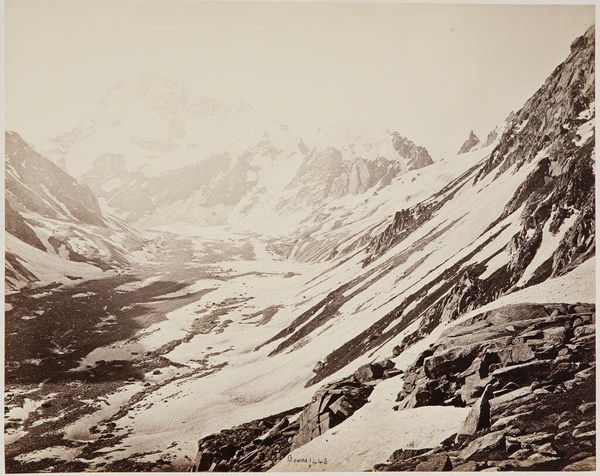
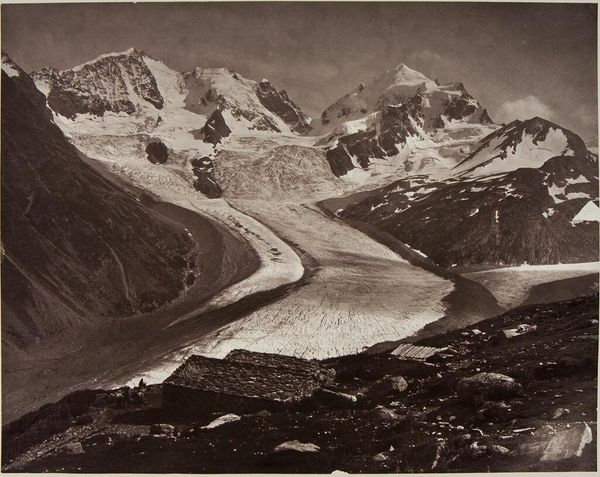
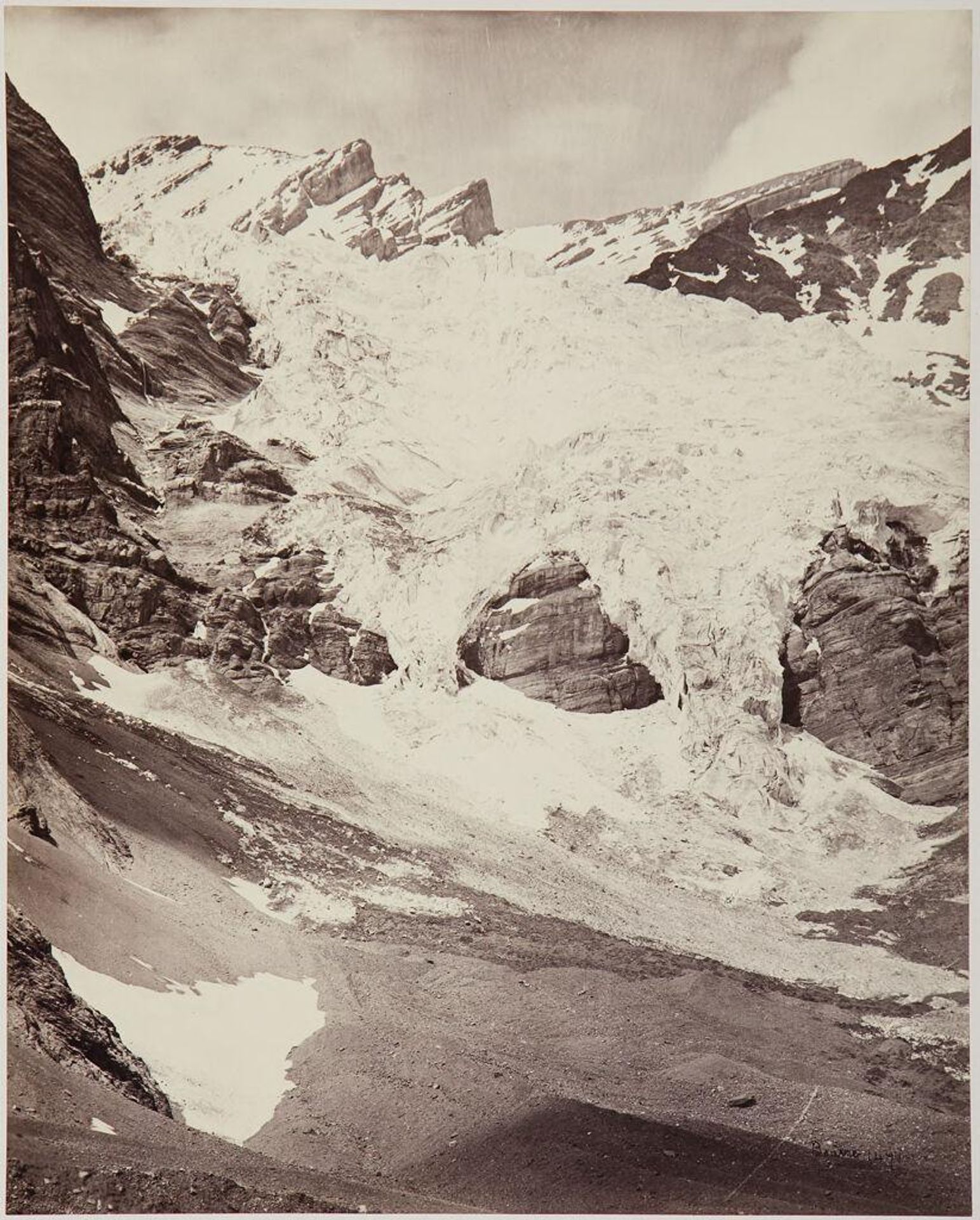
Editor: Here we have Samuel Bourne's photograph, "Kulu, Spiti; Glacier, Below the Manirung Pass." The sepia tones and vastness of the landscape give it such a timeless quality. What strikes you most about this image? Curator: Bourne's work highlights the 19th-century Western fascination with the 'untouched' landscape, often tied to colonial expansion and scientific exploration. Consider how photography like this shaped perceptions of the Himalayas, both fueling romantic ideals and serving as documentation for imperial projects. How does that context inform your reading of the image? Editor: It adds a layer of complexity, knowing it's not just a neutral depiction of nature. It makes me question the photographer's role and the intended audience. Curator: Exactly. Thinking about its display in galleries or scientific societies of the time helps us understand its original cultural impact. Editor: I see the politics of imagery so clearly now. Thanks! Curator: Indeed, a landscape isn't just a landscape; it's a statement.
Kulu, Spiti; Glacier, Below the Manirung Pass
c. 1867


Artwork details
- Dimensions
- image: 29.3 x 23.6 cm (11 9/16 x 9 5/16 in.) mount: 55.8 x 45.8 cm (21 15/16 x 18 1/16 in.)
- Location
- Harvard Art Museums
- Copyright
- CC0 1.0
Comments
Share your thoughts
About this artwork
Editor: Here we have Samuel Bourne's photograph, "Kulu, Spiti; Glacier, Below the Manirung Pass." The sepia tones and vastness of the landscape give it such a timeless quality. What strikes you most about this image? Curator: Bourne's work highlights the 19th-century Western fascination with the 'untouched' landscape, often tied to colonial expansion and scientific exploration. Consider how photography like this shaped perceptions of the Himalayas, both fueling romantic ideals and serving as documentation for imperial projects. How does that context inform your reading of the image? Editor: It adds a layer of complexity, knowing it's not just a neutral depiction of nature. It makes me question the photographer's role and the intended audience. Curator: Exactly. Thinking about its display in galleries or scientific societies of the time helps us understand its original cultural impact. Editor: I see the politics of imagery so clearly now. Thanks! Curator: Indeed, a landscape isn't just a landscape; it's a statement.
Comments
Share your thoughts