Possibly 1796
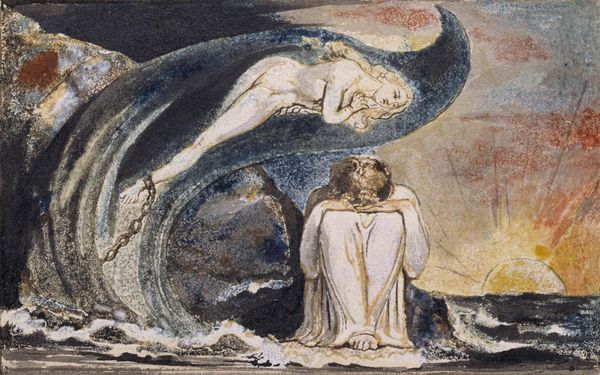
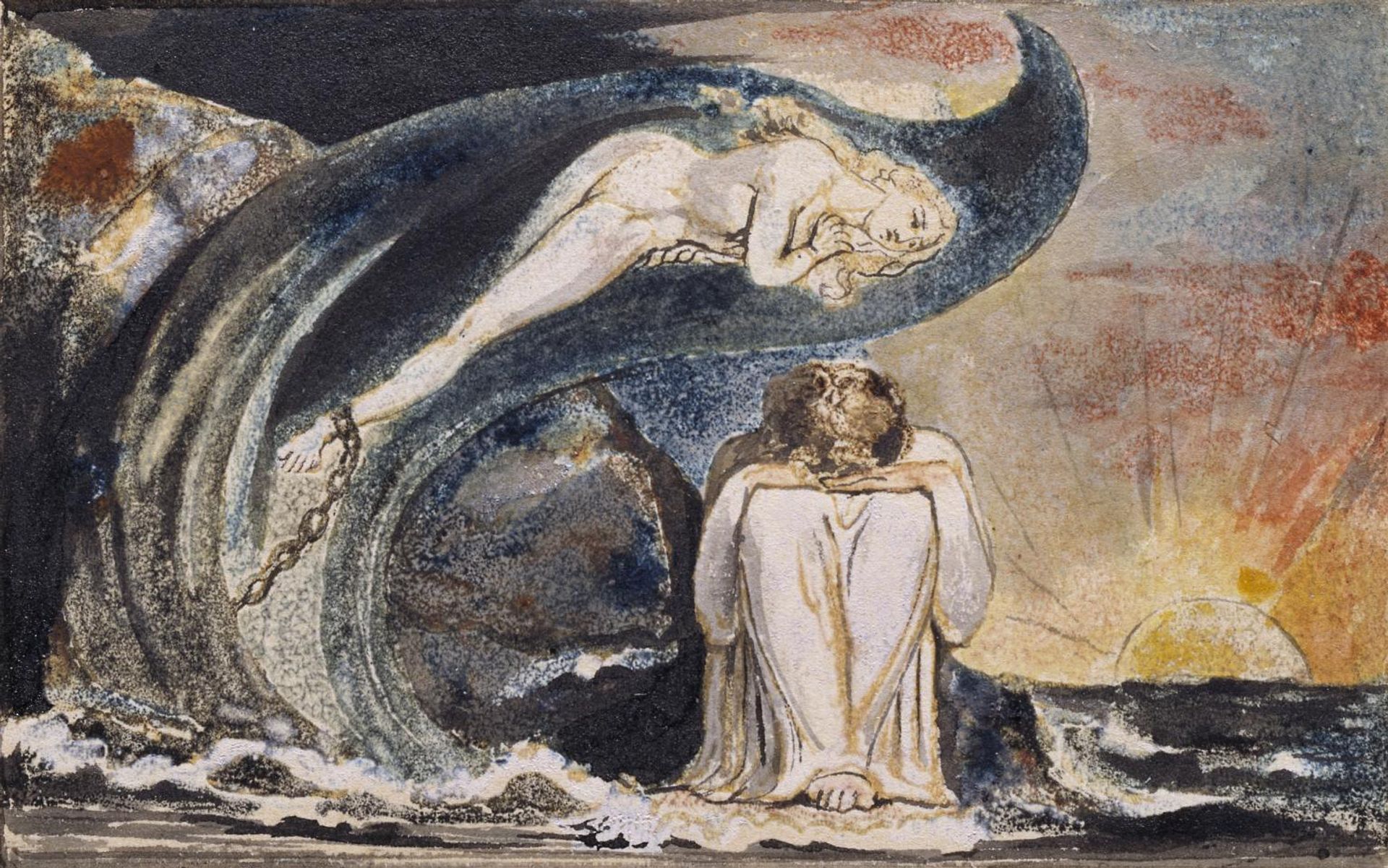
Plate 2 of ‘Urizen’: ‘Teach these Souls to Fly’


Listen to curator's interpretation
Curatorial notes
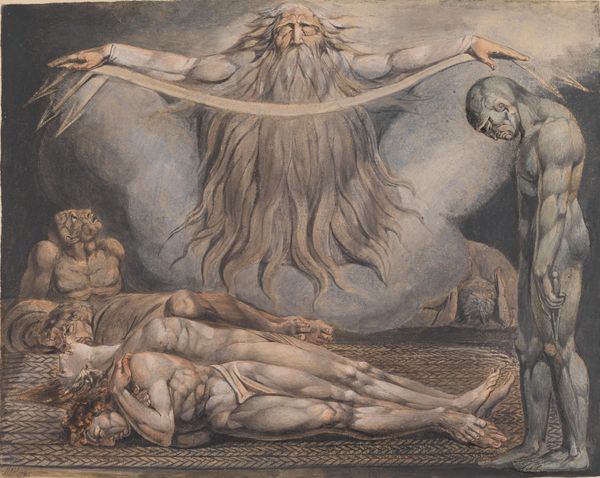
Editor: Here we see William Blake's "Plate 2 of 'Urizen': 'Teach these Souls to Fly'" from around 1794. The watercolour feels so turbulent. What do you make of it? Curator: Blake was deeply critical of the Enlightenment's emphasis on reason, seeing it as a form of oppression. Notice the chained figure, seemingly weighed down, contrasting with the floating figure. Could this be Blake’s commentary on the chains of societal expectations? Editor: So, the figures represent a struggle between reason and, perhaps, imagination? Curator: Precisely. Blake used his art to challenge dominant ideologies and advocate for individual liberation. The chains bind not just the body, but the mind. The floating figure gestures towards a potential for freedom. Editor: It's amazing how relevant Blake's critiques still feel today. Thanks for sharing your insights! Curator: My pleasure. It's crucial to understand art in the context of power and resistance.