About this artwork
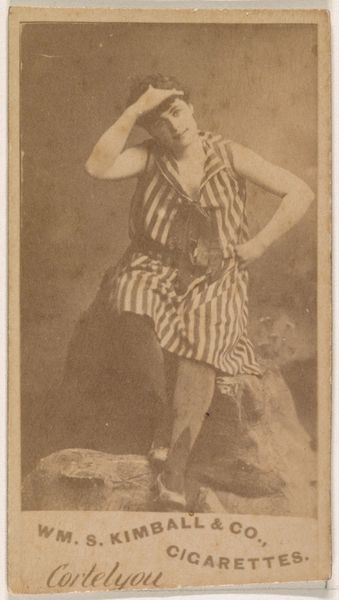
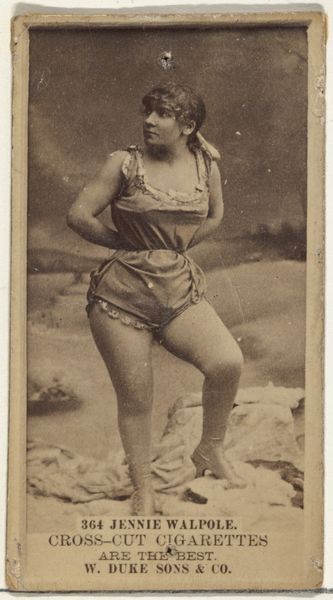
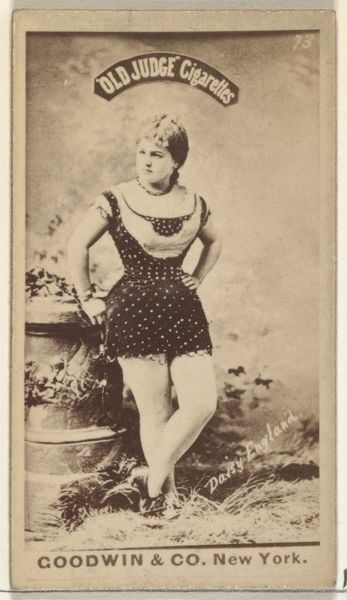
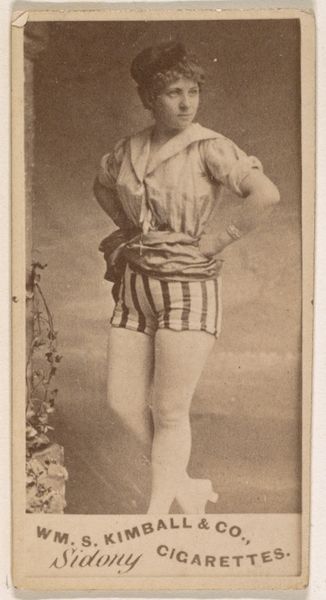
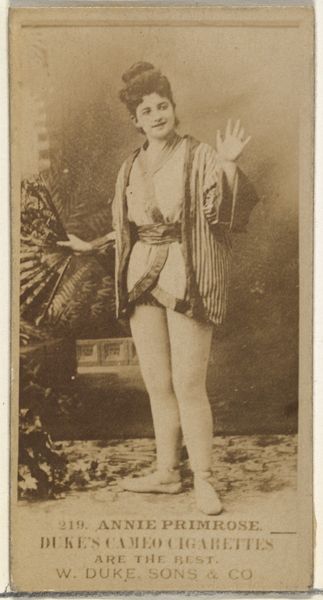
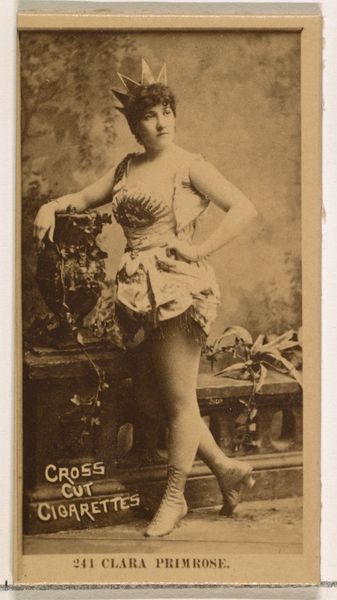
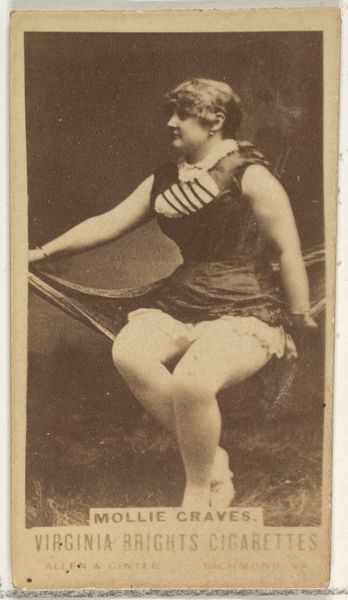
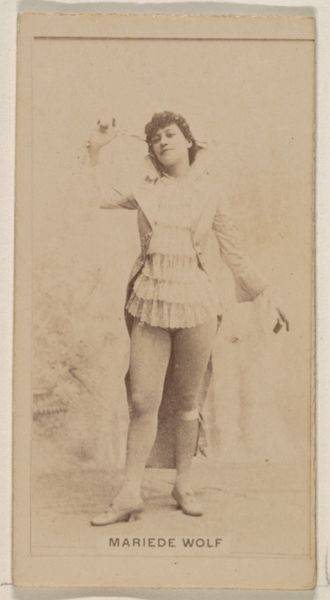
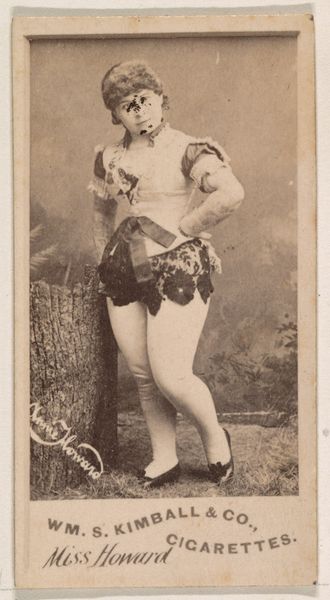
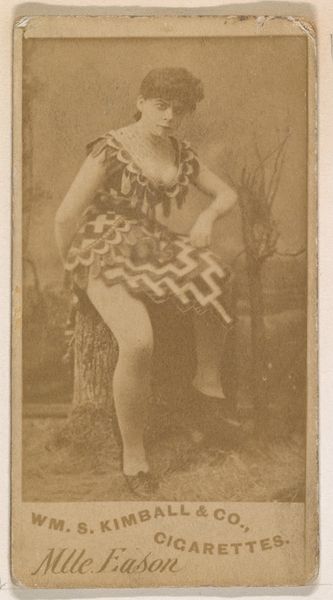
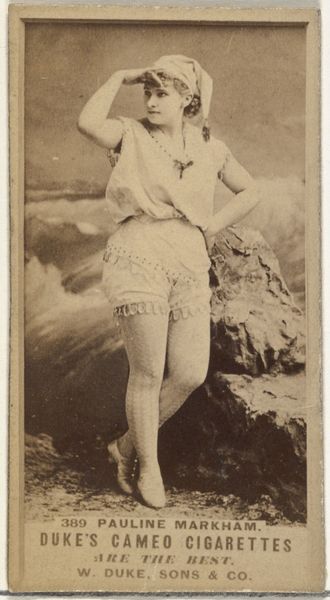
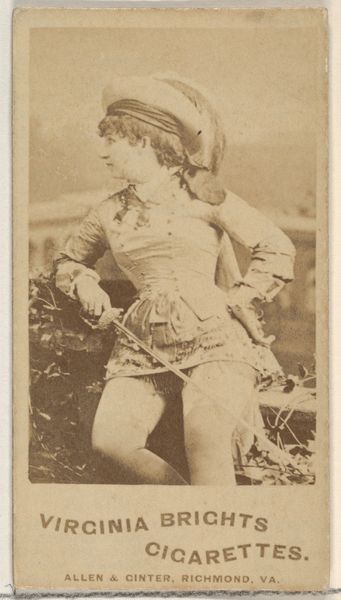
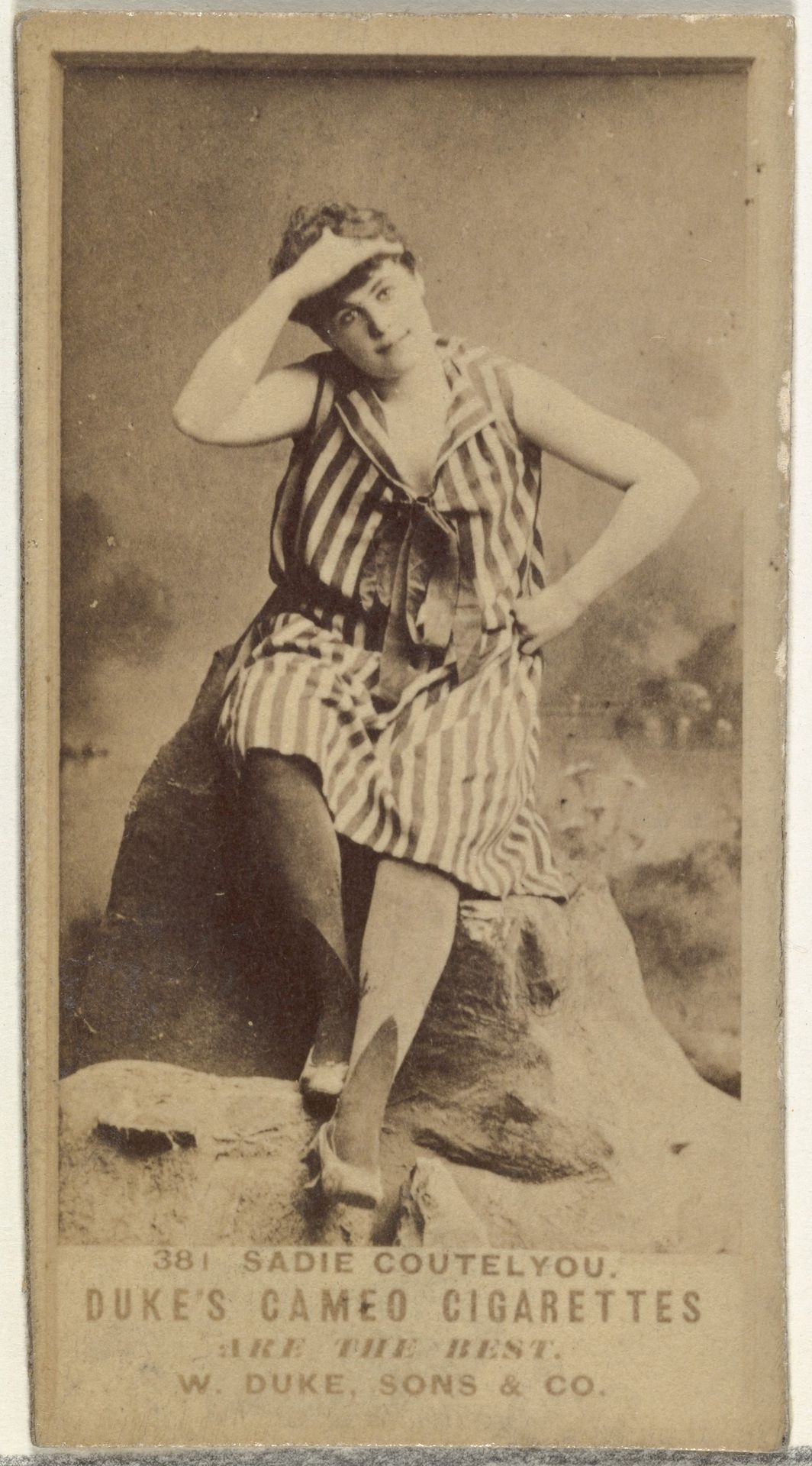
Editor: So, this is a print from the 1880s titled "Card Number 381, Sadie Coutelyou," part of the "Actors and Actresses" series, issued by Duke Sons & Co. It's actually an advertisement for cigarettes. The figure of the actress is very interesting - very poised and confident! I am wondering though, what might be going on beyond the surface of this commercial image? Curator: It's fascinating how consumer culture used these cards to disseminate imagery, isn’t it? Cigarette cards featuring actresses reveal much about the commodification of female performers and their role in shaping societal ideals of beauty and success. W. Duke, Sons & Co. leveraged popular figures like Sadie Coutelyou to connect with a broader audience, making smoking synonymous with sophistication and allure. Editor: So, this wasn't just about selling cigarettes; it was about selling an image, an aspiration. Were these images seen as promoting women in some way? Curator: In some ways, yes, though indirectly. These images gave actresses public recognition. Yet, the cards themselves were essentially vehicles for capitalist agendas. Consider the implications: their likeness becomes a readily available commodity. It raises critical questions about female representation and the economic structures influencing artistic production and reception during this period. What do you think is the key takeaway from this? Editor: I think it is that everyday commercial items can give scholars such insights into what a society valued at a particular time. Thanks! Curator: Indeed, and how those values are constructed and disseminated. A deeper understanding helps contextualize contemporary image politics.
Card Number 381, Sadie Coutelyou, from the Actors and Actresses series (N145-5) issued by Duke Sons & Co. to promote Cameo Cigarettes
1880s

W. Duke, Sons & Co.
1870 - 1920
The Metropolitan Museum of Art
Metropolitan Museum of Art, New York, NYArtwork details
- Medium
- drawing, print, c-print, photography
- Dimensions
- Sheet: 2 11/16 × 1 3/8 in. (6.8 × 3.5 cm)
- Location
- Metropolitan Museum of Art, New York, NY
- Copyright
- Public Domain
Tags
Comments
Share your thoughts
About this artwork
Editor: So, this is a print from the 1880s titled "Card Number 381, Sadie Coutelyou," part of the "Actors and Actresses" series, issued by Duke Sons & Co. It's actually an advertisement for cigarettes. The figure of the actress is very interesting - very poised and confident! I am wondering though, what might be going on beyond the surface of this commercial image? Curator: It's fascinating how consumer culture used these cards to disseminate imagery, isn’t it? Cigarette cards featuring actresses reveal much about the commodification of female performers and their role in shaping societal ideals of beauty and success. W. Duke, Sons & Co. leveraged popular figures like Sadie Coutelyou to connect with a broader audience, making smoking synonymous with sophistication and allure. Editor: So, this wasn't just about selling cigarettes; it was about selling an image, an aspiration. Were these images seen as promoting women in some way? Curator: In some ways, yes, though indirectly. These images gave actresses public recognition. Yet, the cards themselves were essentially vehicles for capitalist agendas. Consider the implications: their likeness becomes a readily available commodity. It raises critical questions about female representation and the economic structures influencing artistic production and reception during this period. What do you think is the key takeaway from this? Editor: I think it is that everyday commercial items can give scholars such insights into what a society valued at a particular time. Thanks! Curator: Indeed, and how those values are constructed and disseminated. A deeper understanding helps contextualize contemporary image politics.
Comments
Share your thoughts