About this artwork
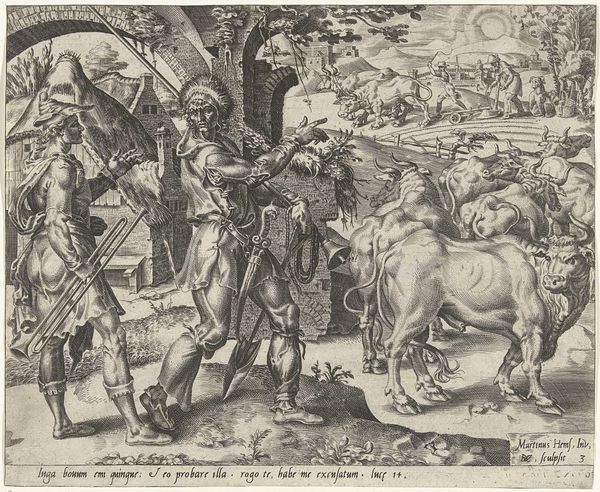
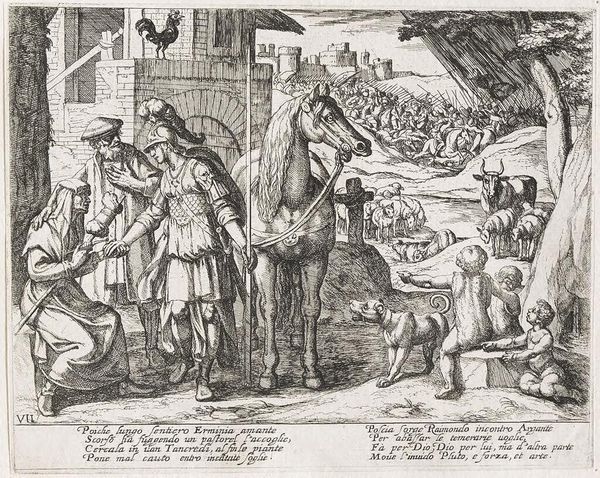
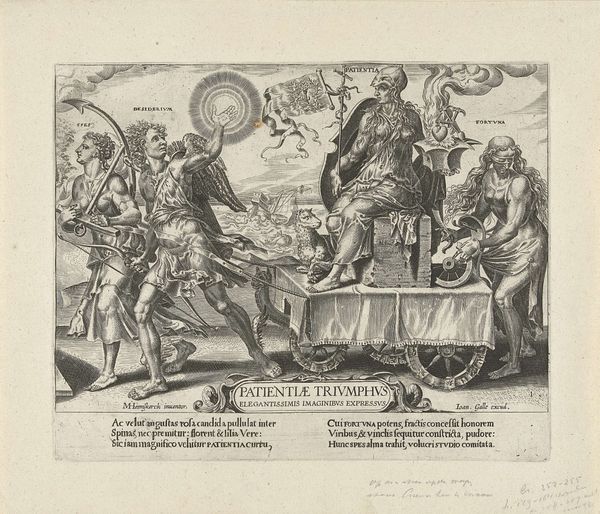
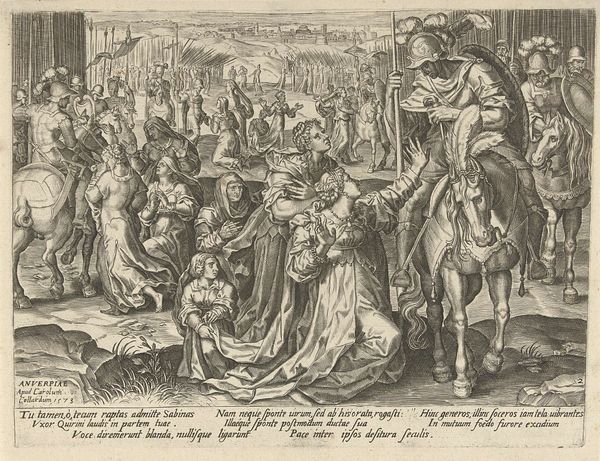
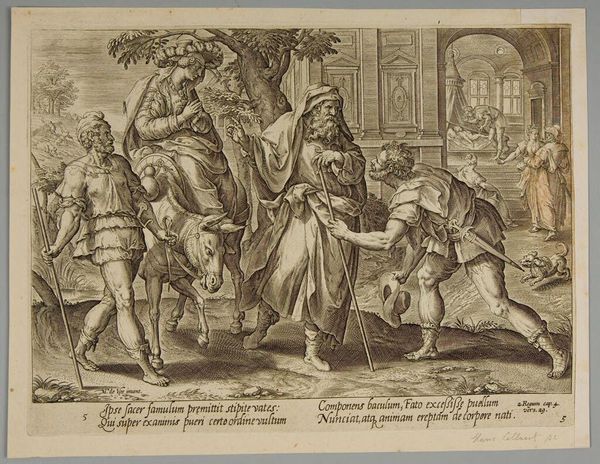
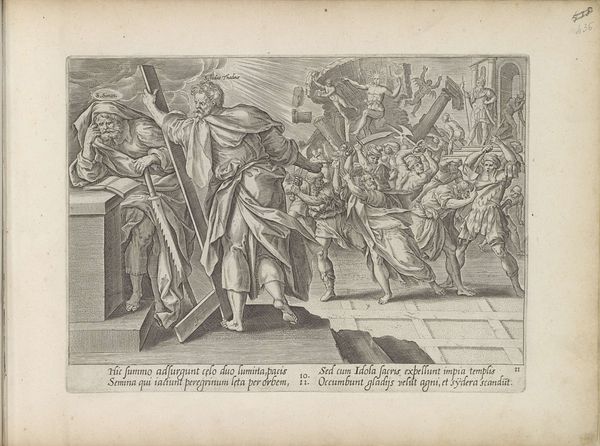
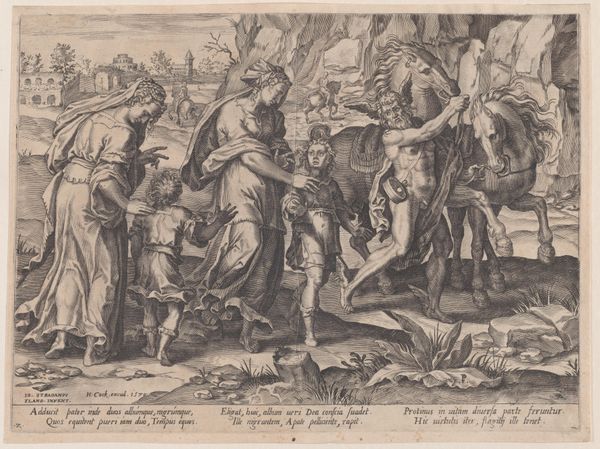
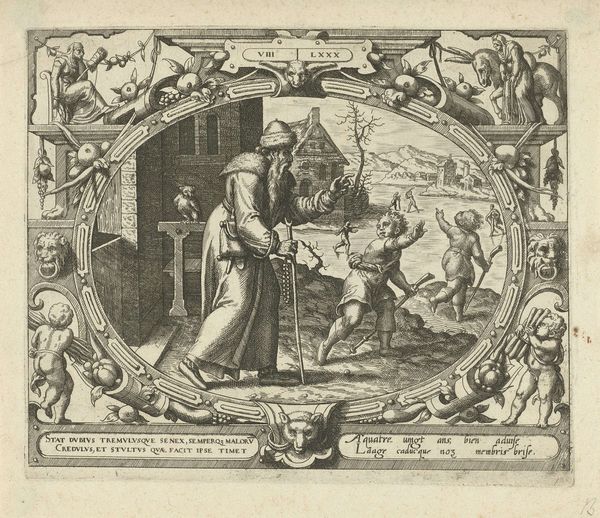
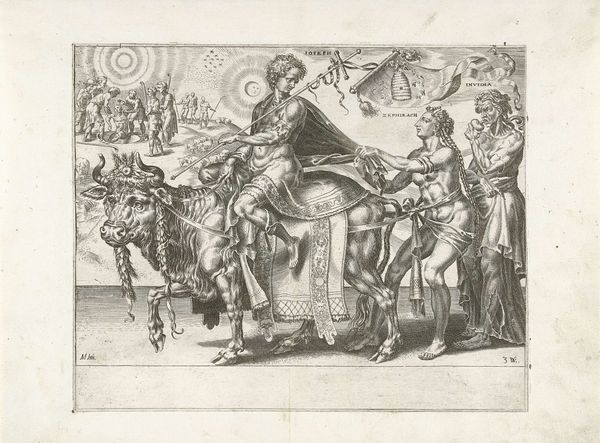
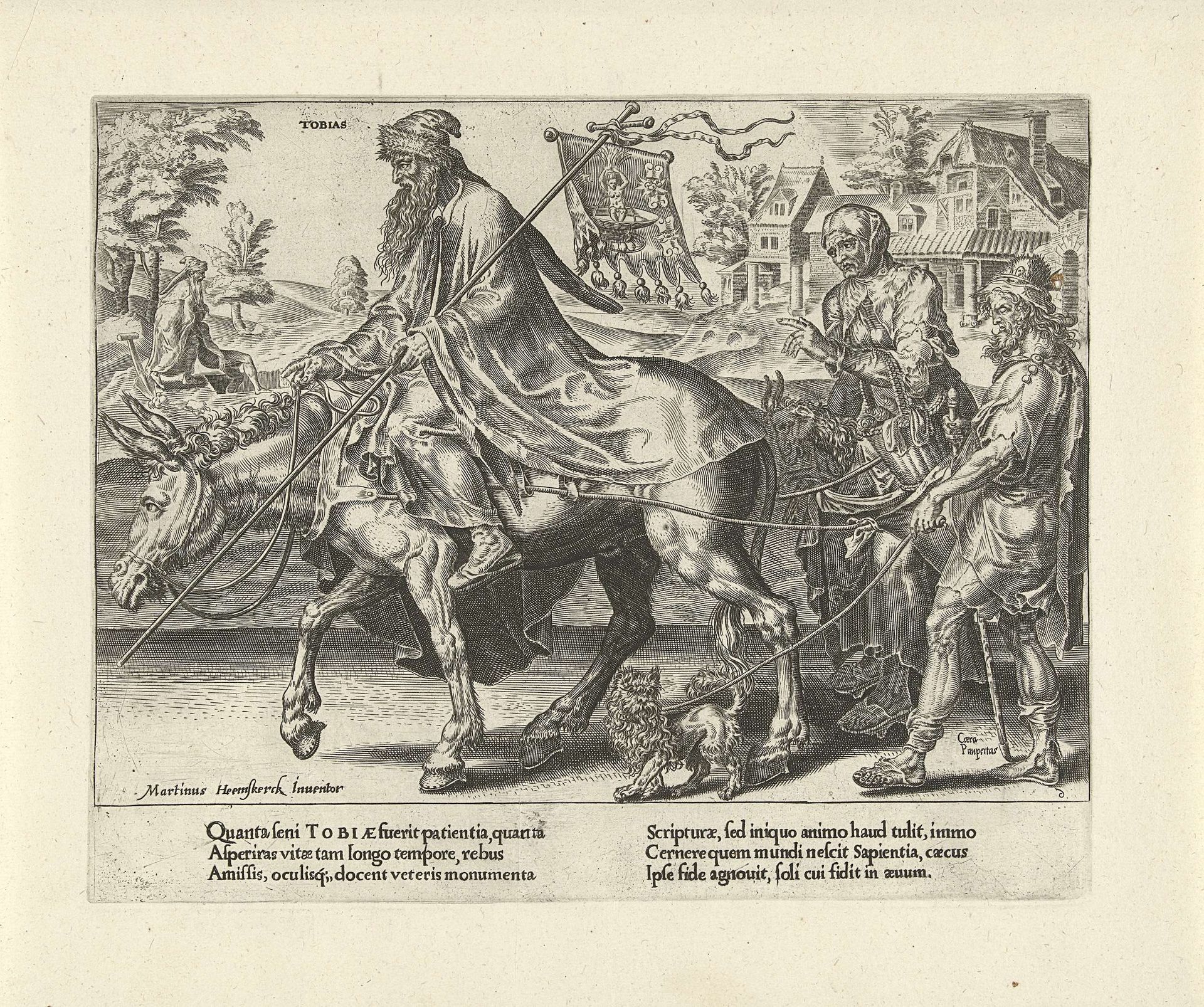
Here, in the Rijksmuseum, is Dirck Volckertsz Coornhert's "Triumph of Tobias", an engraving with an intriguing arrangement of figures and forms. The composition is dominated by a procession, rendered in stark black and white, creating a sense of solemnity and movement. Coornhert uses line and form to create a visual narrative that invites us to consider the relationship between faith, sight, and knowledge. We see Tobias riding a donkey, an attendant leading the way and a dog trotting beneath. The textures, achieved through intricate cross-hatching, give depth to the characters and their garments. The background buildings, in contrast, are rigid and lack this nuance. This piece speaks to the Renaissance interest in religious and philosophical concepts, questioning accepted wisdoms and traditional modes of perception. It suggests that faith can provide insight where worldly wisdom cannot, challenging established meanings and values. The triumph is not merely visual, but a triumph of belief over sight.

Artwork details
- Medium
- print, engraving
- Dimensions
- height 206 mm, width 256 mm
- Location
- Rijksmuseum
- Copyright
- Rijks Museum: Open Domain
Tags
narrative-art
old engraving style
figuration
11_renaissance
history-painting
northern-renaissance
engraving
Comments
No comments
About this artwork
Here, in the Rijksmuseum, is Dirck Volckertsz Coornhert's "Triumph of Tobias", an engraving with an intriguing arrangement of figures and forms. The composition is dominated by a procession, rendered in stark black and white, creating a sense of solemnity and movement. Coornhert uses line and form to create a visual narrative that invites us to consider the relationship between faith, sight, and knowledge. We see Tobias riding a donkey, an attendant leading the way and a dog trotting beneath. The textures, achieved through intricate cross-hatching, give depth to the characters and their garments. The background buildings, in contrast, are rigid and lack this nuance. This piece speaks to the Renaissance interest in religious and philosophical concepts, questioning accepted wisdoms and traditional modes of perception. It suggests that faith can provide insight where worldly wisdom cannot, challenging established meanings and values. The triumph is not merely visual, but a triumph of belief over sight.
Comments
No comments