1825
Tumbler

Bakewell, Page & Bakewell
1808 - 1882
The Metropolitan Museum of Art
Metropolitan Museum of Art, New York, NYListen to curator's interpretation
Curatorial notes
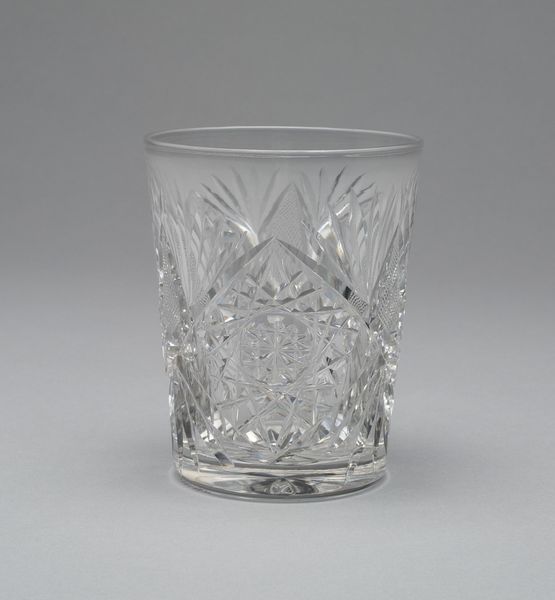
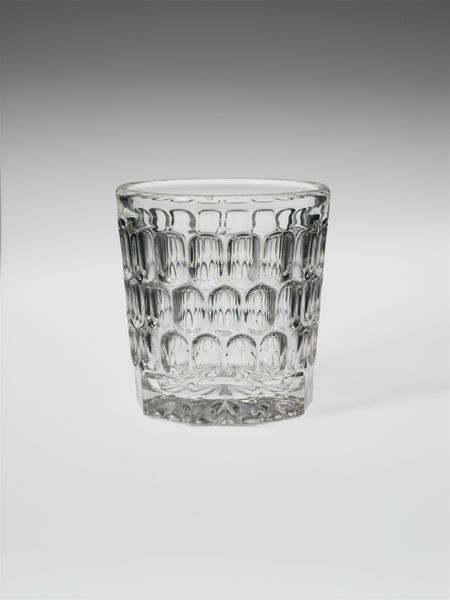
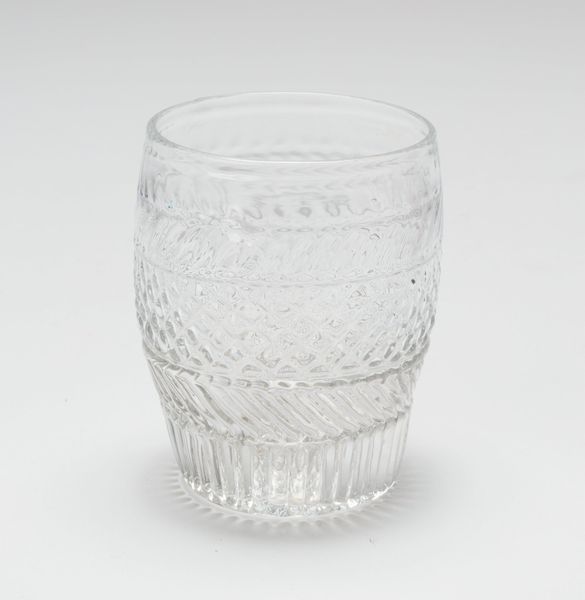
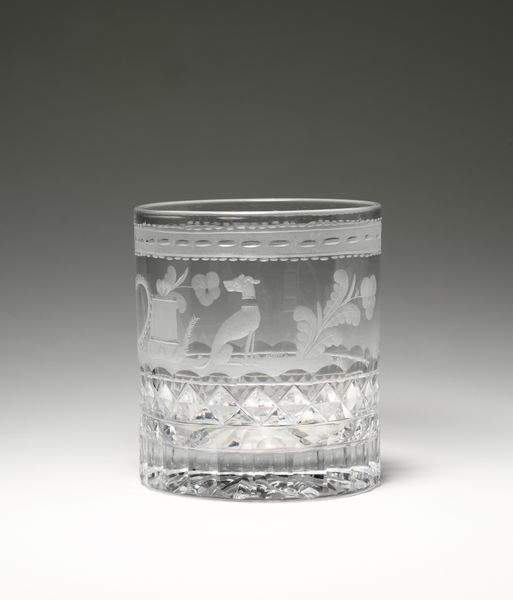
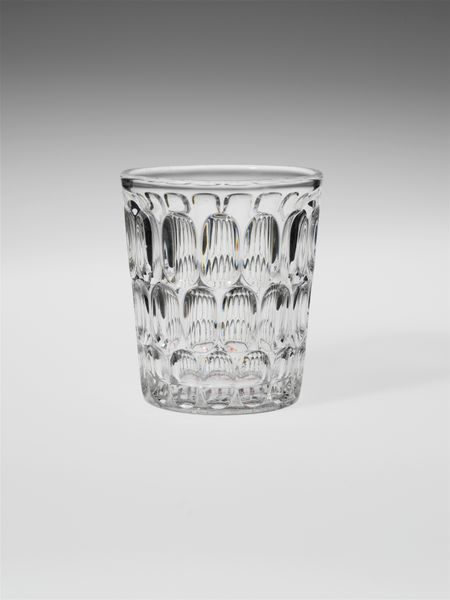
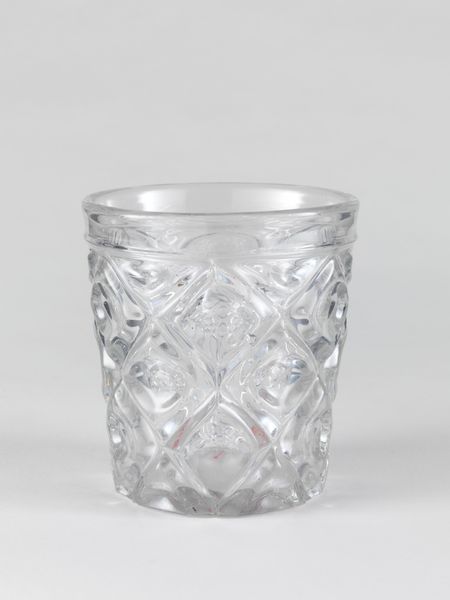
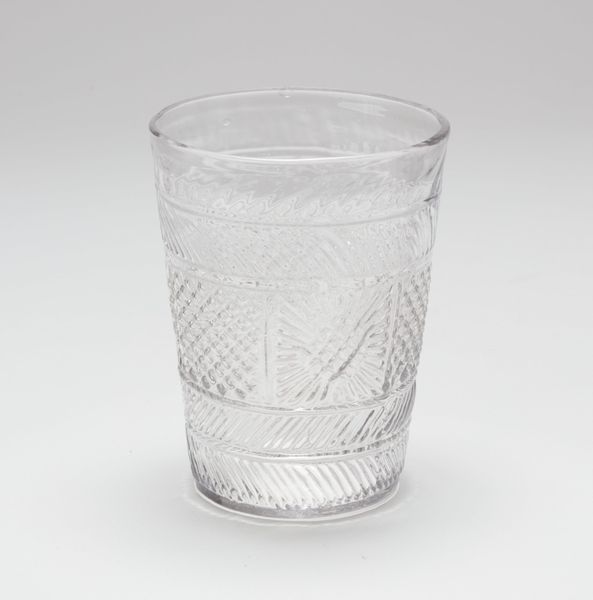
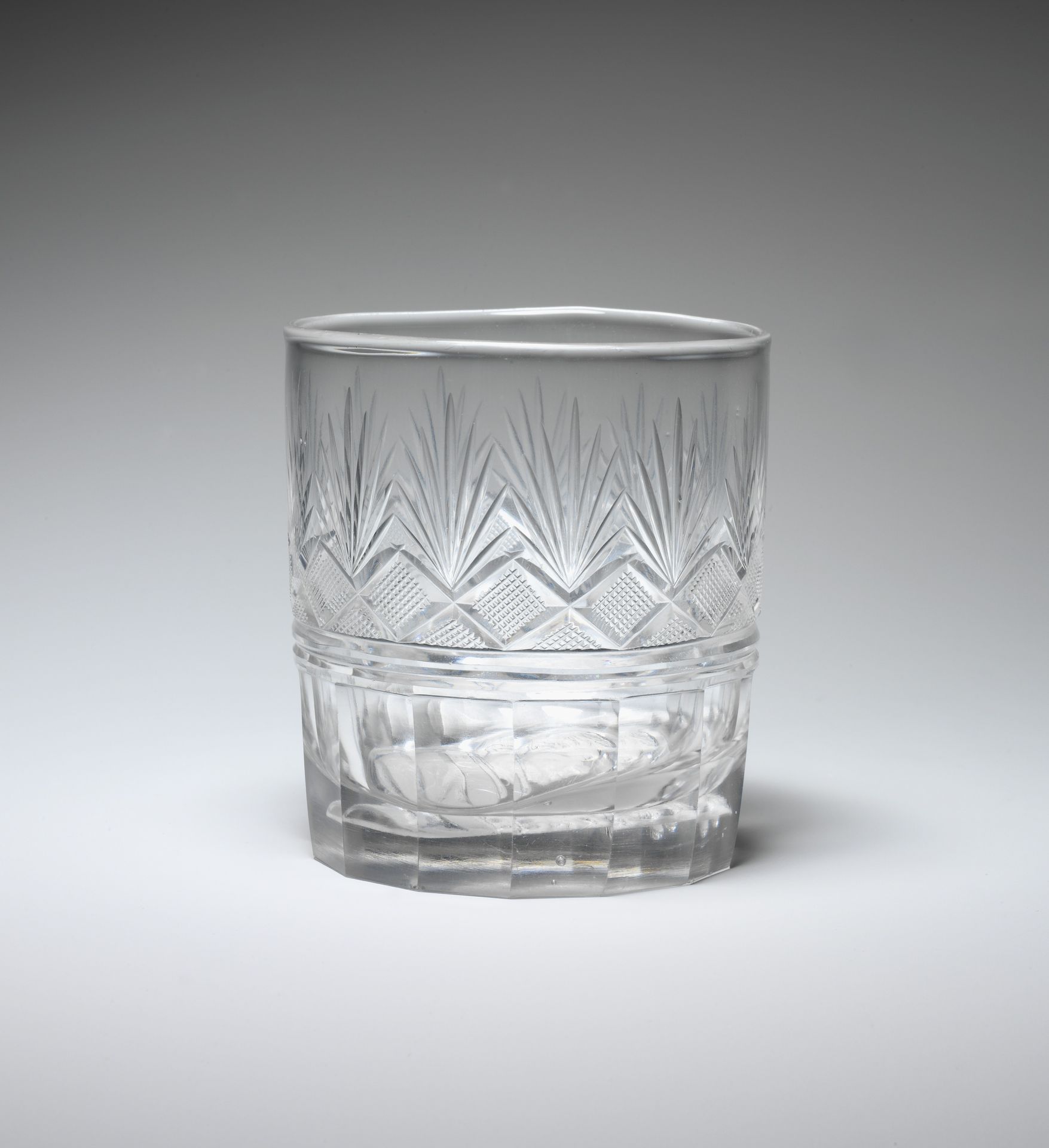
Editor: This is a glass tumbler made around 1825 by Bakewell, Page & Bakewell. I’m really drawn to the geometric patterns etched into it – the diamond shapes and those radiating lines give it a special kind of energy, don’t you think? What stands out to you when you look at this object? Curator: The geometric patterns aren’t merely decorative, they are imbued with meaning. Consider the radiating lines. They echo ancient symbols of the sun, representing enlightenment, vitality, even a kind of divine presence, wouldn't you say? How might such imagery function in the everyday life of its user? Editor: Well, if someone were using it daily, those radiant lines might serve as a subtle, constant reminder of hope, like a small ritual! And the diamond shapes, do they have a similar symbolic weight? Curator: Diamonds often signify clarity, resilience. Their many facets reflect light, representing multifaceted truths, complex emotions. Even something as seemingly simple as a drinking glass can become a carrier of powerful symbols, a reminder of cultural values etched in glass, wouldn't you agree? Editor: Absolutely! I never would have considered how potent everyday objects could be with layers of symbolism. This tumbler is no longer just a glass, but a container of stories and cultural memory. Curator: Precisely! Seeing the cultural and personal encoded within such artifacts opens up an entirely new appreciation. We find continuity, meaning in what might have otherwise seemed mundane.