1851
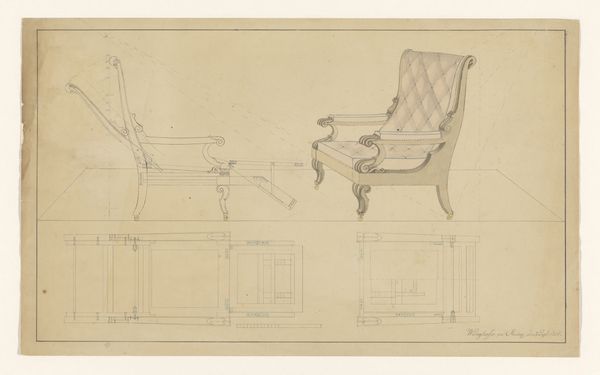
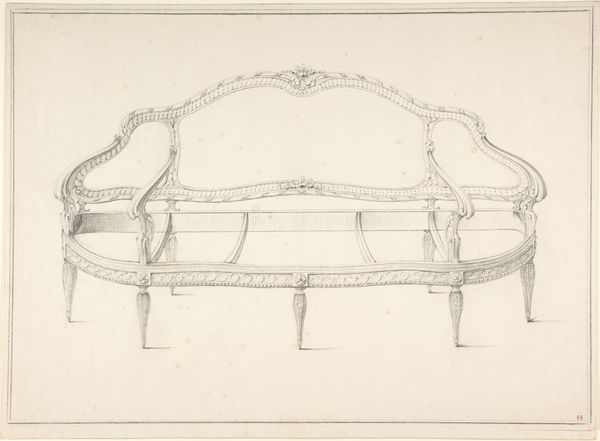
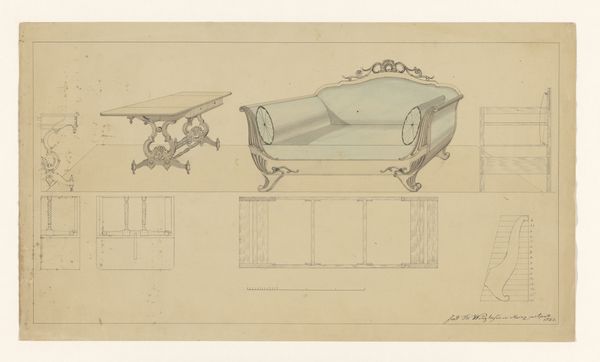
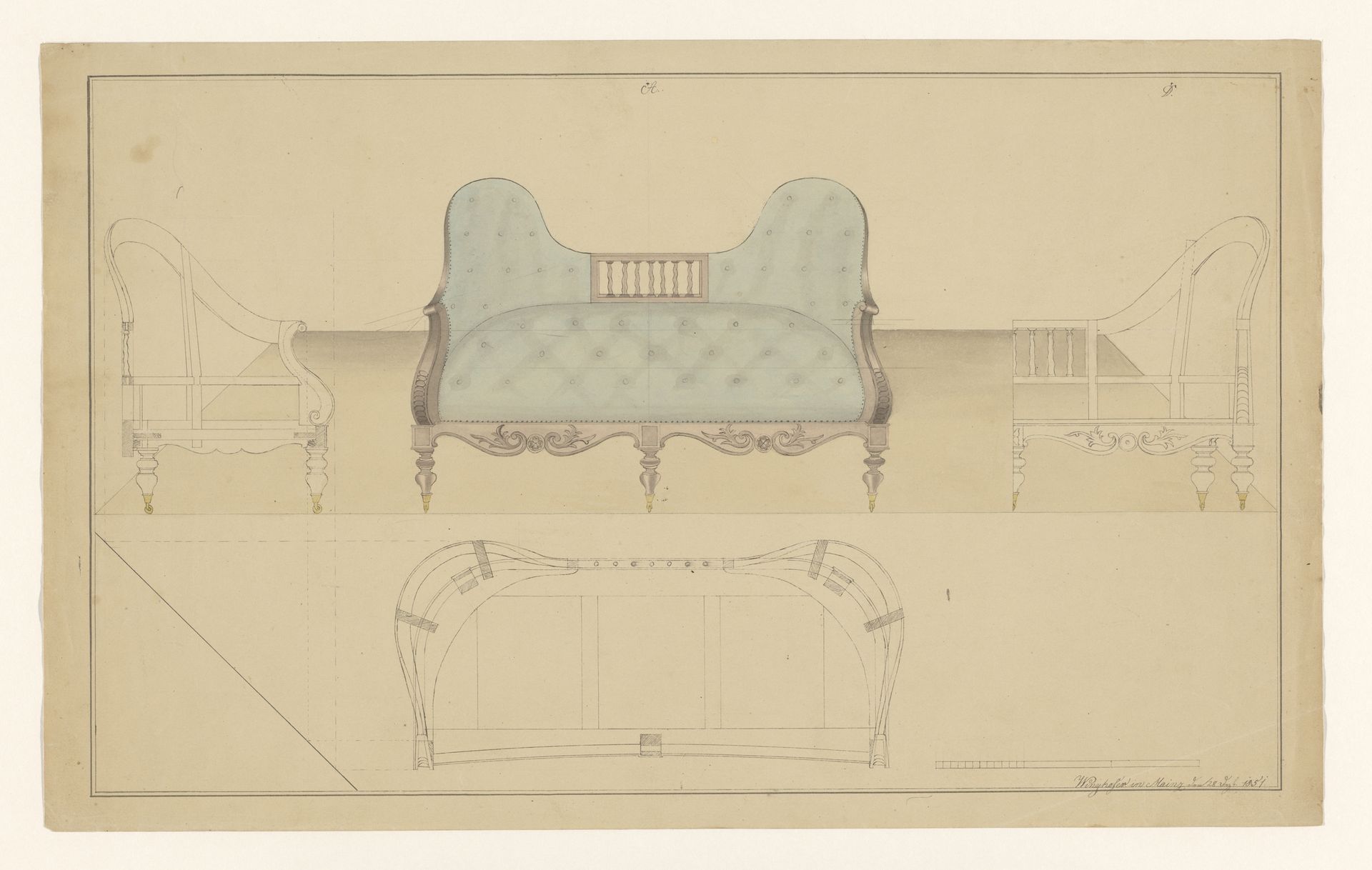
Ontwerp voor een beklede canapé, met een zijaanzicht en een half frontaanzicht, beide in onbeklede staat, en een plattegrond

Listen to curator's interpretation
Curatorial notes
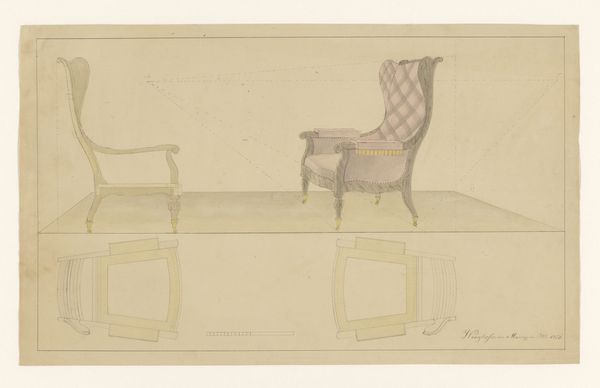
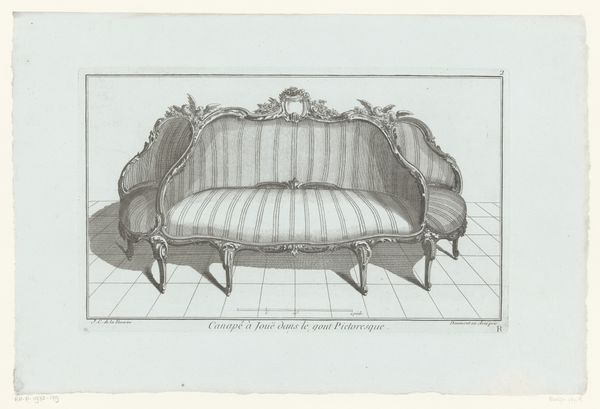
Here we have a design for an upholstered canapé, rendered in delicate lines by B. Winghofer. Observe the cabriole legs, adorned with acanthus leaves, a motif that speaks of classical antiquity, of life and rebirth. This ornamental feature echoes through time, appearing in Roman friezes and Renaissance architecture, each time adapting to the cultural zeitgeist. Even the canapé itself, a place of repose, evokes the ancient Roman triclinium, where social bonds were reinforced. The symmetry of the canapé, offering balance and harmony, appeals to our innate need for order. It subtly suggests stability, a comforting sense of control in our chaotic world. Consider how such symbols persist, transforming yet remaining intrinsically linked to their origins. They are vessels carrying collective memories, surfacing in unexpected forms, always engaging us on a deeper level.