About this artwork
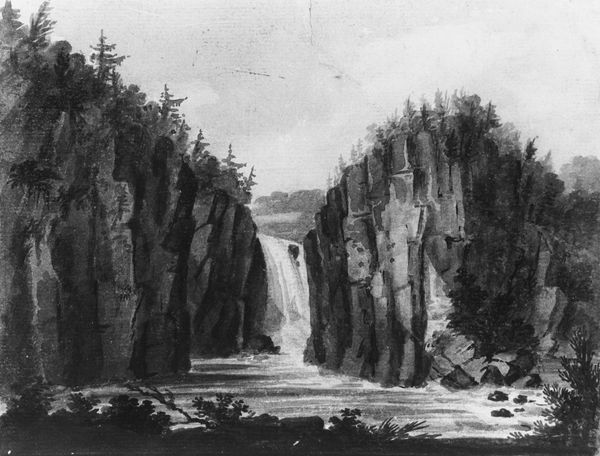
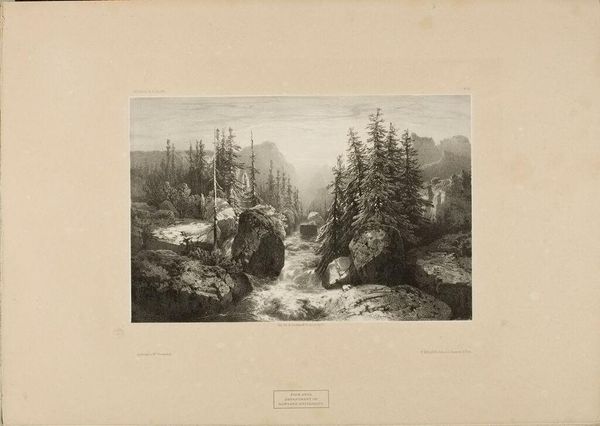
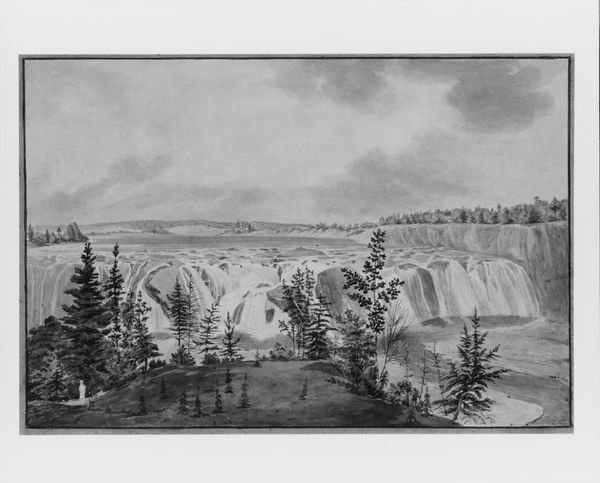
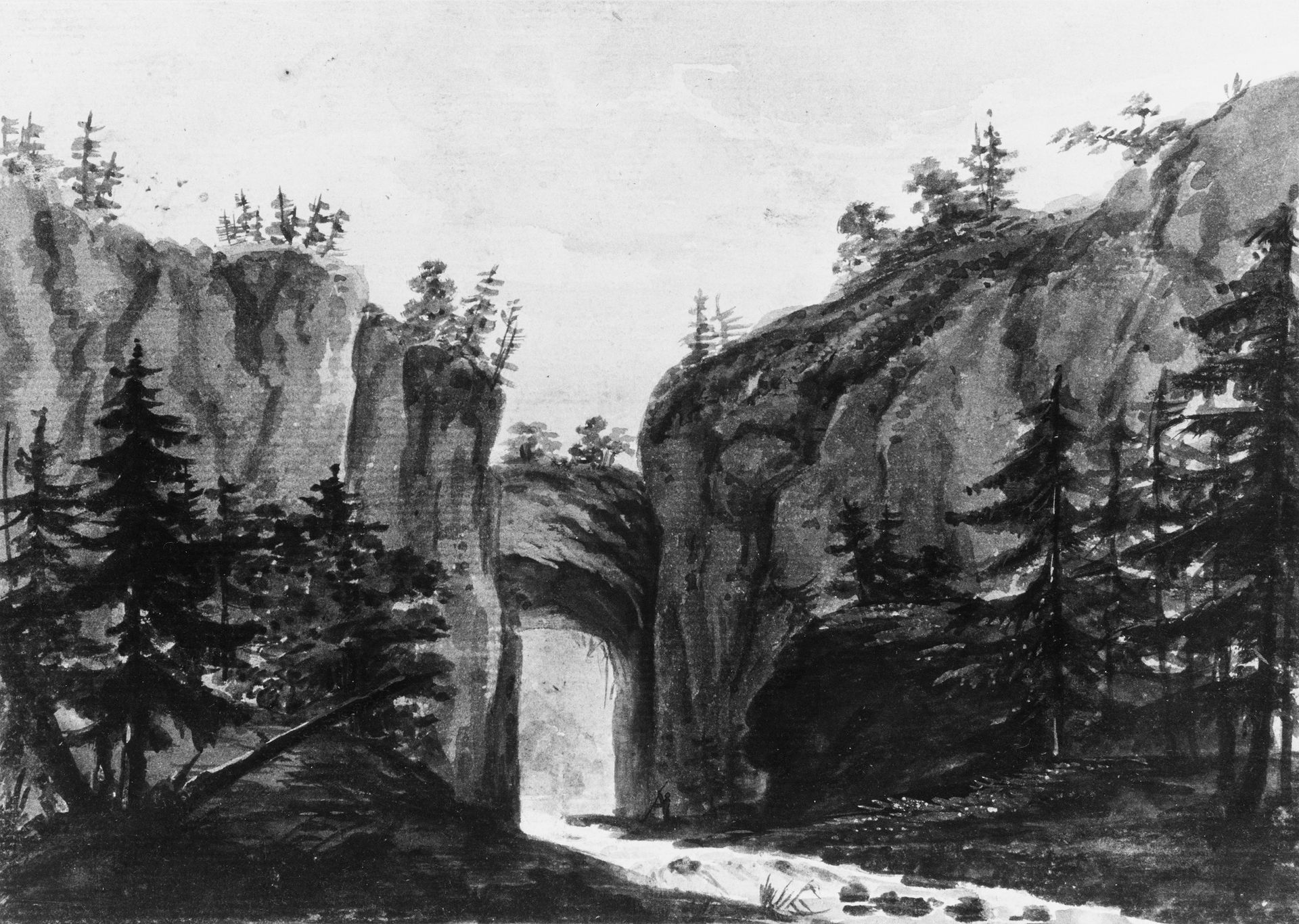
Pavel Petrovich Svinin made this copy after an engraving of the Natural Bridge in Virginia, published in 1787. Svinin's interest in this American landmark speaks to the way images participated in a broader cultural exchange between Europe and the young United States. The sublime natural wonder depicted here captured the imaginations of many, including Thomas Jefferson, who owned the land. In the late 18th and early 19th centuries, prints and engravings like the one Svinin copied, played a crucial role in shaping perceptions of the American landscape for European audiences. By reproducing and circulating such images, artists and publishers contributed to the construction of an American identity rooted in the grandeur and uniqueness of its natural environment. Understanding the political and economic context in which the artwork was made can reveal its broader significance. Art historians examine travelogues, prints, and other visual materials to understand the image's original circulation and reception.
Natural Bridge, Virginia (Copy after an Engraving in François Jean, Marquis de Chastellux, Travels in North America, 1787) 1811 - 1816

Pavel Petrovich Svinin
1787 - 1839
The Metropolitan Museum of Art
Metropolitan Museum of Art, New York, NYArtwork details
- Medium
- drawing, pencil
- Dimensions
- 5 3/16 x 7 3/8 in. (13.2 x 18.7 cm)
- Location
- Metropolitan Museum of Art, New York, NY
- Copyright
- Public Domain
Tags
drawing
landscape
classical-realism
charcoal drawing
charcoal art
romanticism
pencil
charcoal
natural form
Comments
No comments
About this artwork
Pavel Petrovich Svinin made this copy after an engraving of the Natural Bridge in Virginia, published in 1787. Svinin's interest in this American landmark speaks to the way images participated in a broader cultural exchange between Europe and the young United States. The sublime natural wonder depicted here captured the imaginations of many, including Thomas Jefferson, who owned the land. In the late 18th and early 19th centuries, prints and engravings like the one Svinin copied, played a crucial role in shaping perceptions of the American landscape for European audiences. By reproducing and circulating such images, artists and publishers contributed to the construction of an American identity rooted in the grandeur and uniqueness of its natural environment. Understanding the political and economic context in which the artwork was made can reveal its broader significance. Art historians examine travelogues, prints, and other visual materials to understand the image's original circulation and reception.
Comments
No comments