About this artwork
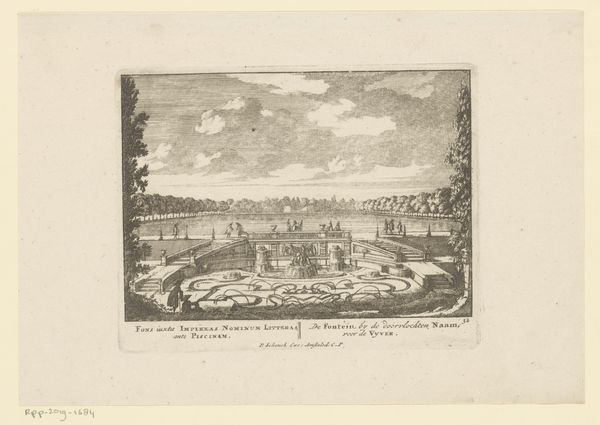
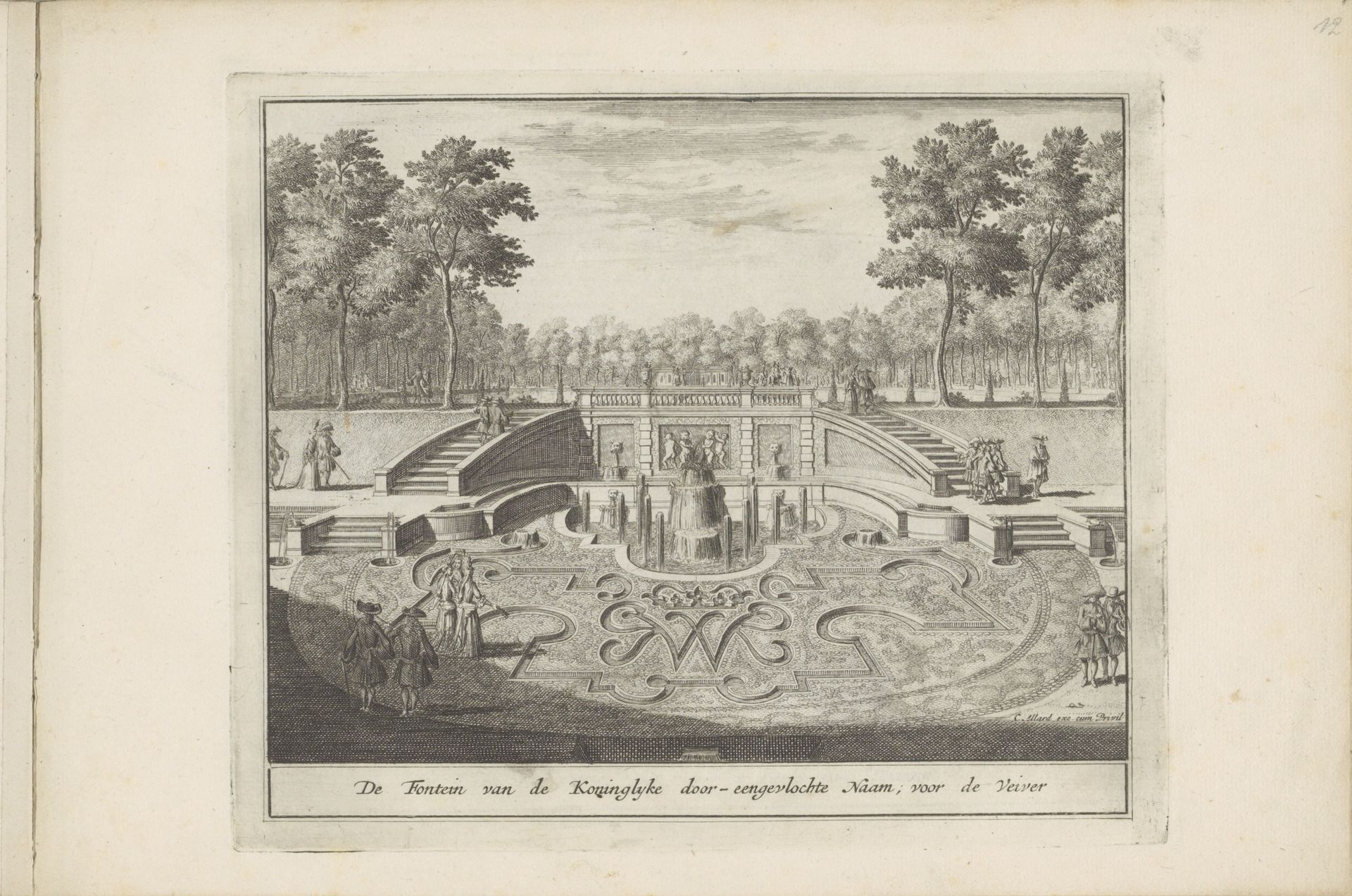
This print of a fountain and parterre was created by Laurens Scherm in the late 17th century, using etching and engraving. These are intaglio printmaking processes, meaning that the image is incised into a metal plate, and then transferred to paper. Look closely, and you can see how Scherm uses thin, precise lines to depict the elaborate design of the garden, with its interwoven "W" and "M" shapes. The formal garden design, with its geometric patterns and sculpted fountains, reflects the desire to impose order on nature. The print is not just a representation of the garden, but also an assertion of social status and control. The labor involved in creating and maintaining such a garden would have been considerable, and it would have been a symbol of wealth and power. By focusing on the materials and techniques used to create this image, we can gain a deeper understanding of its cultural and social significance, moving beyond simply appreciating its aesthetic beauty.
Fontein en parterre met de letters W en M door elkaar gevlochten 1689 - 1702

Laurens Scherm
1671 - 1702Location
RijksmuseumArtwork details
- Medium
- print, engraving, architecture
- Dimensions
- height 172 mm, width 206 mm
- Location
- Rijksmuseum
- Copyright
- Rijks Museum: Open Domain
Tags
baroque
old engraving style
landscape
cityscape
engraving
architecture
Comments
No comments
About this artwork
This print of a fountain and parterre was created by Laurens Scherm in the late 17th century, using etching and engraving. These are intaglio printmaking processes, meaning that the image is incised into a metal plate, and then transferred to paper. Look closely, and you can see how Scherm uses thin, precise lines to depict the elaborate design of the garden, with its interwoven "W" and "M" shapes. The formal garden design, with its geometric patterns and sculpted fountains, reflects the desire to impose order on nature. The print is not just a representation of the garden, but also an assertion of social status and control. The labor involved in creating and maintaining such a garden would have been considerable, and it would have been a symbol of wealth and power. By focusing on the materials and techniques used to create this image, we can gain a deeper understanding of its cultural and social significance, moving beyond simply appreciating its aesthetic beauty.
Comments
No comments