1876
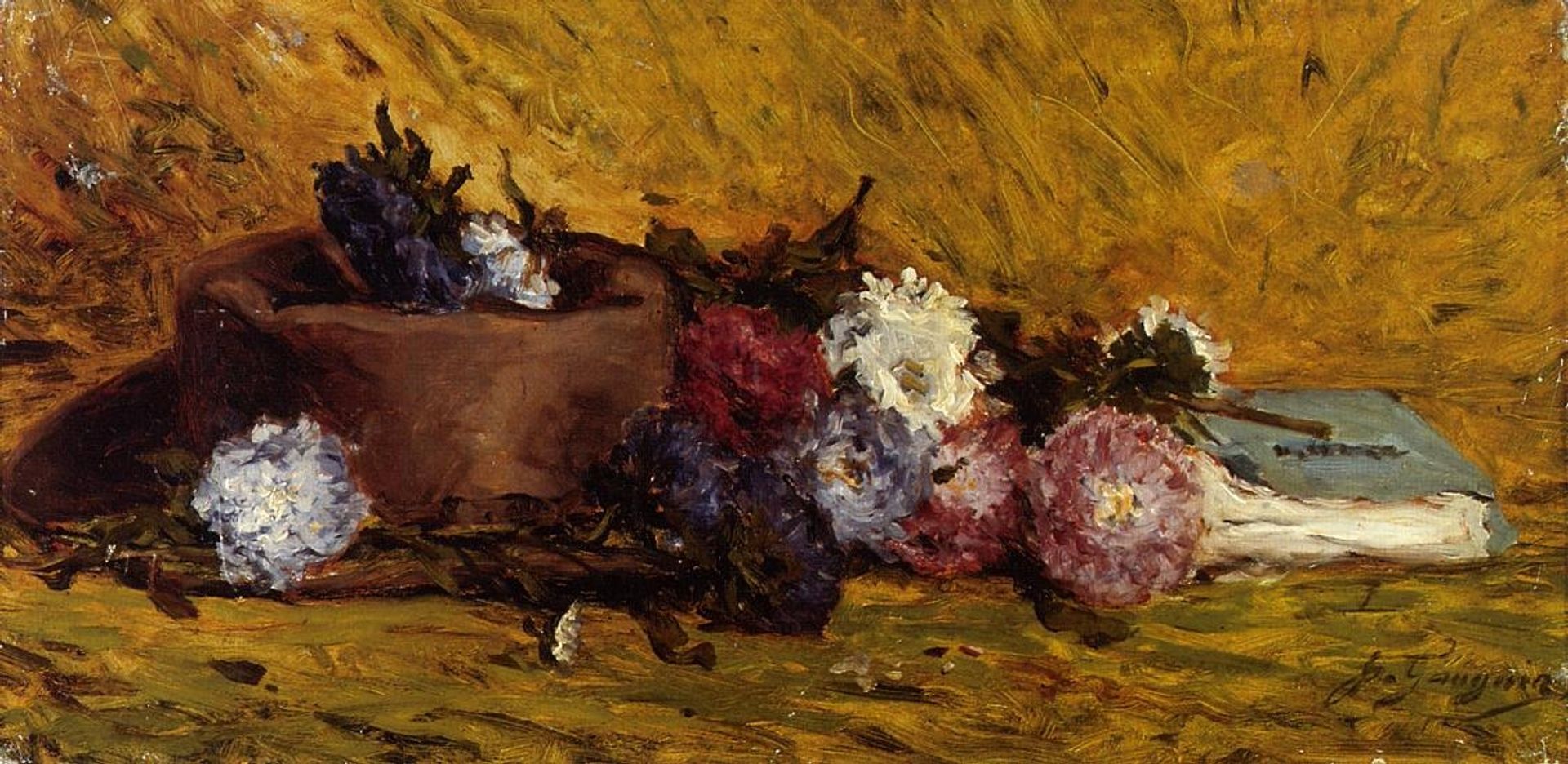
China Asters, Hat and Book

Paul Gauguin
1848 - 1903Location
Private CollectionListen to curator's interpretation
Curatorial notes
Editor: So, here we have "China Asters, Hat and Book," a still life by Paul Gauguin, painted in 1876 with oils, it looks like. The colors are a bit muted, the brushstrokes are thick, and the scene is very intimate. It feels a little melancholic, if I’m honest. What’s your take on it? What do you see in it? Curator: Melancholic is a good word, I think. But look at that hat – slightly crumpled, holding a bouquet not of perfectly arranged flora, but of asters, flowers reaching the end of their season. Beside them, a book, closed, perhaps unread, or perhaps finished. It feels like the quiet contemplation of late afternoon, doesn't it? Like Gauguin paused to catch the end of a day, and thought...well, what do *you* think he thought? Editor: Maybe he's thinking about time passing, or the beauty in the everyday...the fleeting nature of both, I suppose. Curator: Precisely! And consider the context. 1876 was a turning point for Gauguin, before he turned to painting full time, when he was on the cusp of a totally different path. This little moment, snatched in impasto and quiet colour, represents the simple profundity of deciding where you put your attention – beauty, in art, or some hat buried in the background. Editor: That makes me see it differently – not so much sad as…pregnant with possibility. It’s a still life, but not static, more of a turning point. Curator: Exactly. An unwritten novel, you could say! And sometimes, the best stories are the ones that linger in the air. The quiet moment before something changes everything. Editor: Wow, I wouldn't have picked that up myself, the turning point, I mean. I was too caught up in the moody vibes. It really does put a different light on the whole thing. Curator: That's the beautiful thing about art, isn’t it? There’s always more than one story to find if we just allow ourselves to look.