About this artwork
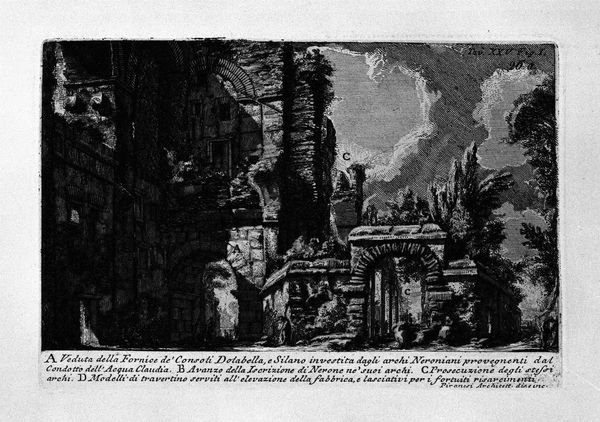
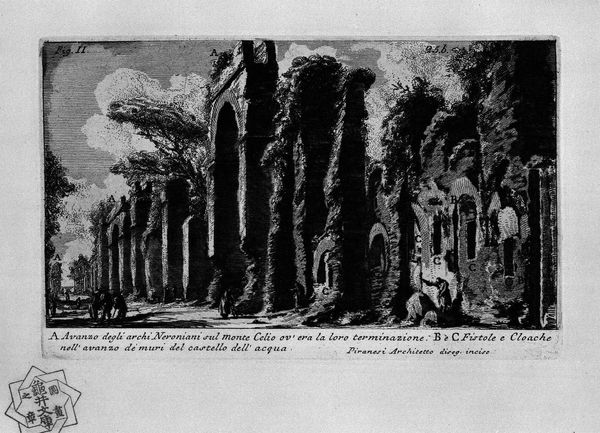
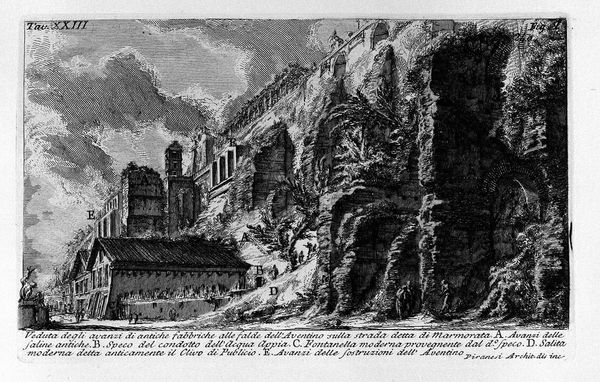
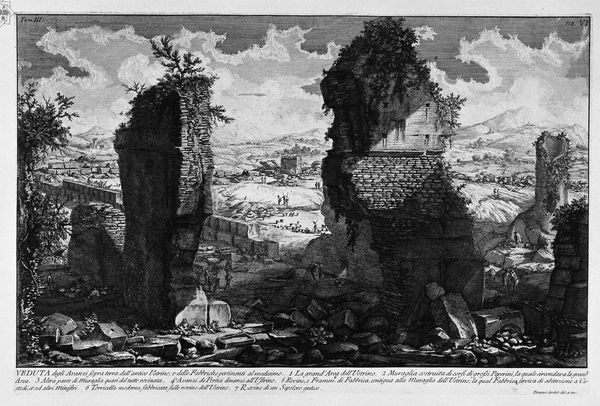
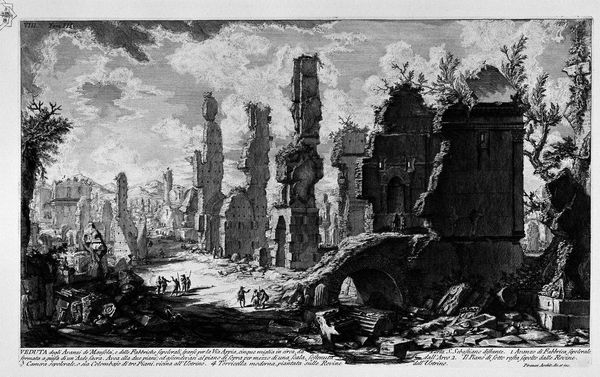
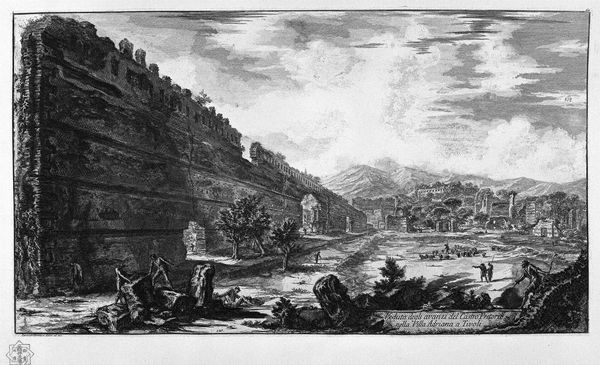
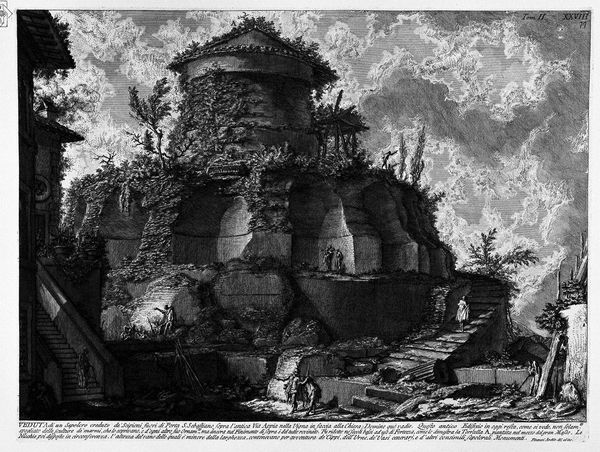
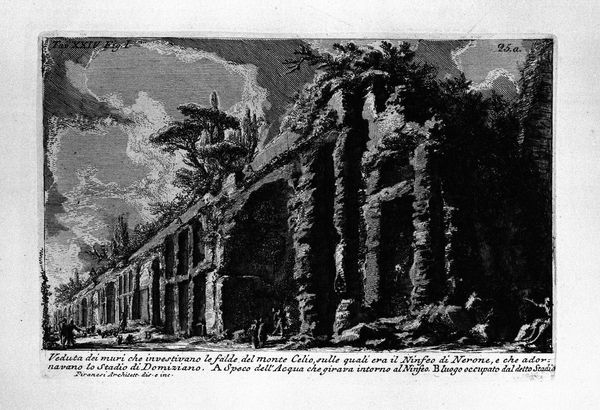
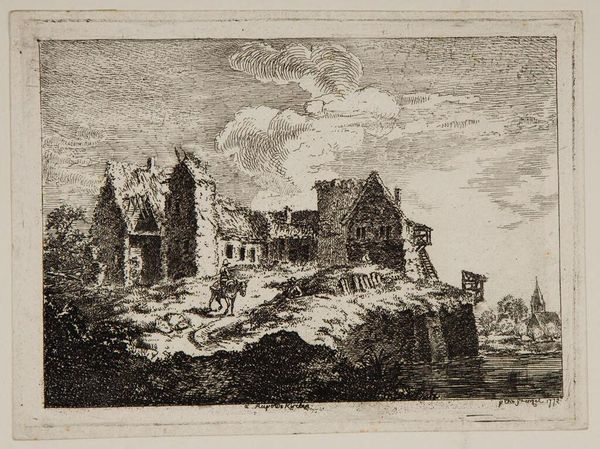
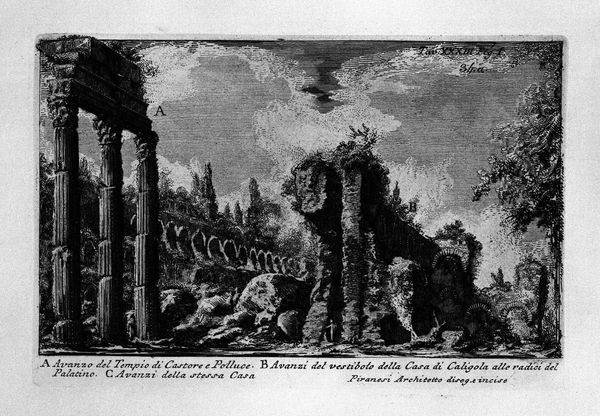
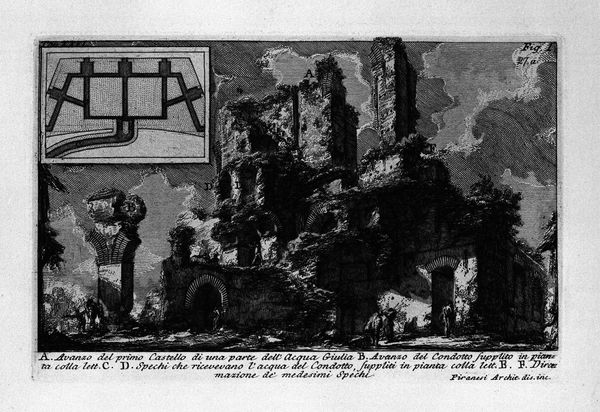
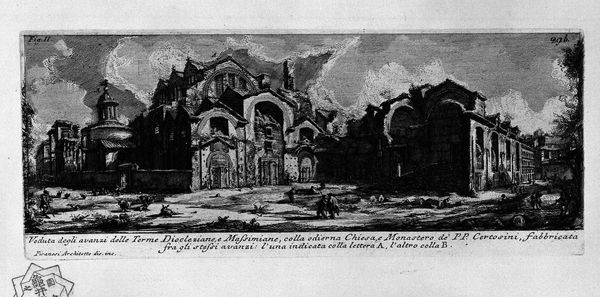
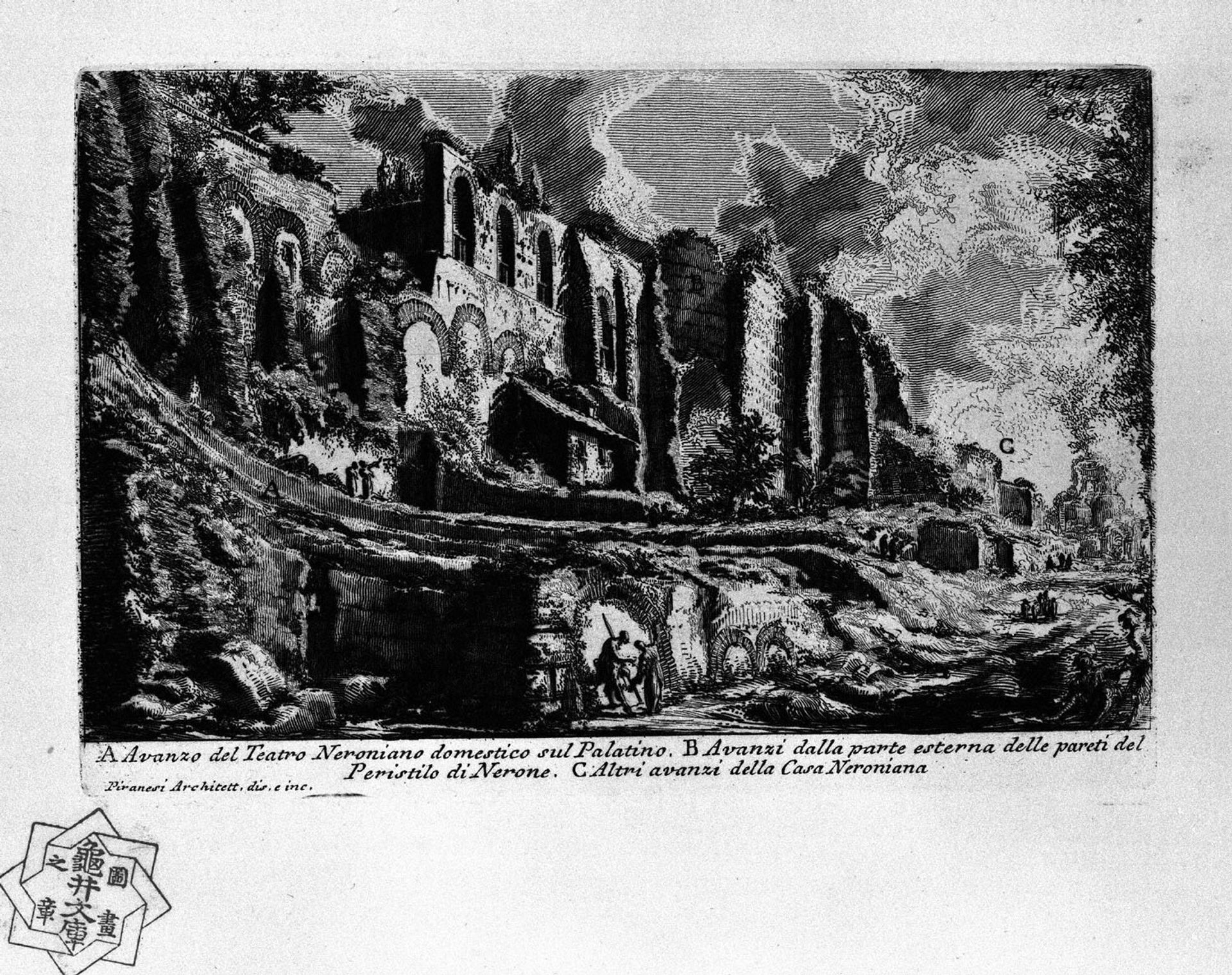
Giovanni Battista Piranesi created this etching, "The Roman Antiquities," sometime in the 18th century. The composition is dominated by the stark contrast between light and shadow, typical of Piranesi's dramatic style. Ruins rise like colossal sculptures against a turbulent sky. Piranesi masterfully uses line and texture to create depth and evoke an emotional response. The intricate details of the crumbling architecture suggest the vanity of human achievement against the relentless passage of time. Consider how the artist uses scale: the tiny figures at the base emphasize the overwhelming scale of the ruins, making the viewer feel insignificant. This theatrical staging of history reflects the 18th-century fascination with classical antiquity, but also questions its endurance. Piranesi destabilizes established notions of grandeur, instead presenting ruins as powerful symbols of decay. His vision isn't just about documenting history; it's about challenging our perception of time, power, and the human condition.

Artwork details
- Medium
- drawing, print, etching, architecture
- Copyright
- Public domain
Tags
drawing
etching
landscape
romanesque
ancient-mediterranean
column
pen-ink sketch
architecture
Comments
No comments
About this artwork
Giovanni Battista Piranesi created this etching, "The Roman Antiquities," sometime in the 18th century. The composition is dominated by the stark contrast between light and shadow, typical of Piranesi's dramatic style. Ruins rise like colossal sculptures against a turbulent sky. Piranesi masterfully uses line and texture to create depth and evoke an emotional response. The intricate details of the crumbling architecture suggest the vanity of human achievement against the relentless passage of time. Consider how the artist uses scale: the tiny figures at the base emphasize the overwhelming scale of the ruins, making the viewer feel insignificant. This theatrical staging of history reflects the 18th-century fascination with classical antiquity, but also questions its endurance. Piranesi destabilizes established notions of grandeur, instead presenting ruins as powerful symbols of decay. His vision isn't just about documenting history; it's about challenging our perception of time, power, and the human condition.
Comments
No comments