About this artwork
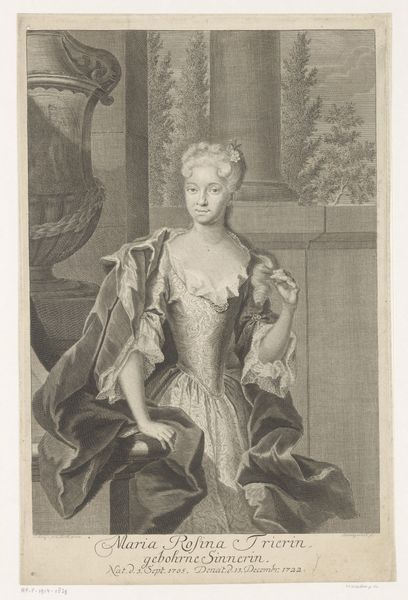
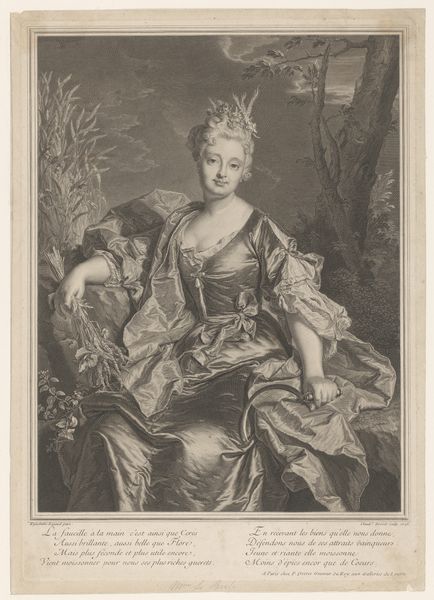
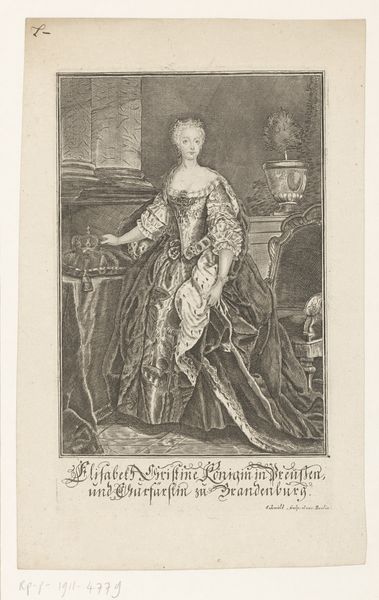
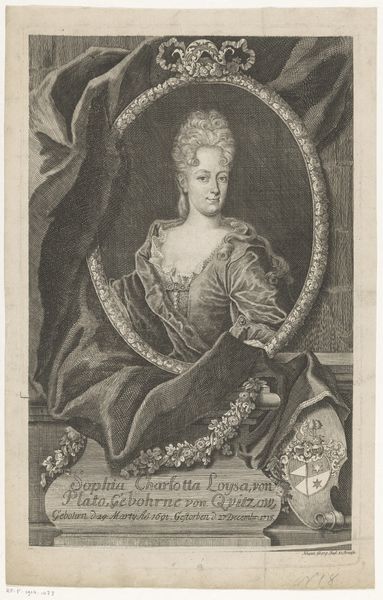
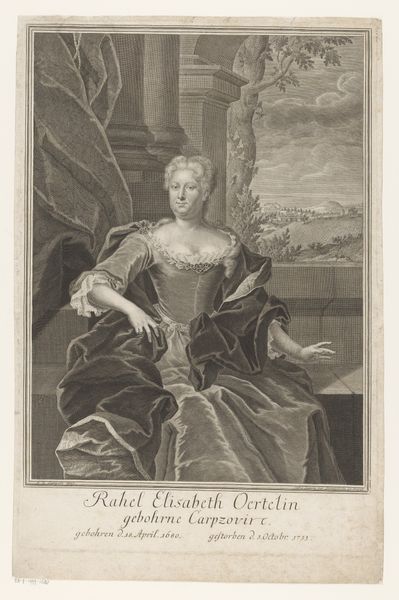
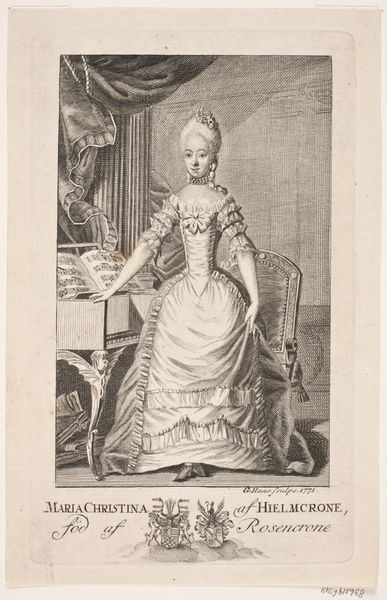
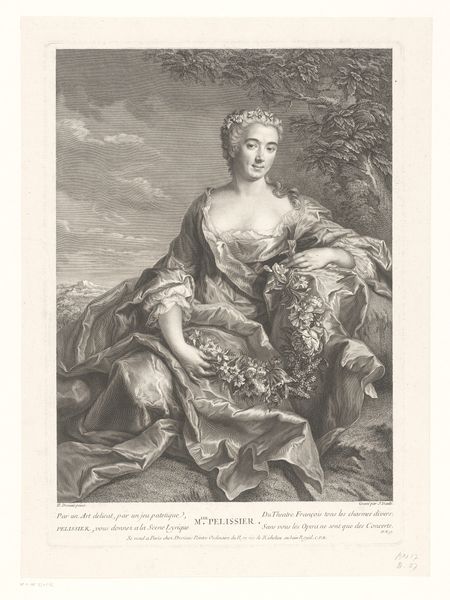
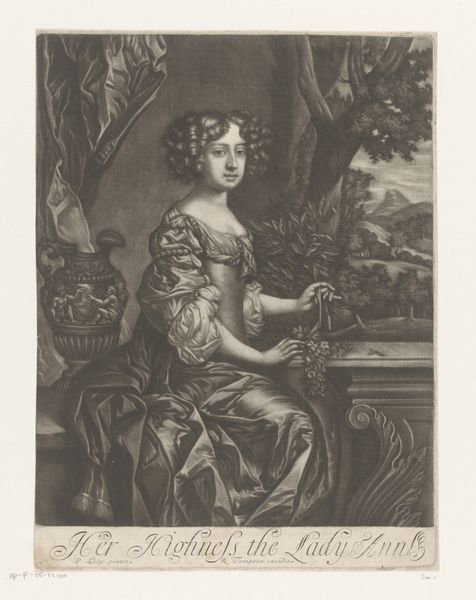
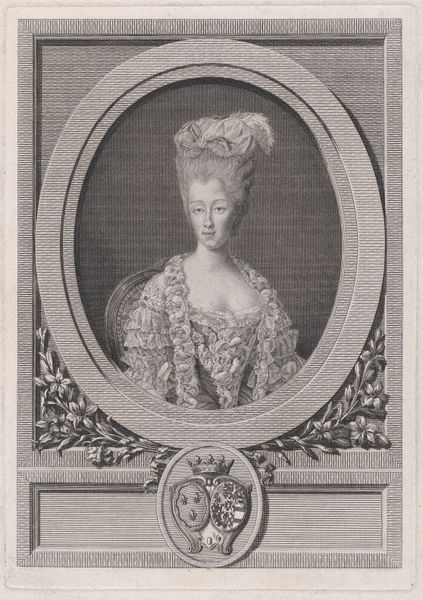
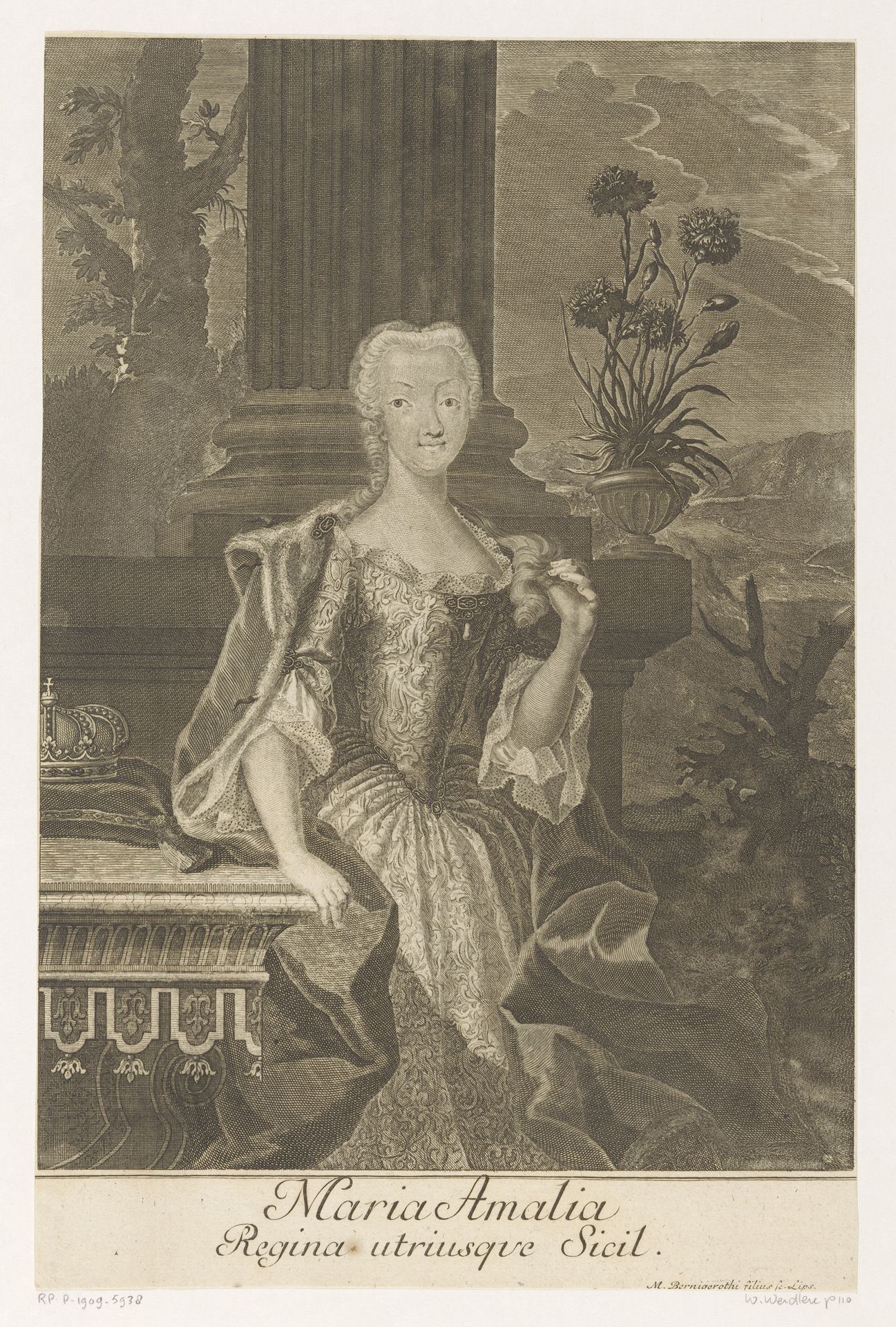
Johann Martin Bernigeroth created this portrait of Maria Amalia, Queen of Naples-Sicily, using engraving, a printmaking process that dates back to the fifteenth century. The method involves incising an image onto a metal plate, inking the plate, and then pressing it onto paper. The engraver’s skill is evident in the fine lines that define the Queen's features, clothing, and the surrounding scenery. The textures, from the Queen’s ornate dress to the stone architecture, are all rendered through the careful manipulation of line and tone. Engraving like this wasn't just about artistic expression; it was deeply connected to the economics of the time. Printmaking allowed for the reproduction and distribution of images on a relatively large scale, influencing public perception of nobility and power. The labor-intensive nature of engraving also highlights the contrast between the skilled artisan and the subject, the Queen, who is free from such work. Ultimately, understanding the materials and processes behind this image helps us recognize its role within the broader social and economic context of 18th-century Europe.
Portret van Maria Amalia, koningin van Napels-Sicilië
1738 - 1759

Johann Martin Bernigeroth
1713 - 1767Location
RijksmuseumArtwork details
- Medium
- print, engraving
- Dimensions
- height 317 mm, width 205 mm
- Location
- Rijksmuseum
- Copyright
- Rijks Museum: Open Domain
Tags
Comments
Share your thoughts
About this artwork
Johann Martin Bernigeroth created this portrait of Maria Amalia, Queen of Naples-Sicily, using engraving, a printmaking process that dates back to the fifteenth century. The method involves incising an image onto a metal plate, inking the plate, and then pressing it onto paper. The engraver’s skill is evident in the fine lines that define the Queen's features, clothing, and the surrounding scenery. The textures, from the Queen’s ornate dress to the stone architecture, are all rendered through the careful manipulation of line and tone. Engraving like this wasn't just about artistic expression; it was deeply connected to the economics of the time. Printmaking allowed for the reproduction and distribution of images on a relatively large scale, influencing public perception of nobility and power. The labor-intensive nature of engraving also highlights the contrast between the skilled artisan and the subject, the Queen, who is free from such work. Ultimately, understanding the materials and processes behind this image helps us recognize its role within the broader social and economic context of 18th-century Europe.
Comments
Share your thoughts