About this artwork
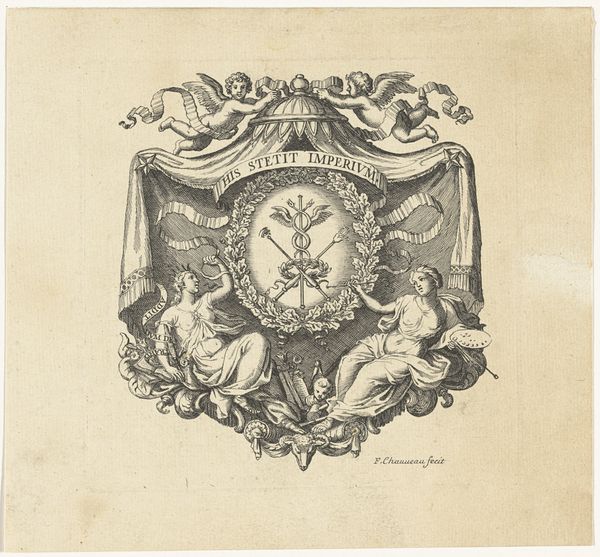
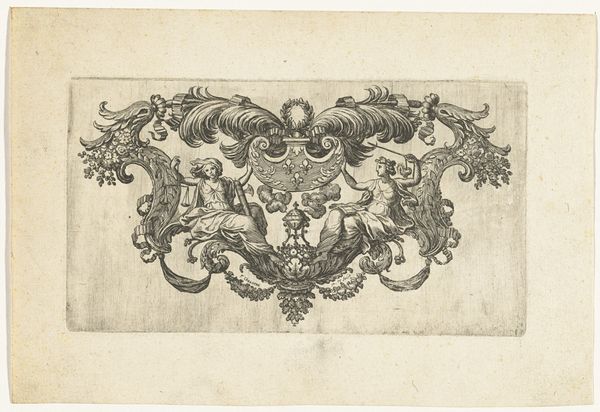
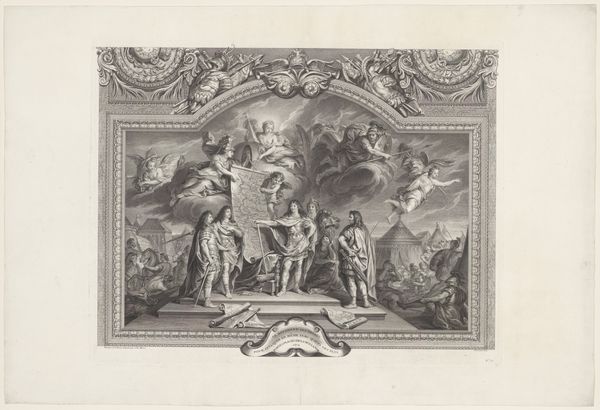
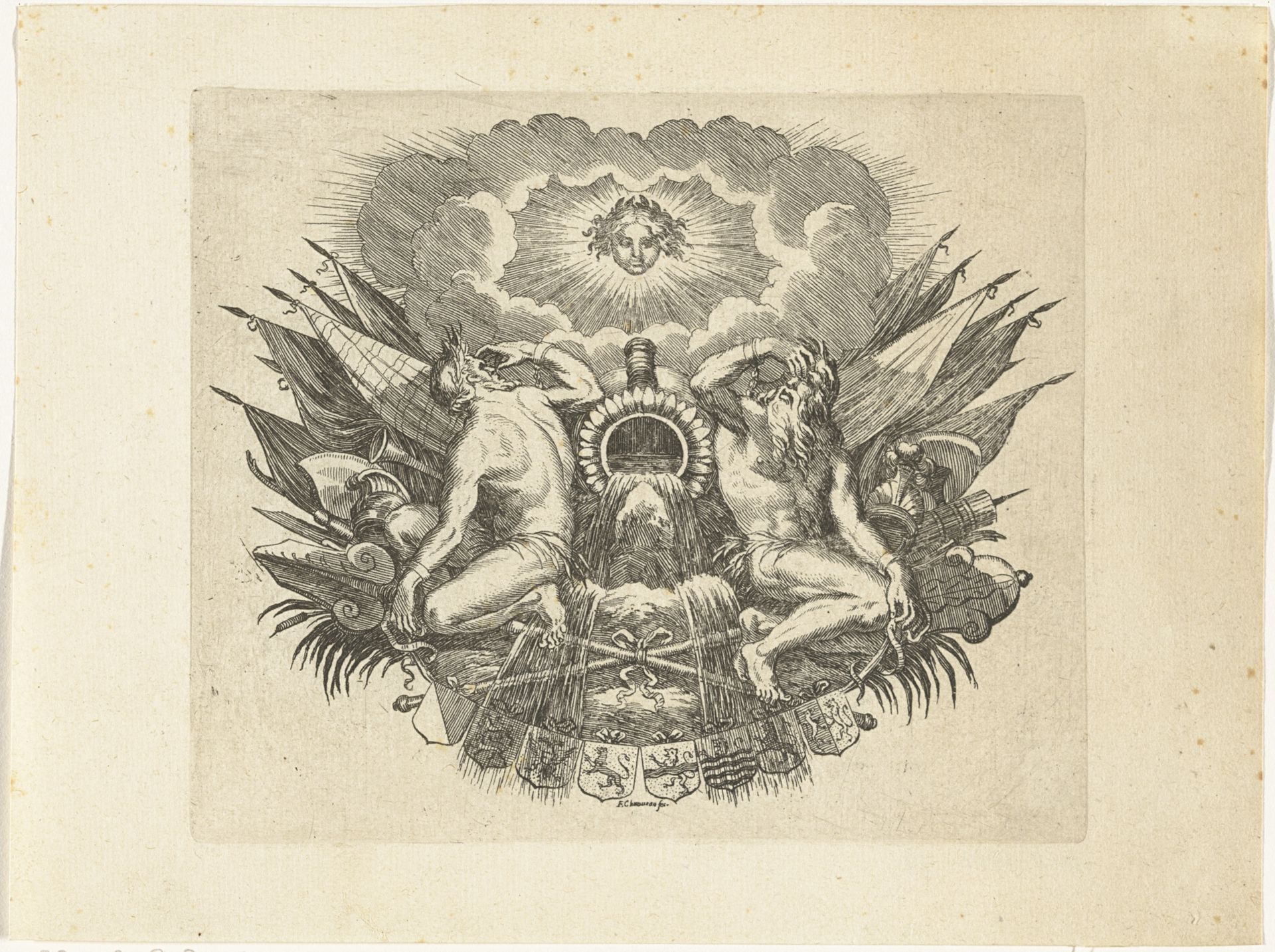
François Chauveau made this etching as the title illustration for Pierre Corneille's book about Louis XIV's military campaigns against the Dutch Republic in 1672. The image creates meaning through visual codes, cultural references, and historical associations. Two despondent, half-naked men sit either side of a fountain, representing the Dutch Republic weakened after war. Above, a sun face peers through the clouds – a symbol of the French King Louis XIV, sometimes known as the Sun King – sending a divine light onto the scene below. Flags and military trophies are scattered around the vignette, underlining the military victory being celebrated. The social conditions that shaped this artwork included the absolutist rule of Louis XIV, who used art and propaganda to reinforce his power and project an image of glory. To understand this artwork better, historians would consult texts and images from the period to get a sense of the prevailing social attitudes and power dynamics. Ultimately, the meaning of art depends on the social and institutional context in which it was made and received.
Vignet voor de titelprent van Pierre Corneille's 'Les Victoires du Roy sur les Estats de Hollande, en l'année 1672' c. 1672

François Chauveau
1613 - 1676Location
RijksmuseumArtwork details
- Medium
- print, etching
- Dimensions
- height 110 mm, width 133 mm
- Location
- Rijksmuseum
- Copyright
- Rijks Museum: Open Domain
Tags
allegory
baroque
etching
etching
history-painting
Comments
No comments
About this artwork
François Chauveau made this etching as the title illustration for Pierre Corneille's book about Louis XIV's military campaigns against the Dutch Republic in 1672. The image creates meaning through visual codes, cultural references, and historical associations. Two despondent, half-naked men sit either side of a fountain, representing the Dutch Republic weakened after war. Above, a sun face peers through the clouds – a symbol of the French King Louis XIV, sometimes known as the Sun King – sending a divine light onto the scene below. Flags and military trophies are scattered around the vignette, underlining the military victory being celebrated. The social conditions that shaped this artwork included the absolutist rule of Louis XIV, who used art and propaganda to reinforce his power and project an image of glory. To understand this artwork better, historians would consult texts and images from the period to get a sense of the prevailing social attitudes and power dynamics. Ultimately, the meaning of art depends on the social and institutional context in which it was made and received.
Comments
No comments