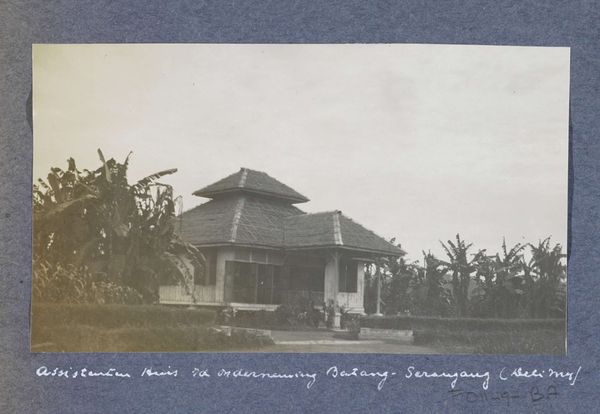
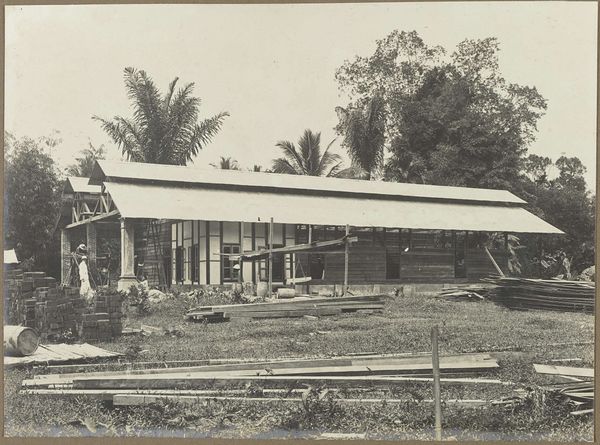
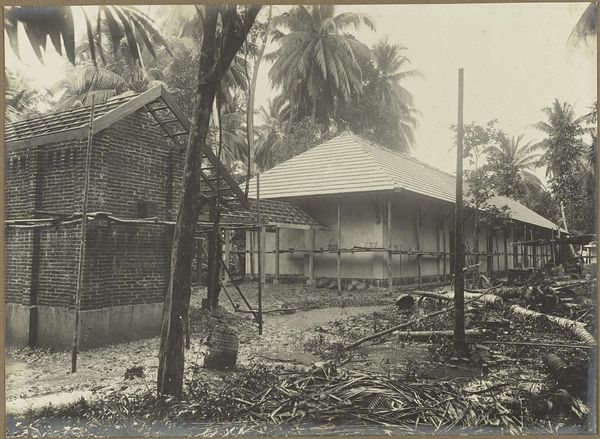
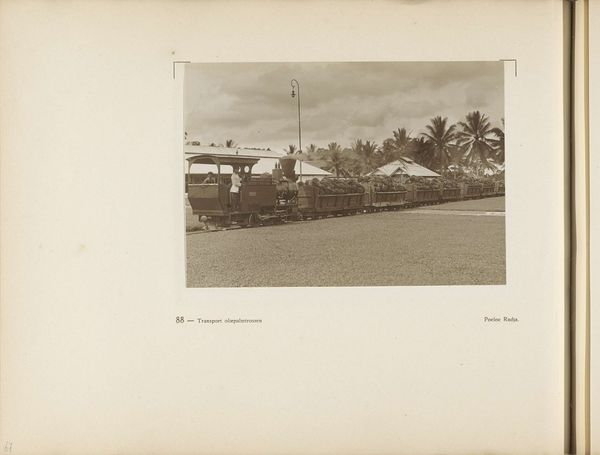
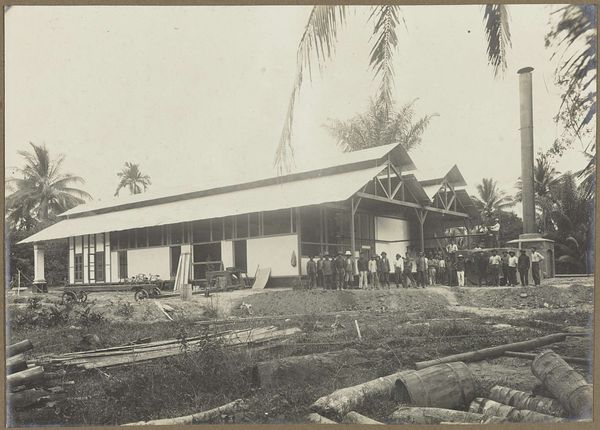
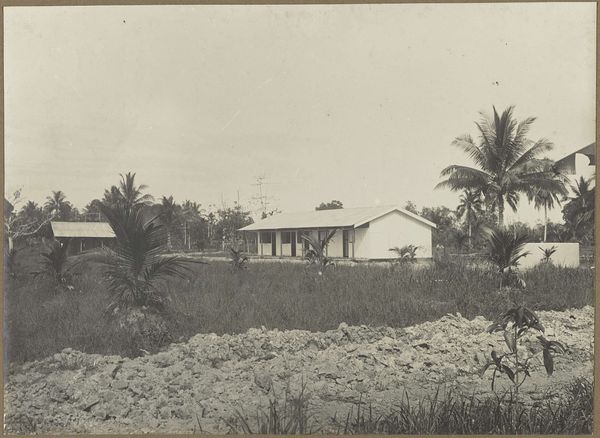
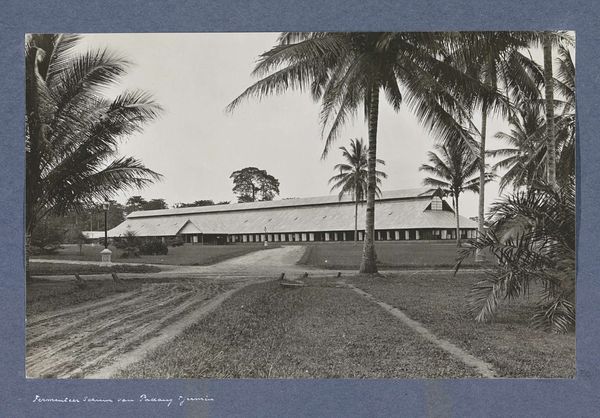
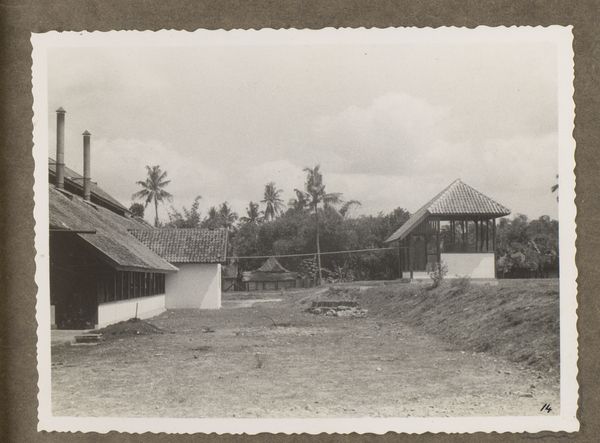
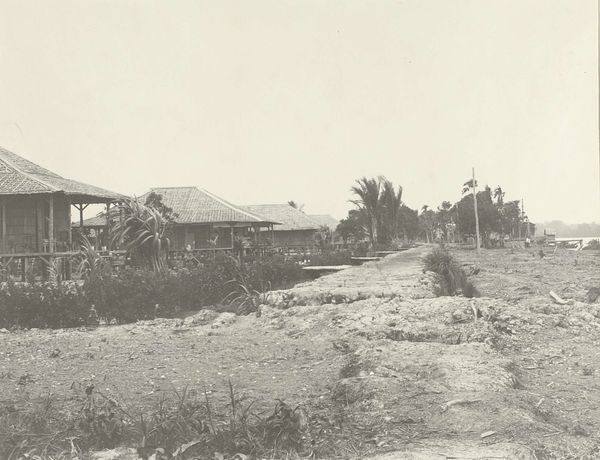
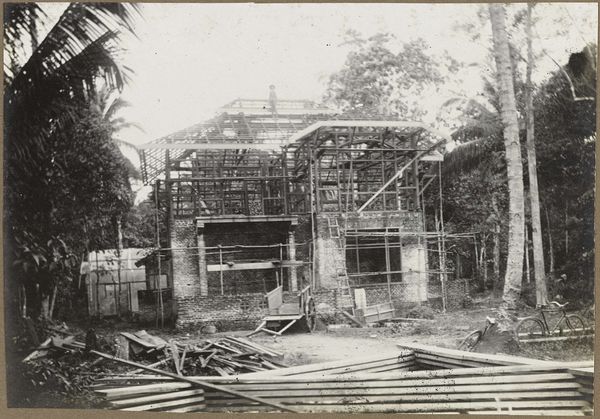
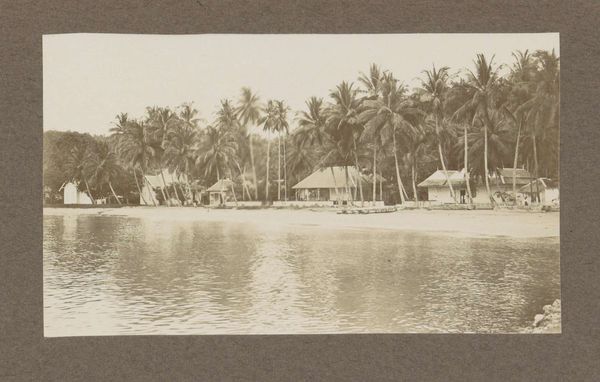
Exterieur van de rubberfabriek van de onderneming Batang Serangang op Sumatra c. 1900 - 1920
0:00
0:00

anonymous
Rijksmuseum
photography
#
landscape
#
photography
#
cityscape
Dimensions: height 79 mm, width 134 mm
Copyright: Rijks Museum: Open Domain
Curator: So, here we have an intriguing photograph, circa 1900-1920, capturing the exterior of the Batang Serangang rubber factory on Sumatra. The photographer remains anonymous, which, in a way, amplifies the photograph's historical weight, doesn't it? Editor: It does. My first thought is…contrast. It feels like a captured moment teetering between paradise and industry. Palm trees, then… angular buildings, a strange metal water tower looming like a futuristic mirage. What strikes you first? Curator: Absolutely the composition, layering of organic and inorganic. The interplay between the tropical foliage, almost obscuring and softening the factory’s rigid lines and its infrastructure, which really highlights the imposition of colonial industry on the landscape, both reshaping it and being partially swallowed up by it. We have to consider labor, exploitation and extraction here. Editor: I see that, yeah. There's also something sad about it. A loneliness perhaps. It's the in-between place that stays with me... I am looking at these barrels, are they to move and process the rubber, right? Almost like strange guardians, silent witnesses. What else about the process do you see at work here? Curator: Exactly. The scale of operations is evident from those processing containers. One cannot help but consider the workforce itself: the hands involved in both cultivation and refinement of the raw rubber, the people without whom this infrastructure would collapse. And there’s no visible people here. What about those formal relationships do you interpret? Editor: Invisible hands making a landscape. As I understand that Batang Serangang plantation was a private enterprise... Makes you wonder about conditions and lives back then. And seeing it framed so starkly makes the imagination just runs to envision so many stories hidden within this frame...I wonder, in my fantasies, if they were as romantic or cruel? Curator: And precisely what makes it compelling: the absences. The history isn’t simply documented, it's *implied.* We’re given a tableau prompting interrogation of this forgotten production. This isn't just a landscape photograph but is instead direct representation of socio-economic machinery. The question now is how should such complex and unequal relationships get rendered today? Editor: Hmm. I guess I walk away sensing history less as something distant and safely studied than as... echo resonating now. That photograph whispers about choices and lives then and still nudges towards today.
Comments
No comments
Be the first to comment and join the conversation on the ultimate creative platform.
 Collect
 React
React Comment
More like this