About this artwork
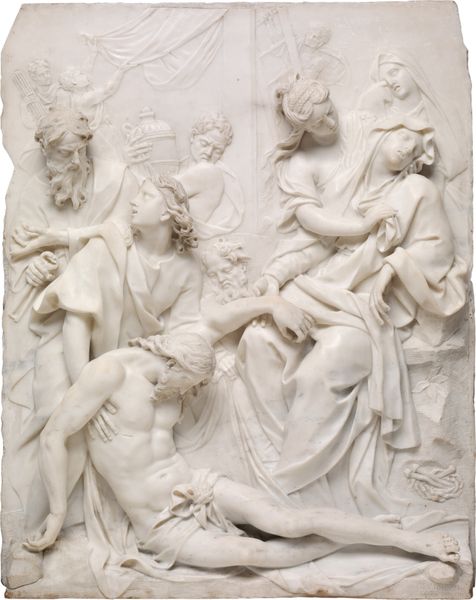
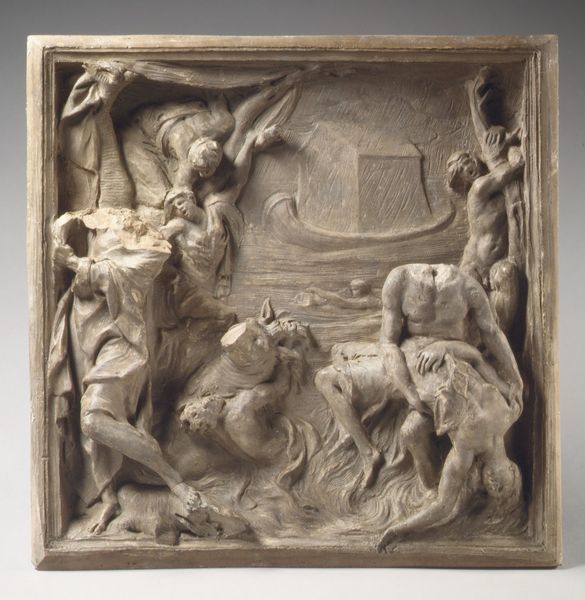
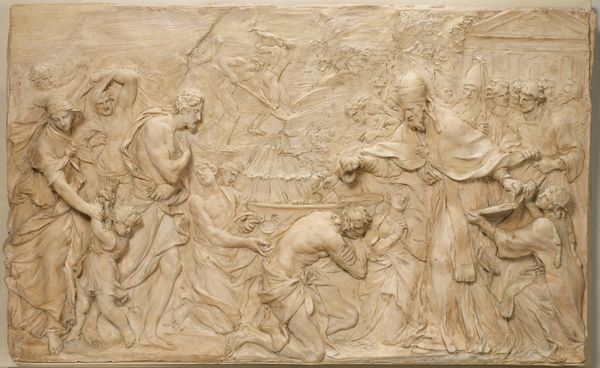
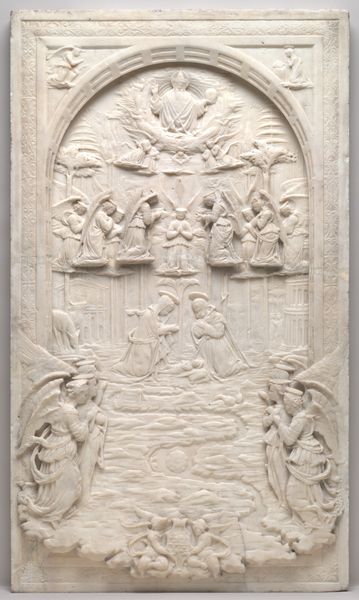
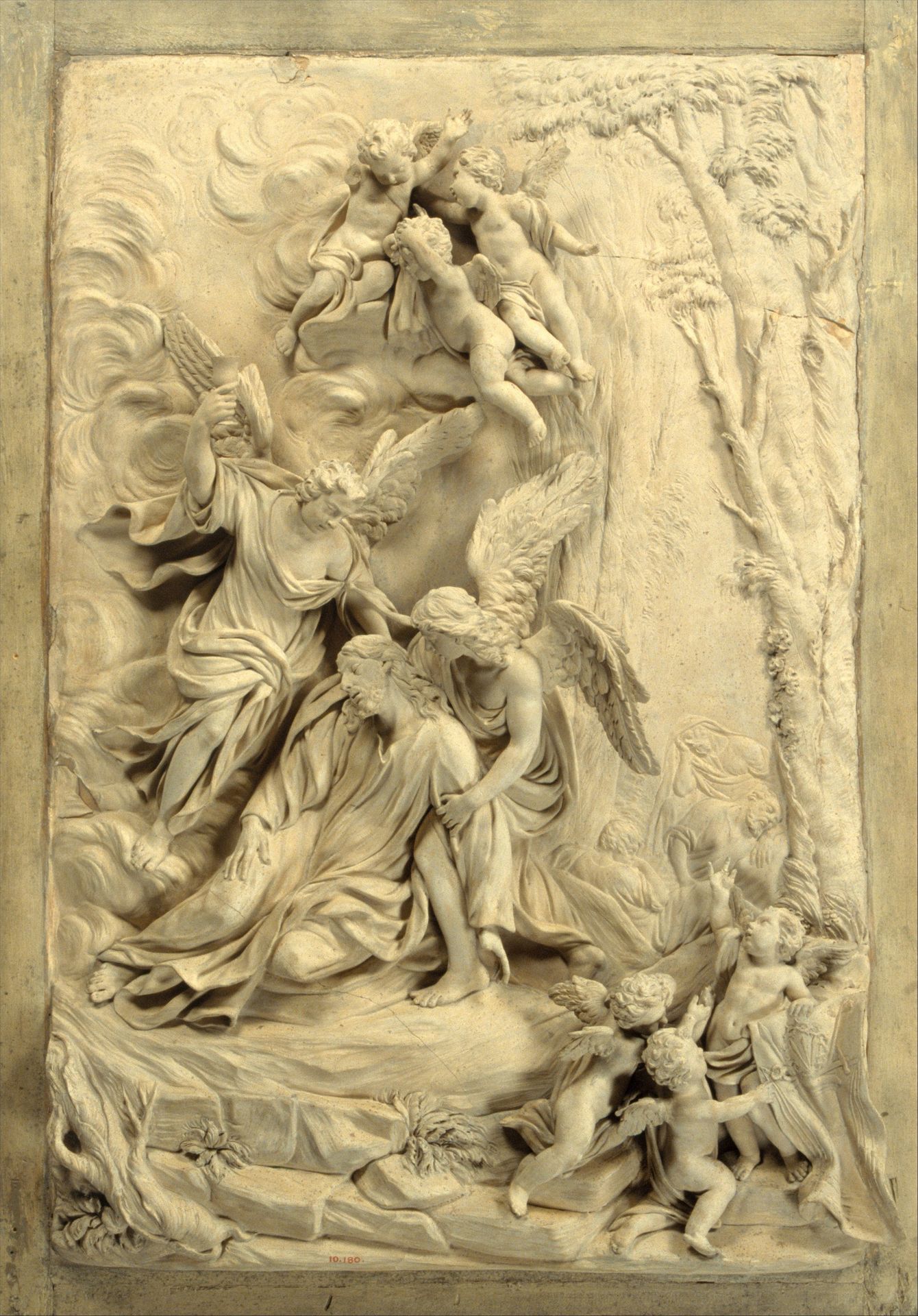
Massimiliano Soldani made this terracotta relief of the Agony in the Garden in Florence sometime in the late 17th or early 18th century. This image depicts the story from the Gospel of Luke, in which Jesus prays the night before his crucifixion. We see him kneeling in the garden of Gethsemane, comforted by an angel, while a host of cherubs looks on. Soldani has used the visual language of the Catholic Church to create a devotional artwork that is both moving and instructive. The whiteness of the terracotta makes the sculpture look like it is made out of marble. Florence in this period was dominated by the Catholic Church and its artistic patronage. Soldani's sculpture is a product of this environment, reflecting the religious and cultural values of his time. By studying the history of Florence and the Catholic Church, and their patronage of the arts, we can better understand the social conditions that made this sculpture possible. It gives us insight into the role of art in shaping and reflecting the values of its time.
The Agony in the Garden
1700 - 1715

Massimiliano Soldani
1656 - 1740
The Metropolitan Museum of Art
Metropolitan Museum of Art, New York, NYArtwork details
- Medium
- relief, sculpture, marble
- Dimensions
- 23 3/4 × 16 in. (60.3 × 40.6 cm)
- Location
- Metropolitan Museum of Art, New York, NY
- Copyright
- Public Domain
Tags
Comments
Share your thoughts
About this artwork
Massimiliano Soldani made this terracotta relief of the Agony in the Garden in Florence sometime in the late 17th or early 18th century. This image depicts the story from the Gospel of Luke, in which Jesus prays the night before his crucifixion. We see him kneeling in the garden of Gethsemane, comforted by an angel, while a host of cherubs looks on. Soldani has used the visual language of the Catholic Church to create a devotional artwork that is both moving and instructive. The whiteness of the terracotta makes the sculpture look like it is made out of marble. Florence in this period was dominated by the Catholic Church and its artistic patronage. Soldani's sculpture is a product of this environment, reflecting the religious and cultural values of his time. By studying the history of Florence and the Catholic Church, and their patronage of the arts, we can better understand the social conditions that made this sculpture possible. It gives us insight into the role of art in shaping and reflecting the values of its time.
Comments
Share your thoughts