About this artwork
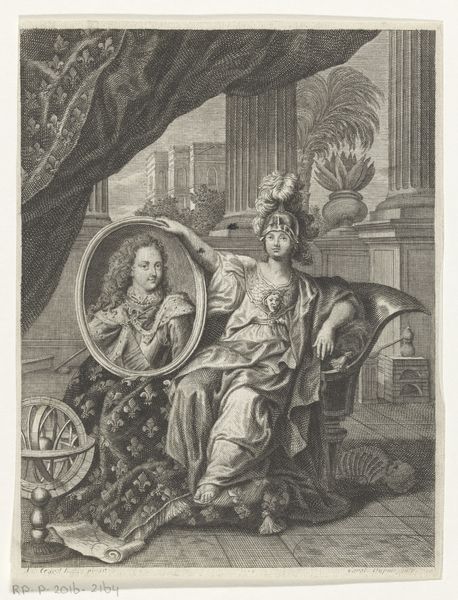
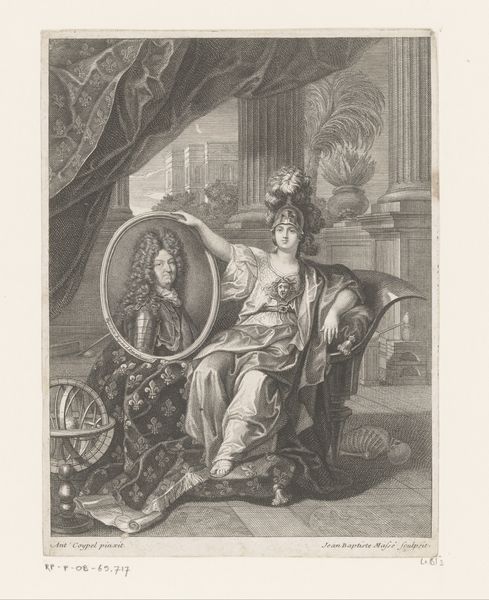
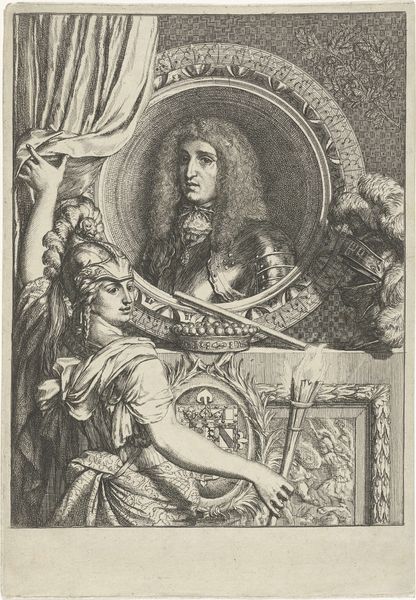
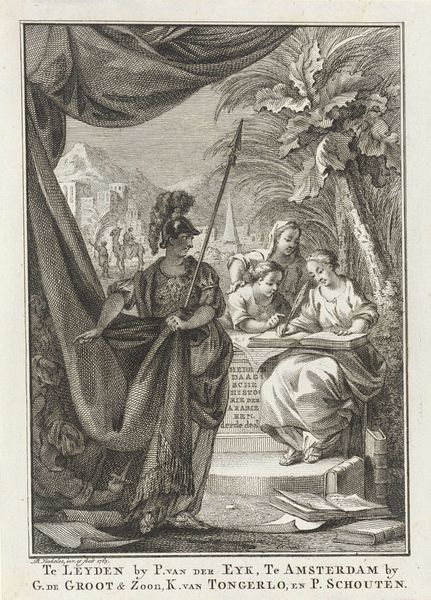
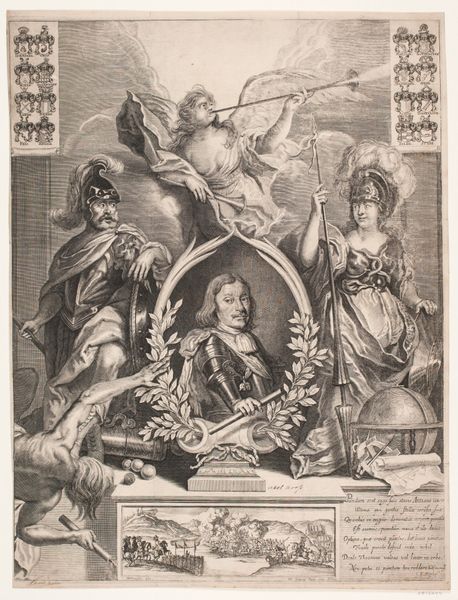
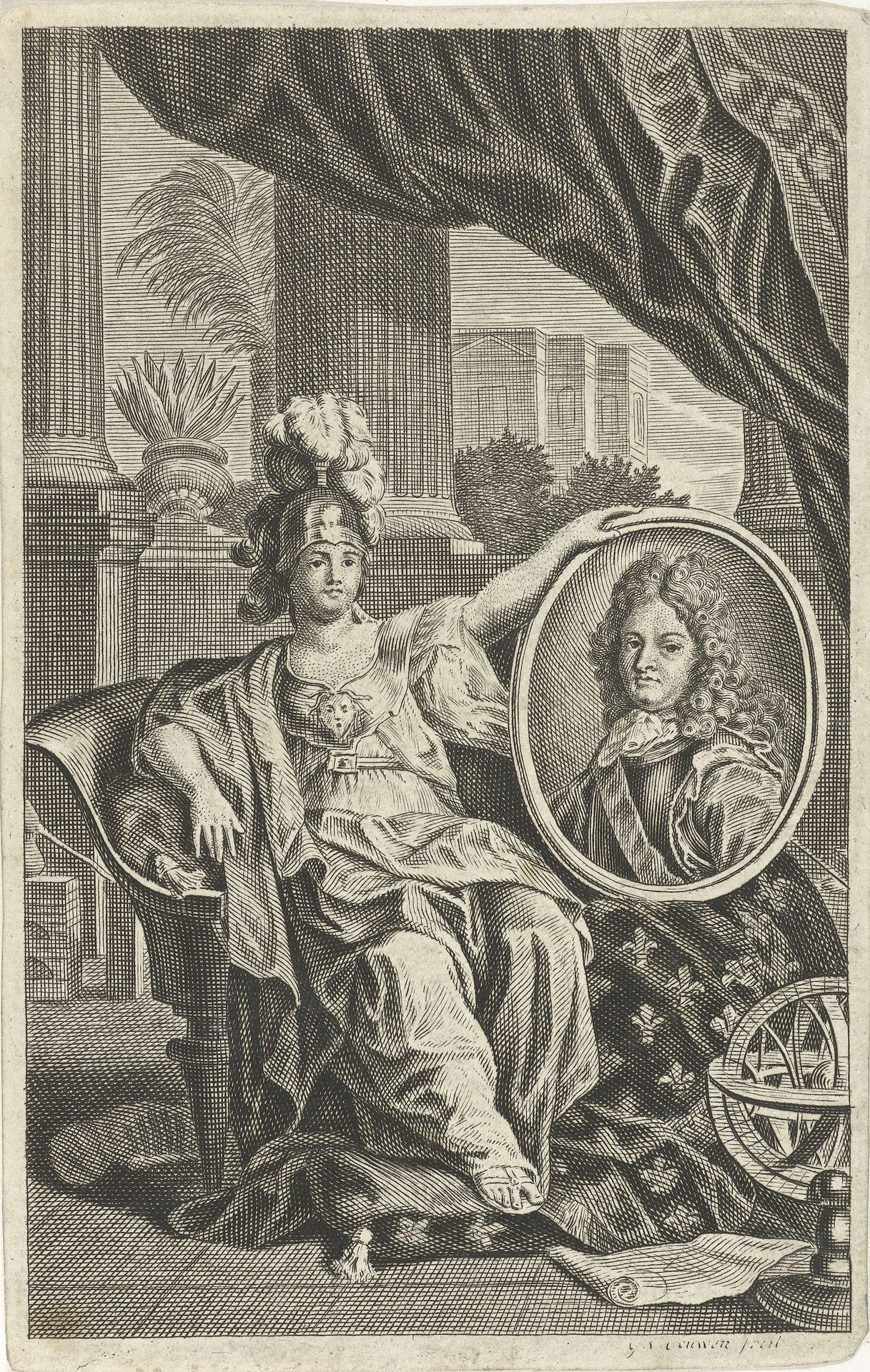
Gilliam van der Gouwen created this engraving, titled "Minerva with the portrait of an unknown man," around 1740. Here, Minerva, the Roman goddess of wisdom and strategic warfare, presents a portrait of an unknown man, enveloped by symbols of intellect and power. Minerva’s presence is a potent symbol in itself, resonating with images of Athena from ancient Greece, a visual motif that recurs through the ages, embodying reason and skill. The fleur-de-lis on the drapery, a symbol historically associated with French royalty, adds a layer of nobility. This evokes the complex dance between power, knowledge, and divine approval that has preoccupied artists and patrons for centuries. Consider how such symbols tap into our collective memory, stirring subconscious connections to historical narratives and archetypal figures. These symbols form a bridge across time, reminding us that the pursuit of wisdom and the desire for recognition are enduring aspects of the human experience.
Minerva met het portret van een onbekende man
c. 1670 - 1740

Gilliam van der Gouwen
1740Location
RijksmuseumArtwork details
- Medium
- engraving
- Dimensions
- height 141 mm, width 90 mm
- Location
- Rijksmuseum
- Copyright
- Rijks Museum: Open Domain
Tags
Comments
Share your thoughts
About this artwork
Gilliam van der Gouwen created this engraving, titled "Minerva with the portrait of an unknown man," around 1740. Here, Minerva, the Roman goddess of wisdom and strategic warfare, presents a portrait of an unknown man, enveloped by symbols of intellect and power. Minerva’s presence is a potent symbol in itself, resonating with images of Athena from ancient Greece, a visual motif that recurs through the ages, embodying reason and skill. The fleur-de-lis on the drapery, a symbol historically associated with French royalty, adds a layer of nobility. This evokes the complex dance between power, knowledge, and divine approval that has preoccupied artists and patrons for centuries. Consider how such symbols tap into our collective memory, stirring subconscious connections to historical narratives and archetypal figures. These symbols form a bridge across time, reminding us that the pursuit of wisdom and the desire for recognition are enduring aspects of the human experience.
Comments
Share your thoughts