About this artwork
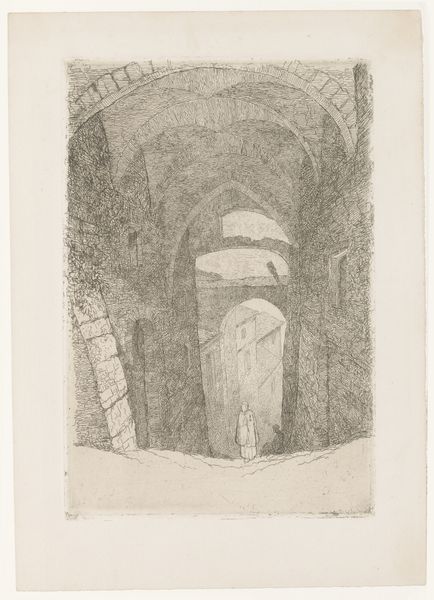
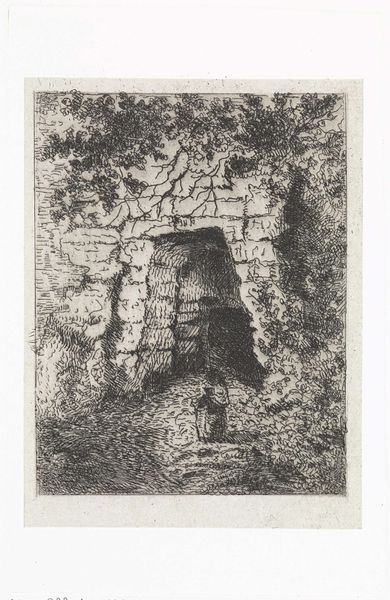
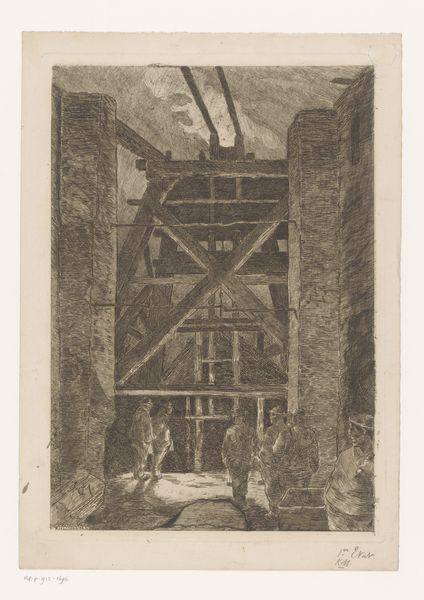
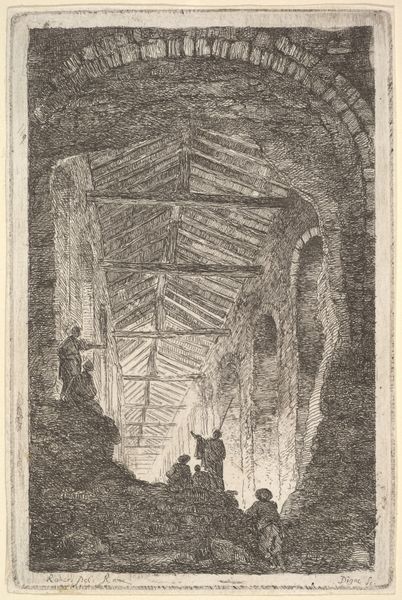
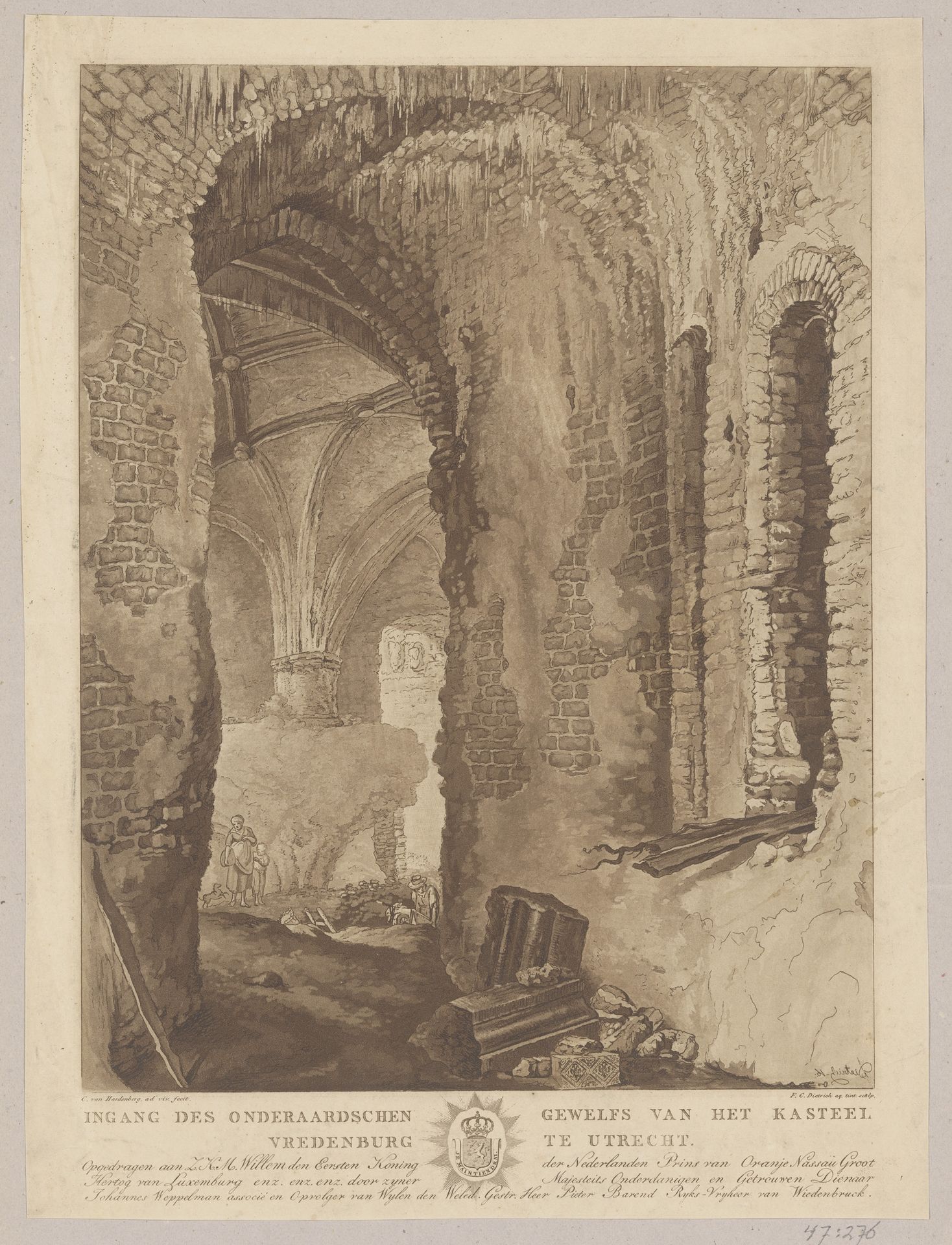
Friedrich Christoph Dietrich created this drawing of the underground vault of Vredenburg Castle in Utrecht using pen, brush and gray ink. The composition is dominated by the decaying architecture of the vault, rendered with detailed brickwork and crumbling textures. The monochromatic palette amplifies the somber mood, inviting contemplation on themes of ruin and time. Light filters into the vault, casting shadows that emphasize the depth and structural complexity of the space. Dietrich destabilizes typical representations of architectural grandeur. The stark portrayal of decay challenges our fixed understanding of strength and permanence. The semiotic weight of the ruined castle can be interpreted as a signifier of shifting power dynamics, echoing broader societal changes during the period. Consider how Dietrich's focus on the textures of decay and the interplay of light and shadow serves not merely an aesthetic function, but also raises historical and philosophical questions about the nature of power, time, and representation. The drawing exists as an ongoing cultural dialogue through which meanings are renegotiated and reinterpreted across generations.
Gezicht op het onderaards gewelf van kasteel Vredenburg in Utrecht
1817 - 1840

Friedrich Christoph Dietrich
1779 - 1847Location
RijksmuseumArtwork details
- Medium
- drawing, paper, graphite, charcoal
- Dimensions
- height 396 mm, width 298 mm
- Location
- Rijksmuseum
- Copyright
- Rijks Museum: Open Domain
Tags
Comments
Share your thoughts
About this artwork
Friedrich Christoph Dietrich created this drawing of the underground vault of Vredenburg Castle in Utrecht using pen, brush and gray ink. The composition is dominated by the decaying architecture of the vault, rendered with detailed brickwork and crumbling textures. The monochromatic palette amplifies the somber mood, inviting contemplation on themes of ruin and time. Light filters into the vault, casting shadows that emphasize the depth and structural complexity of the space. Dietrich destabilizes typical representations of architectural grandeur. The stark portrayal of decay challenges our fixed understanding of strength and permanence. The semiotic weight of the ruined castle can be interpreted as a signifier of shifting power dynamics, echoing broader societal changes during the period. Consider how Dietrich's focus on the textures of decay and the interplay of light and shadow serves not merely an aesthetic function, but also raises historical and philosophical questions about the nature of power, time, and representation. The drawing exists as an ongoing cultural dialogue through which meanings are renegotiated and reinterpreted across generations.
Comments
Share your thoughts