About this artwork
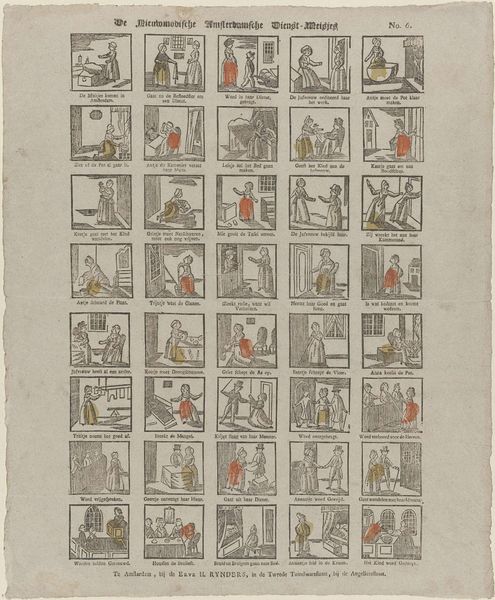
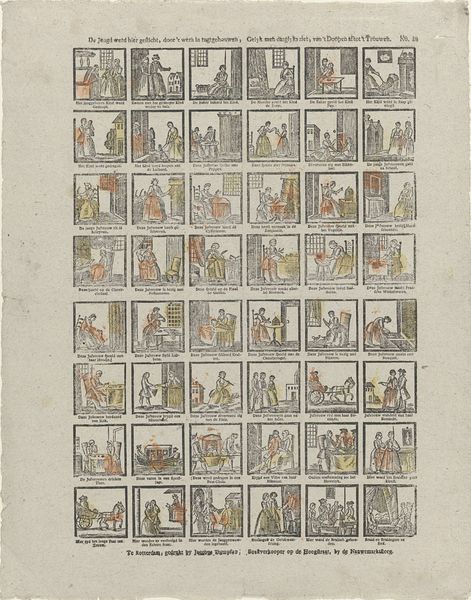
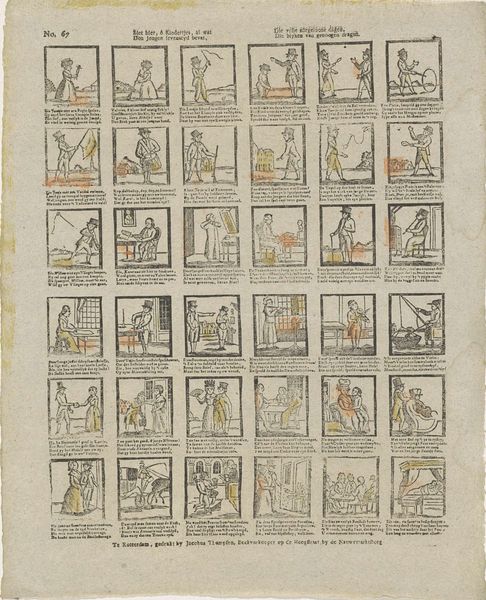
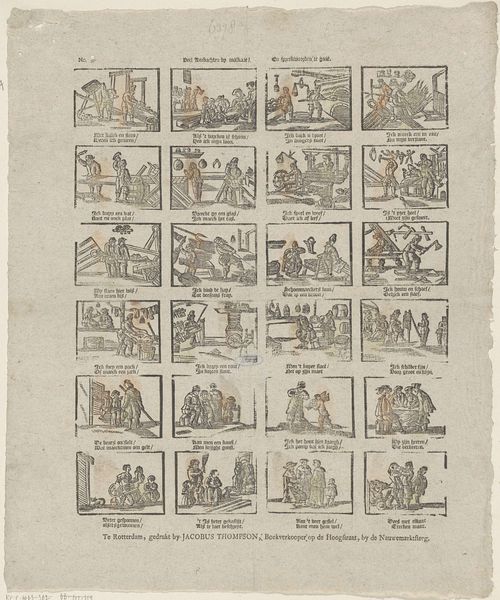
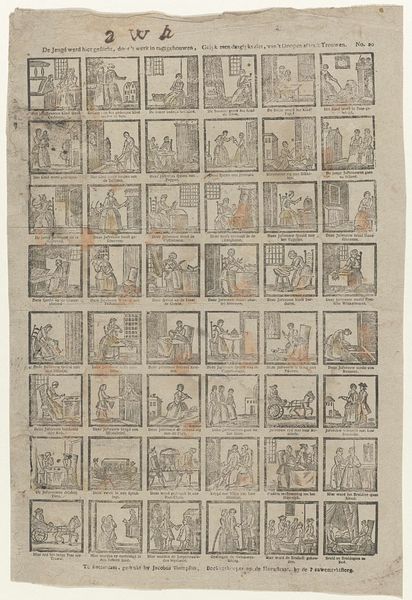
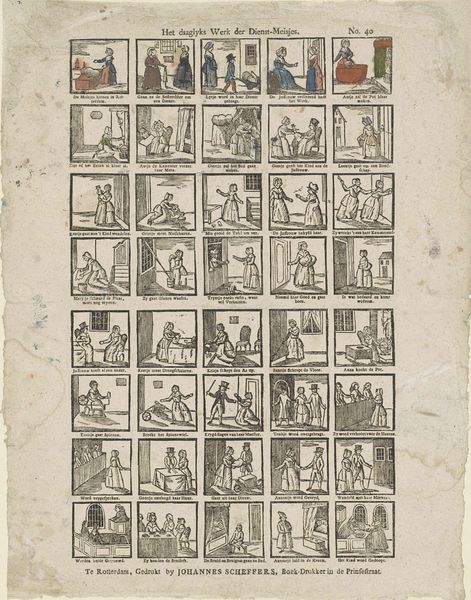
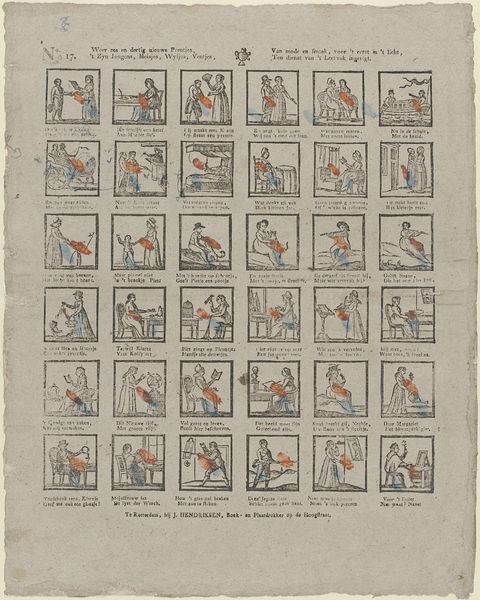
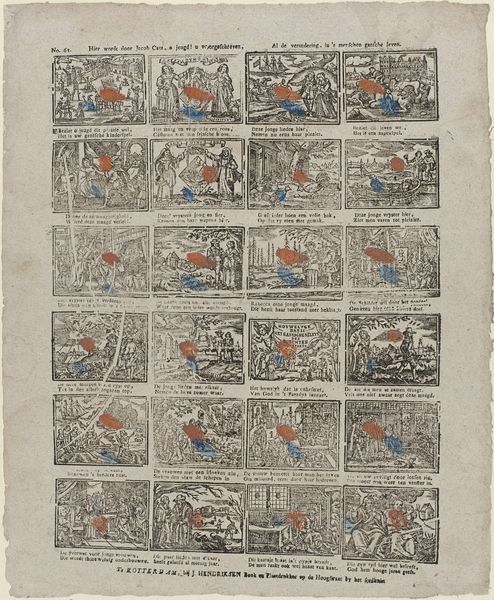
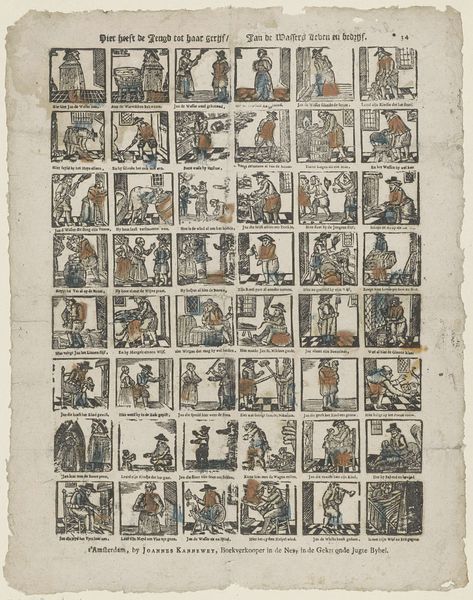
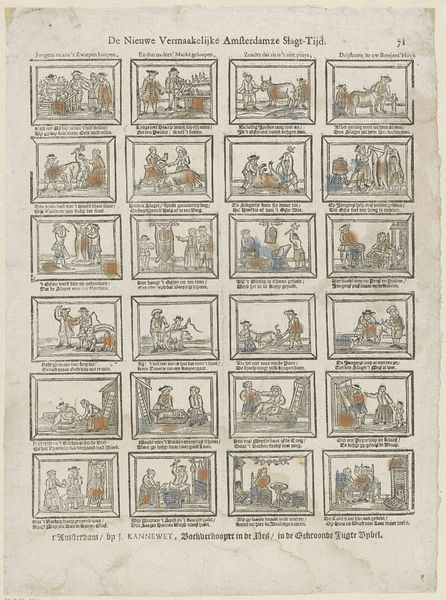
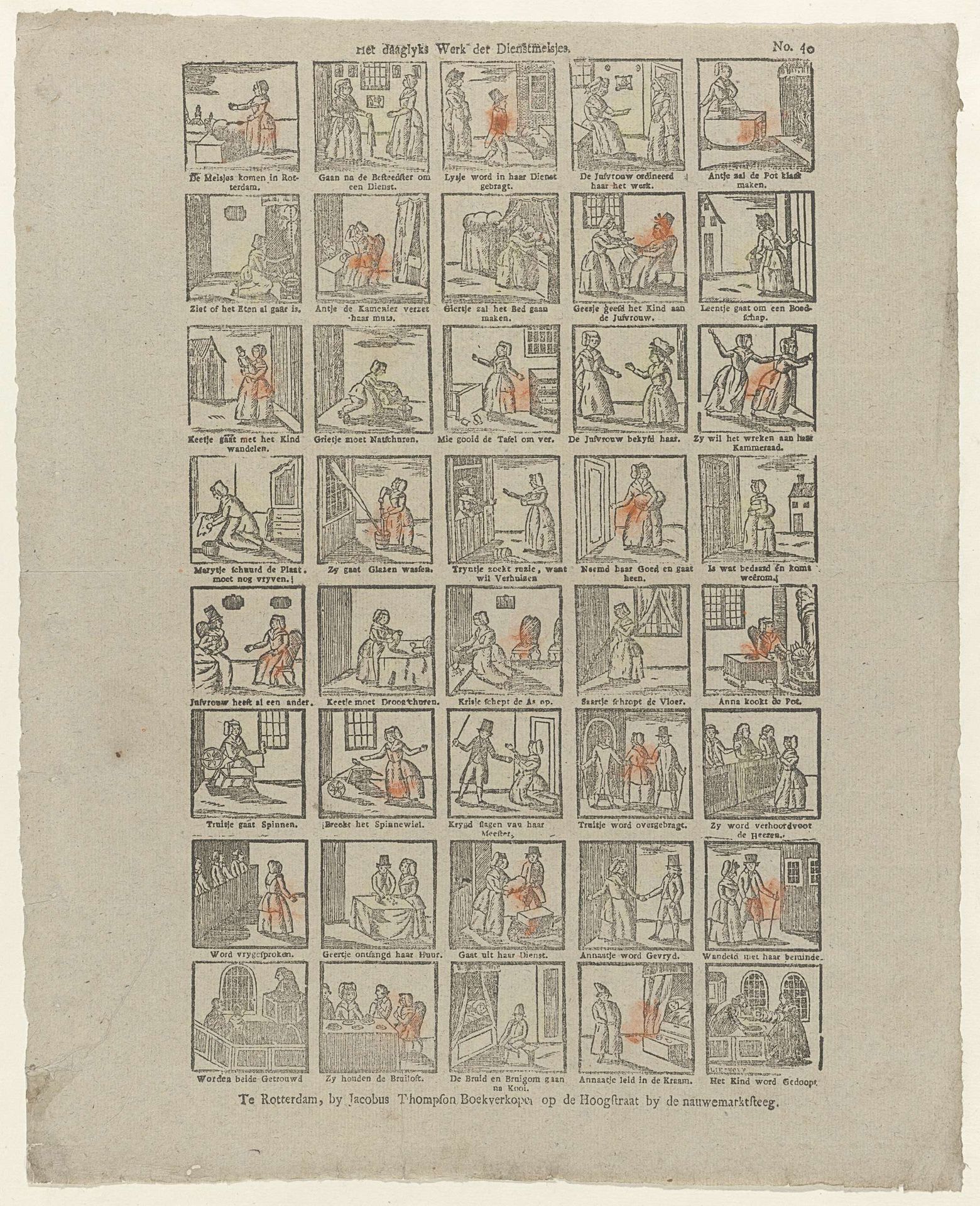
This print, "Het daaglyks werk der dienstmeisjes", or "The Daily Work of the Maids," was made in Rotterdam by Jacobus Thompson. It’s an intriguing visual document of the lives of working-class women in the Netherlands. These small scenes offer us a glimpse into the labor, and perhaps the social standing, of maids. This would have been a period of growing urban centers and shifting class structures. Consider how institutions of printing and publishing might be engaging with ideas of class, labor, and social mobility. What messages about the social hierarchy are being communicated here? Are these images designed to uplift or demean the maids? As historians, we might use sources such as census data, household accounts, and even literature of the time to piece together a more comprehensive picture of the world these images represent. By understanding the cultural and economic context, we can begin to interpret the social commentary embedded within the artwork.
Het daaglyks werk der dienstmeisjes 1791 - 1812

Jacobus Thompson
@jacobusthompsonLocation
RijksmuseumArtwork details
- Medium
- print, engraving
- Dimensions
- height 408 mm, width 327 mm
- Location
- Rijksmuseum
- Copyright
- Rijks Museum: Open Domain
Tags
narrative-art
ukiyo-e
comic
genre-painting
engraving
Comments
No comments
About this artwork
This print, "Het daaglyks werk der dienstmeisjes", or "The Daily Work of the Maids," was made in Rotterdam by Jacobus Thompson. It’s an intriguing visual document of the lives of working-class women in the Netherlands. These small scenes offer us a glimpse into the labor, and perhaps the social standing, of maids. This would have been a period of growing urban centers and shifting class structures. Consider how institutions of printing and publishing might be engaging with ideas of class, labor, and social mobility. What messages about the social hierarchy are being communicated here? Are these images designed to uplift or demean the maids? As historians, we might use sources such as census data, household accounts, and even literature of the time to piece together a more comprehensive picture of the world these images represent. By understanding the cultural and economic context, we can begin to interpret the social commentary embedded within the artwork.
Comments
No comments