About this artwork
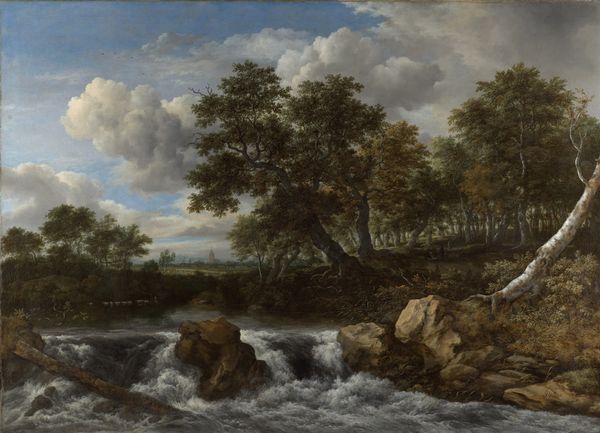
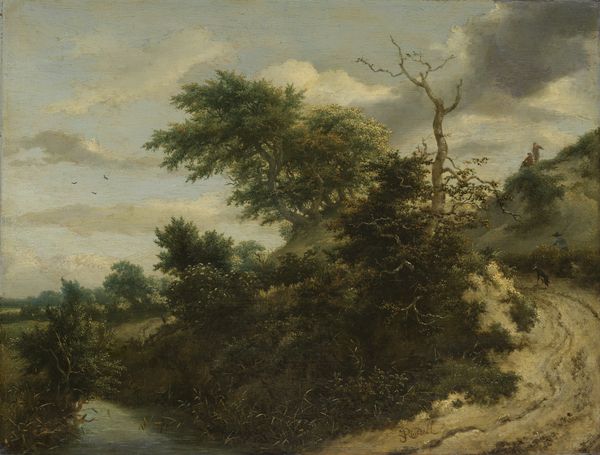
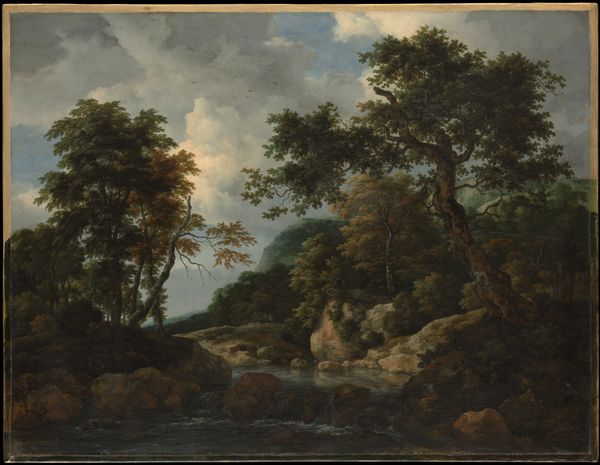
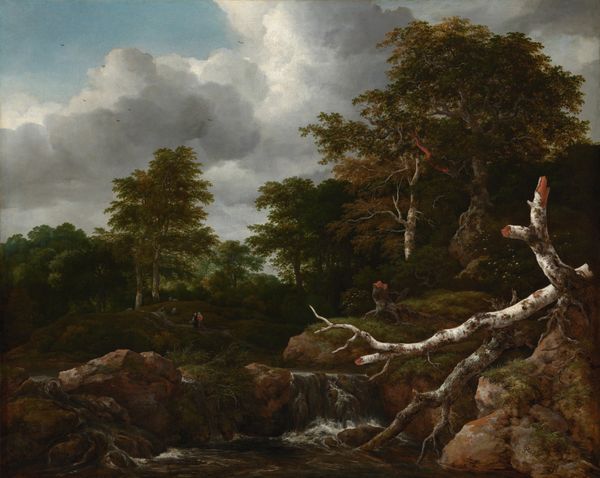
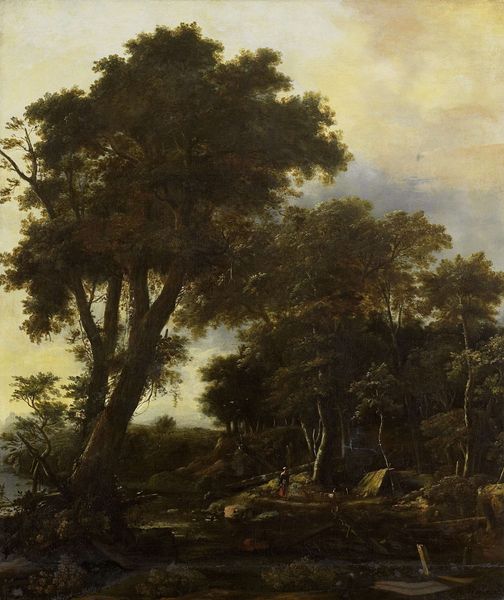
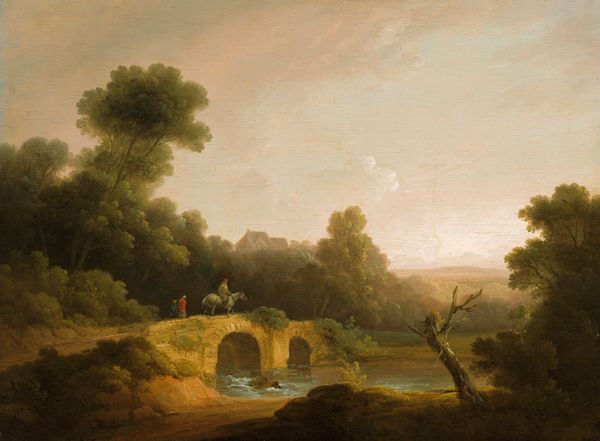
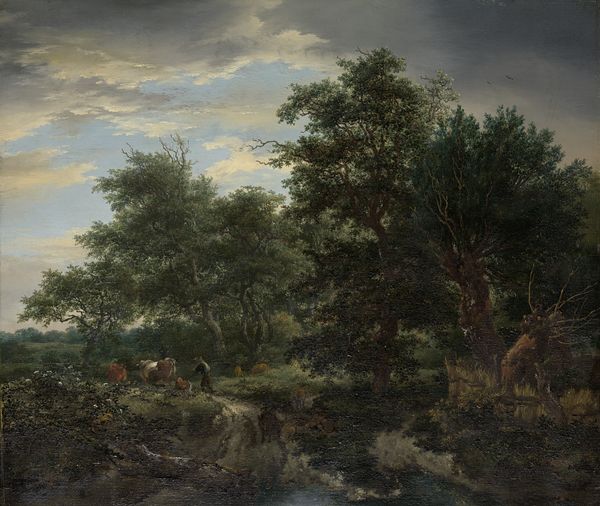
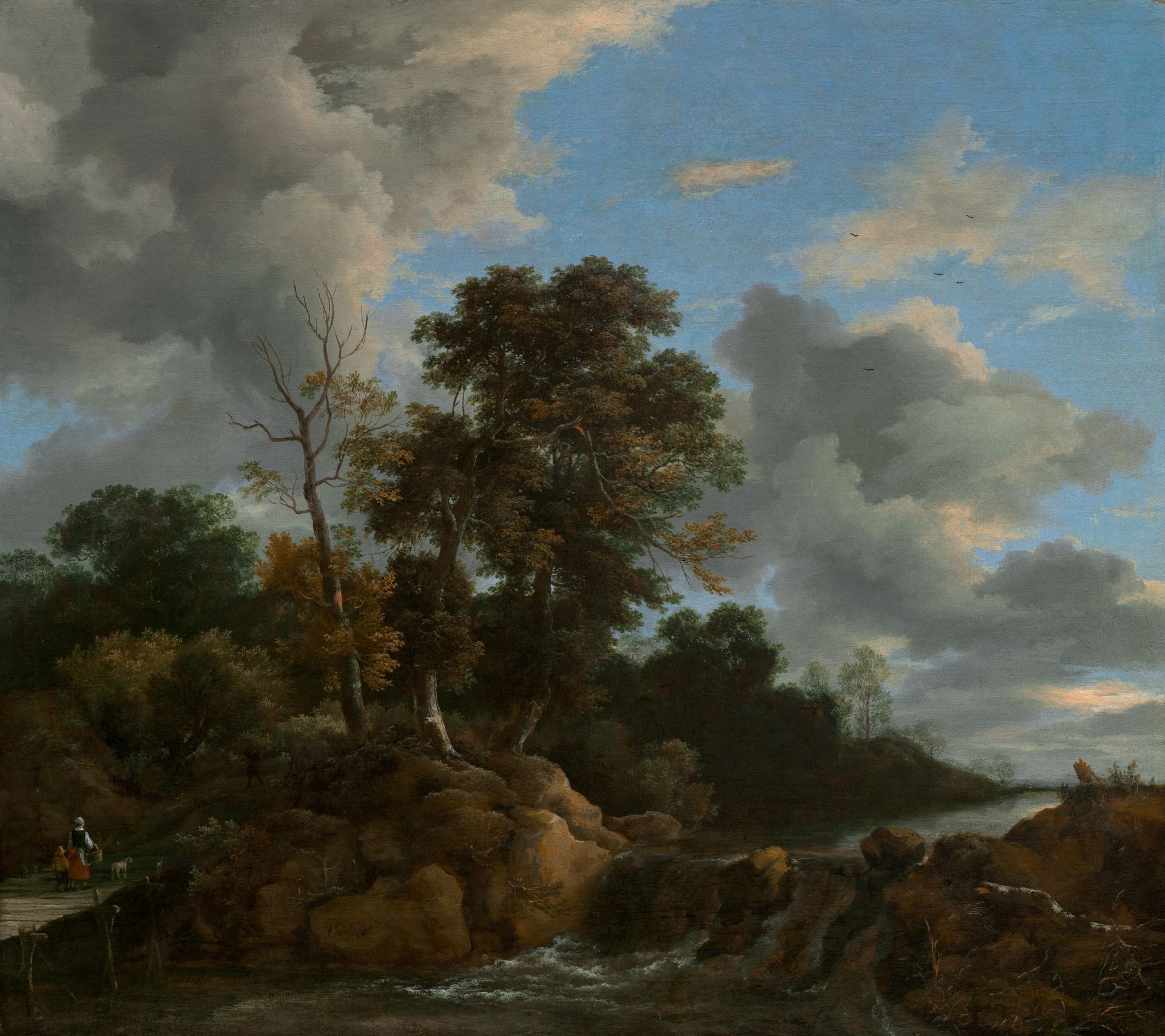
Jacob van Ruisdael created this ‘Landscape’ with oil on canvas during the Dutch Golden Age, a period marked by unprecedented economic prosperity for the Dutch Republic. This painting is a window into the 17th century's relationship with the natural world. The painting depicts an idealized vision of the Dutch countryside, a space imbued with both serenity and the potential for the sublime. Note the figures on the bridge, seemingly dwarfed by the grandeur of the landscape. The way Ruisdael captures the light as it filters through the trees and reflects off the water makes us consider ideas around human existence and our small place within the wider natural world. Ruisdael’s landscapes invited viewers to reflect on their relationship with the land, which was especially pertinent in a society undergoing rapid urbanization and economic change. The commodification of land and resources was beginning, yet there was also a deep appreciation for the beauty and tranquility of the natural world.


Artwork details
- Medium
- painting, oil-paint
- Dimensions
- overall: 53.2 x 60 cm (20 15/16 x 23 5/8 in.) framed: 78.7 x 85.1 x 9.5 cm (31 x 33 1/2 x 3 3/4 in.)
- Copyright
- National Gallery of Art: CC0 1.0
Tags
baroque
dutch-golden-age
painting
oil-paint
landscape
cityscape
realism
Comments
Be the first to share your thoughts about this work.
About this artwork
Jacob van Ruisdael created this ‘Landscape’ with oil on canvas during the Dutch Golden Age, a period marked by unprecedented economic prosperity for the Dutch Republic. This painting is a window into the 17th century's relationship with the natural world. The painting depicts an idealized vision of the Dutch countryside, a space imbued with both serenity and the potential for the sublime. Note the figures on the bridge, seemingly dwarfed by the grandeur of the landscape. The way Ruisdael captures the light as it filters through the trees and reflects off the water makes us consider ideas around human existence and our small place within the wider natural world. Ruisdael’s landscapes invited viewers to reflect on their relationship with the land, which was especially pertinent in a society undergoing rapid urbanization and economic change. The commodification of land and resources was beginning, yet there was also a deep appreciation for the beauty and tranquility of the natural world.
Comments
Be the first to share your thoughts about this work.