About this artwork
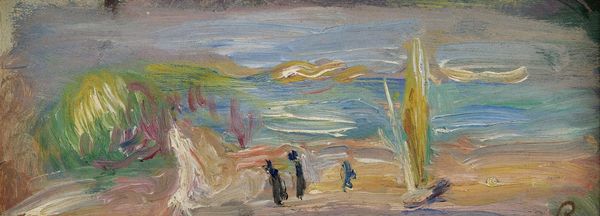
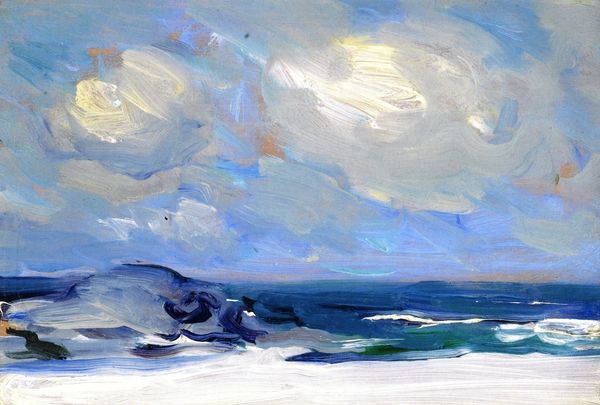
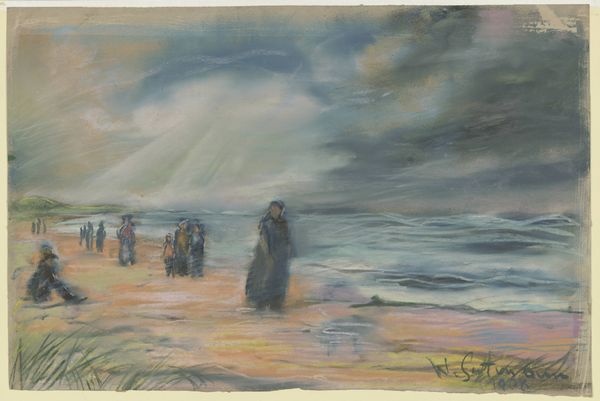
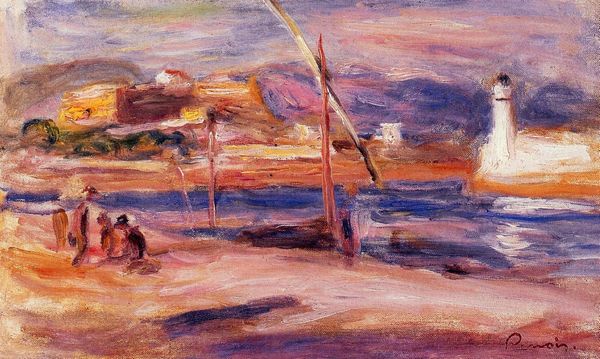
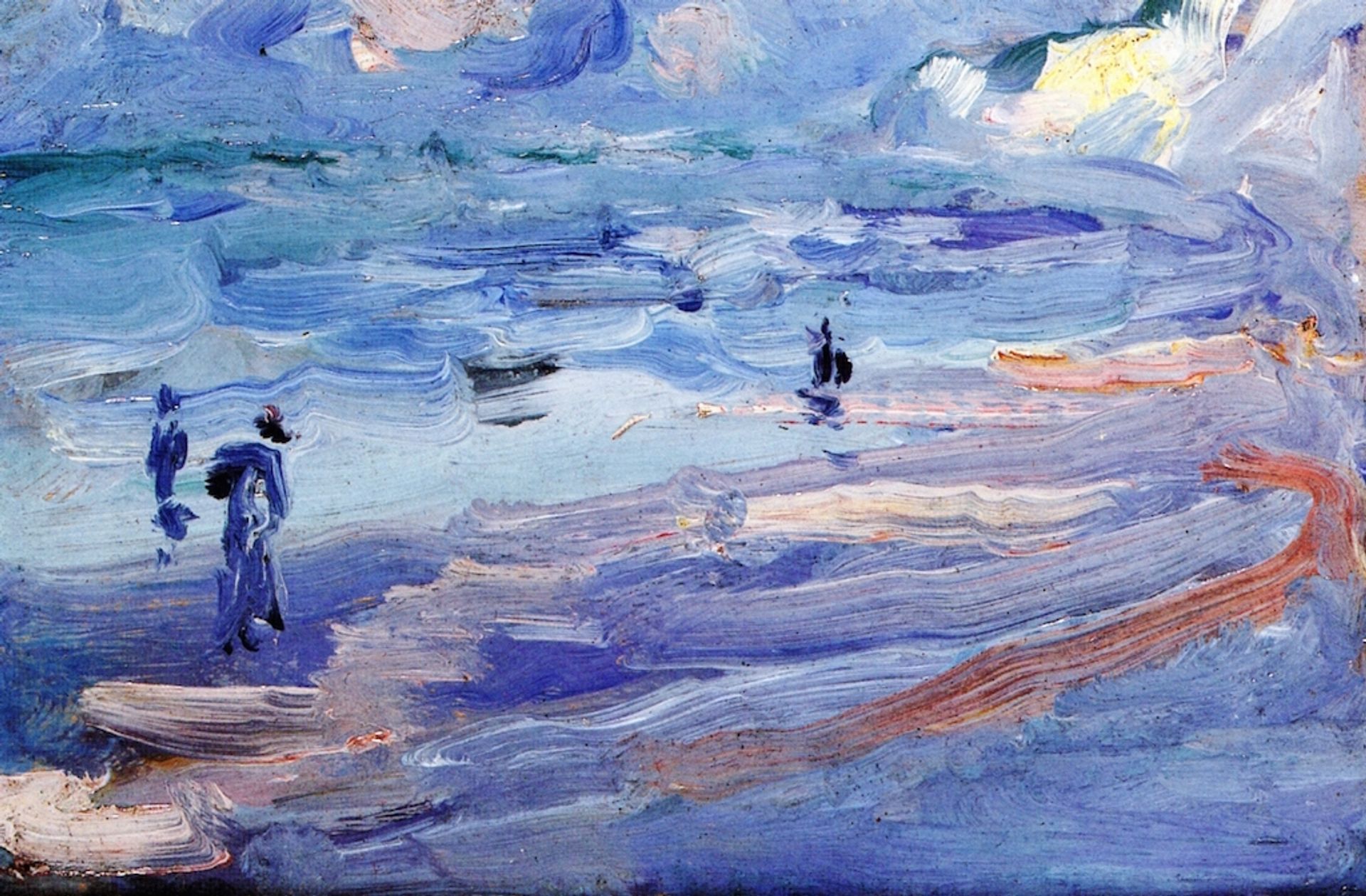
Editor: We're looking at Samuel Peploe's "Figures on a Beach," and it's just this gorgeous swirl of blues and whites. The figures are barely there, almost swallowed by the landscape. What do you see in this piece? Curator: The lack of specific dating can often lead to speculation, which is welcome when analyzing Peploe! He was a master of impressionistic light and color, but what resonates here, for me, is how Peploe uses those strokes of blue to invoke a shared experience of being at the water's edge, evoking what Carl Jung calls "oceanic feeling" that connects the individual psyche to the vast collective unconscious, but does the absence of hard lines invite viewers to project their own memories onto it? Editor: Absolutely. I find it interesting how the figures are these vague forms, like memories fading away. Is it fair to see something melancholic, maybe even existential? Curator: Yes. I suggest the beach, culturally, it represents a threshold. A meeting place between the known and the unknown, between land and sea, consciously evoking the space between being and not-being? Look closely, and ask yourselves what these ambiguous figures invite you to remember. Editor: That's a lovely way to put it. It makes me think about how we use images to reconstruct our own past. Curator: Indeed. In many ways we could see Peploe as setting a scene that encourages a deep form of recall using symbols. Editor: I never would have thought about the beach that way! This piece now feels very personal. Curator: Precisely! Art gives images back to memory.

Artwork details
- Copyright
- Public domain
Tags
abstract expressionism
sky
abstract painting
fauvism
impressionist landscape
possibly oil pastel
fluid art
neo expressionist
acrylic on canvas
paint stroke
water
expressionist
Comments
Be the first to share your thoughts about this work.
About this artwork
Editor: We're looking at Samuel Peploe's "Figures on a Beach," and it's just this gorgeous swirl of blues and whites. The figures are barely there, almost swallowed by the landscape. What do you see in this piece? Curator: The lack of specific dating can often lead to speculation, which is welcome when analyzing Peploe! He was a master of impressionistic light and color, but what resonates here, for me, is how Peploe uses those strokes of blue to invoke a shared experience of being at the water's edge, evoking what Carl Jung calls "oceanic feeling" that connects the individual psyche to the vast collective unconscious, but does the absence of hard lines invite viewers to project their own memories onto it? Editor: Absolutely. I find it interesting how the figures are these vague forms, like memories fading away. Is it fair to see something melancholic, maybe even existential? Curator: Yes. I suggest the beach, culturally, it represents a threshold. A meeting place between the known and the unknown, between land and sea, consciously evoking the space between being and not-being? Look closely, and ask yourselves what these ambiguous figures invite you to remember. Editor: That's a lovely way to put it. It makes me think about how we use images to reconstruct our own past. Curator: Indeed. In many ways we could see Peploe as setting a scene that encourages a deep form of recall using symbols. Editor: I never would have thought about the beach that way! This piece now feels very personal. Curator: Precisely! Art gives images back to memory.
Comments
Be the first to share your thoughts about this work.