About this artwork
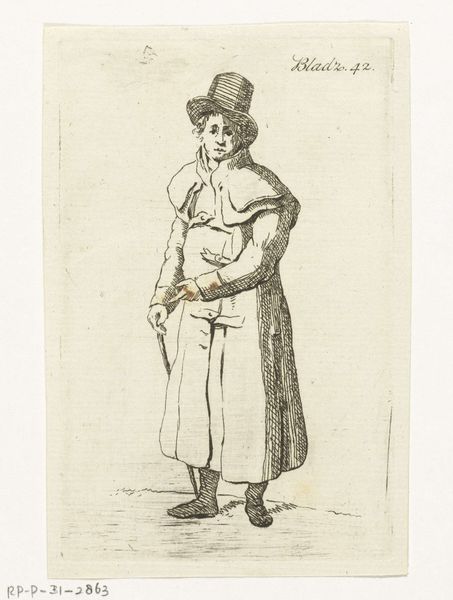
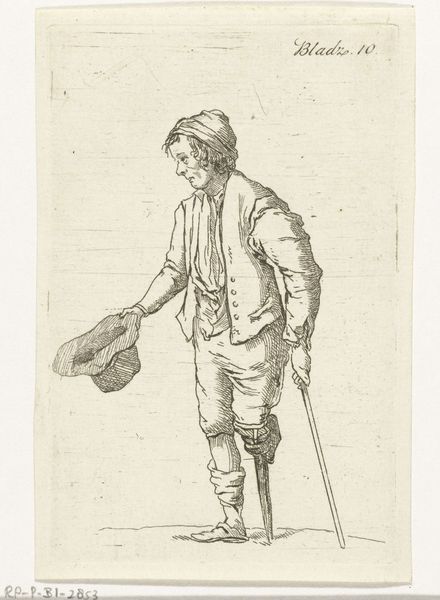
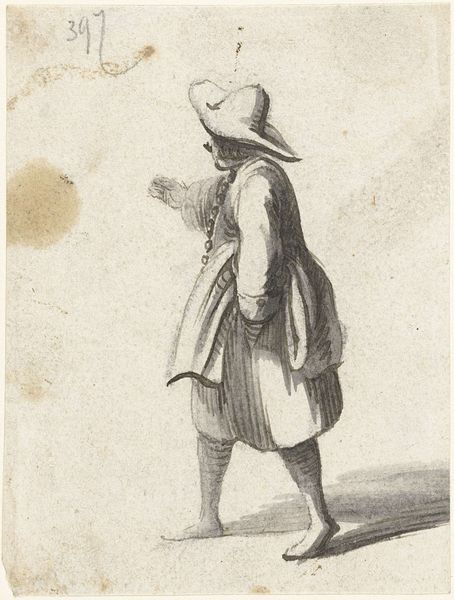
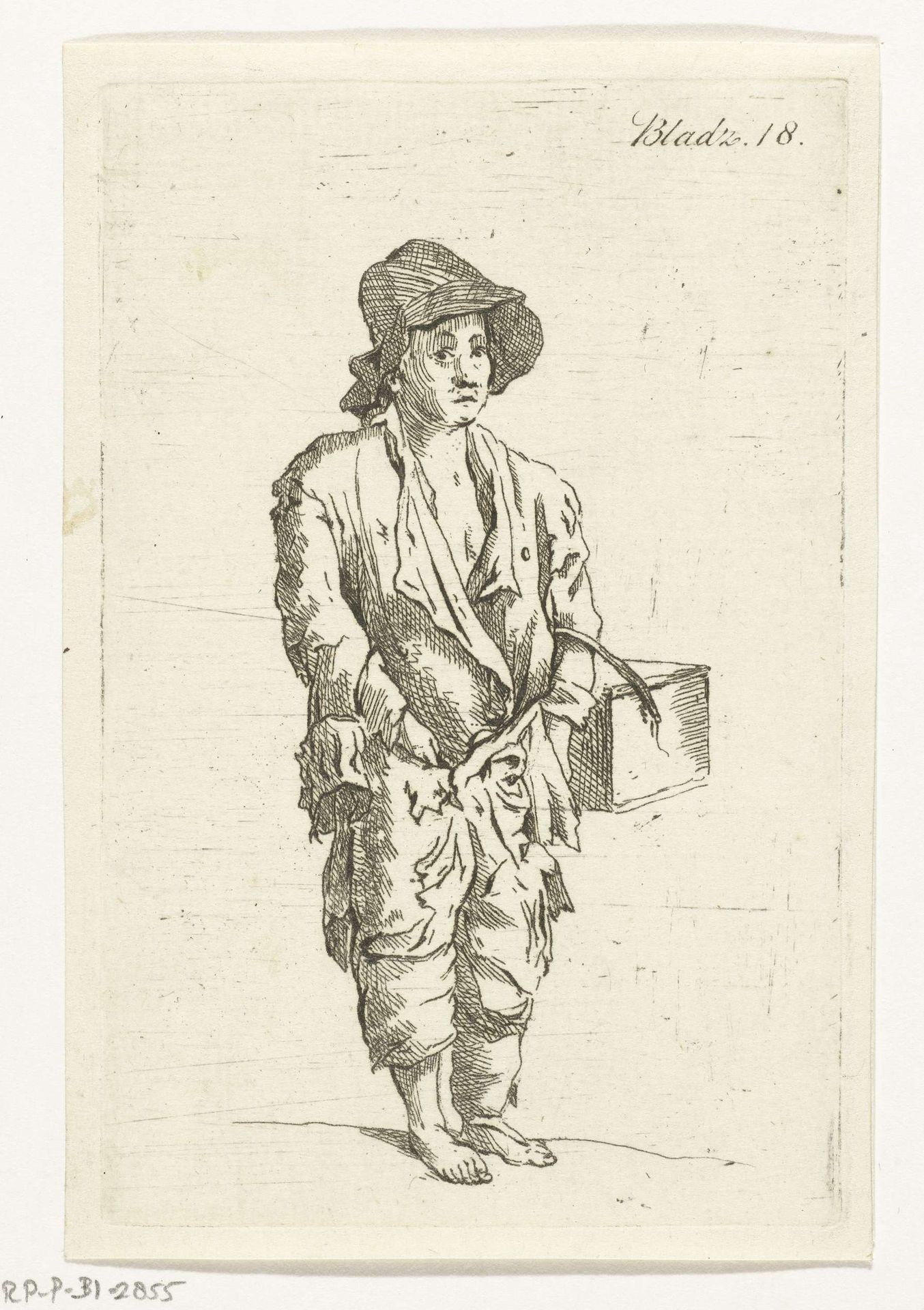
Anthonie van den Bos created this etching, ‘Standing Boy Dressed in Rags’, using metal, acid, and ink. The method relies on the artist’s skilled application of acid to the metal plate, biting away lines that will hold the ink. Look closely, and you’ll notice how the precise, deliberate marks capture the boy’s tattered clothing and barefoot stance, revealing a story of poverty and marginalization. Etching allowed the wide distribution of images, making it a powerful tool for social commentary. The marks carry a social charge. Consider the labor involved: from the initial drawing to the chemical processes, each step reflects a meticulous, time-intensive practice. By focusing on the material reality of etching, and the subject depicted, we can appreciate how art like this engages with the social and economic realities of its time, challenging any strict division between art and craft.
Staande jongen gekleed in lompen
1778 - 1838

Anthonie van den Bos
1763 - 1838Location
RijksmuseumArtwork details
- Medium
- drawing, print, etching, paper
- Dimensions
- height 120 mm, width 80 mm
- Location
- Rijksmuseum
- Copyright
- Rijks Museum: Open Domain
Tags
Comments
Share your thoughts
About this artwork
Anthonie van den Bos created this etching, ‘Standing Boy Dressed in Rags’, using metal, acid, and ink. The method relies on the artist’s skilled application of acid to the metal plate, biting away lines that will hold the ink. Look closely, and you’ll notice how the precise, deliberate marks capture the boy’s tattered clothing and barefoot stance, revealing a story of poverty and marginalization. Etching allowed the wide distribution of images, making it a powerful tool for social commentary. The marks carry a social charge. Consider the labor involved: from the initial drawing to the chemical processes, each step reflects a meticulous, time-intensive practice. By focusing on the material reality of etching, and the subject depicted, we can appreciate how art like this engages with the social and economic realities of its time, challenging any strict division between art and craft.
Comments
Share your thoughts