c. 15th century
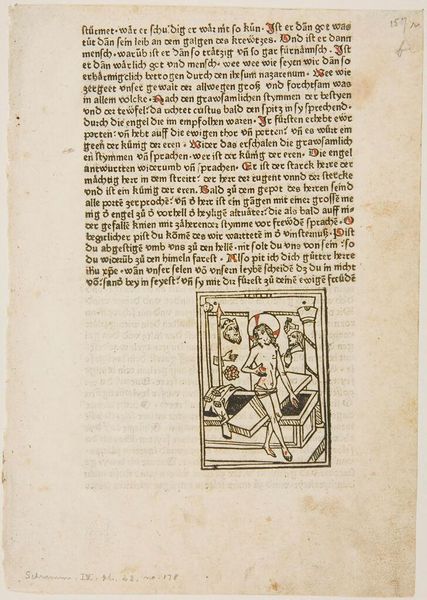
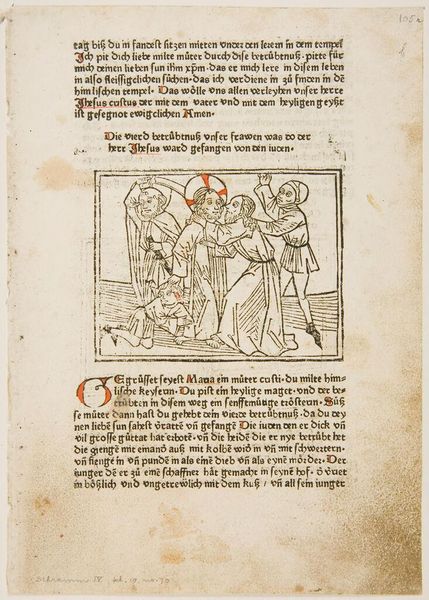
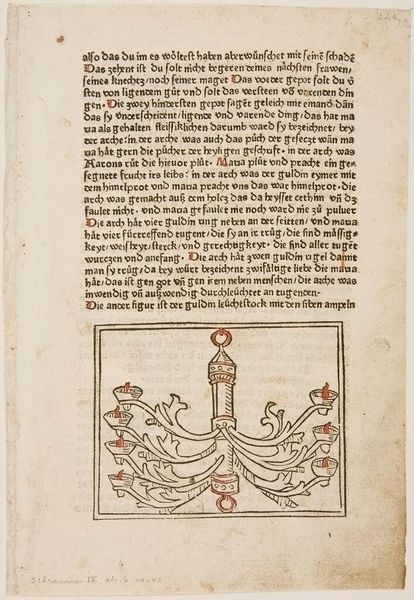
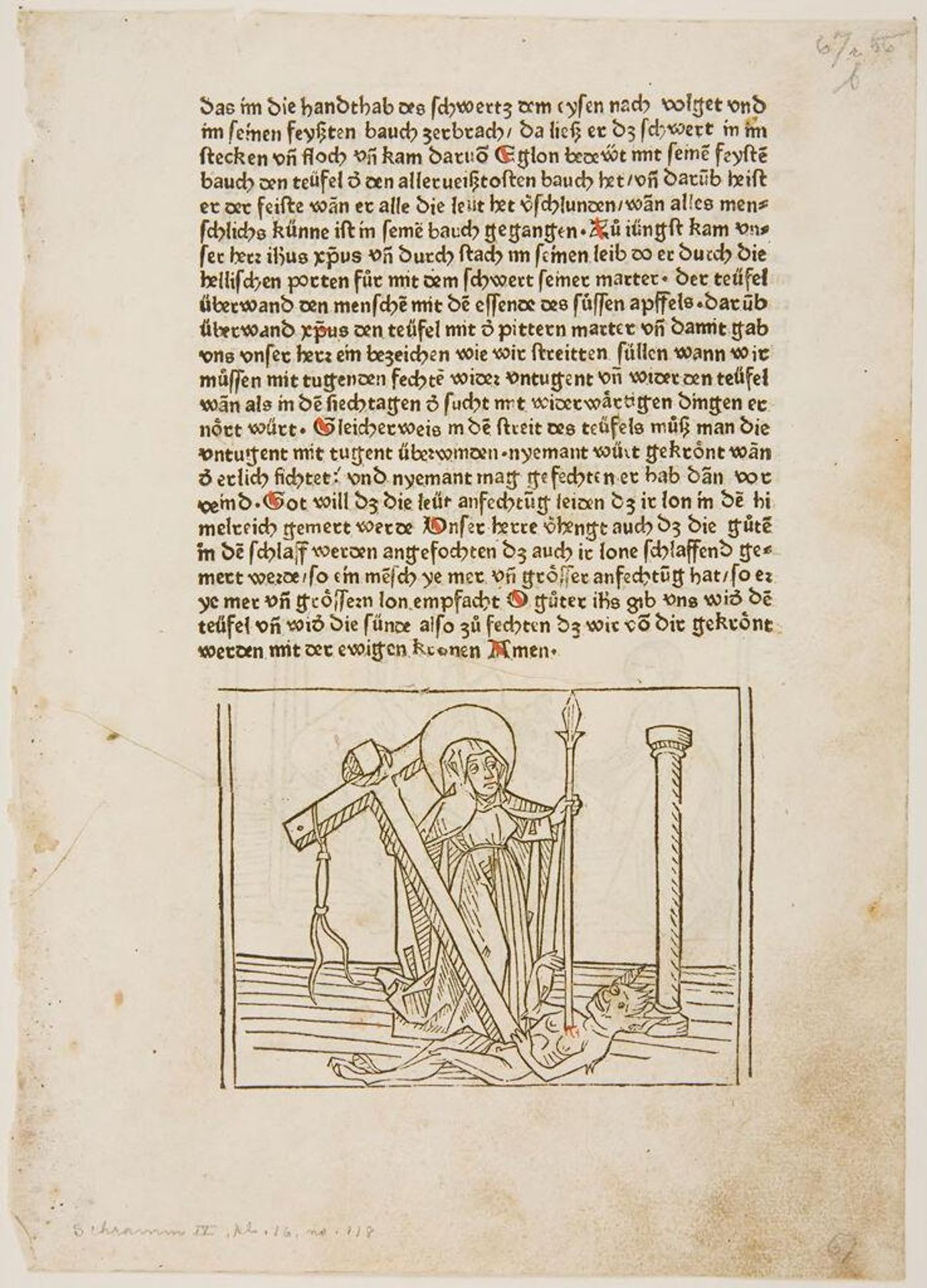
Mary Triumphs over the Devil; verso: Queen Thamarys with Head of Cirus


Listen to curator's interpretation
Curatorial notes
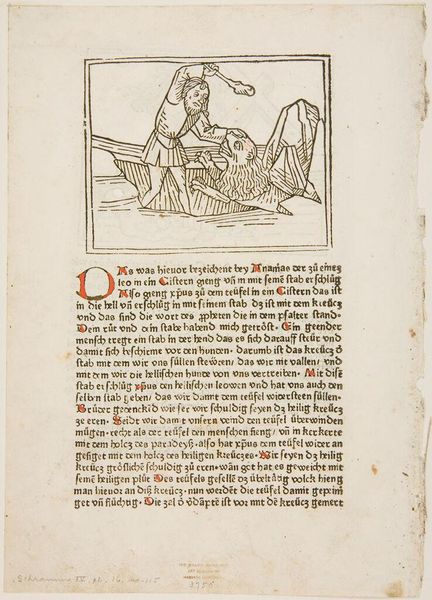
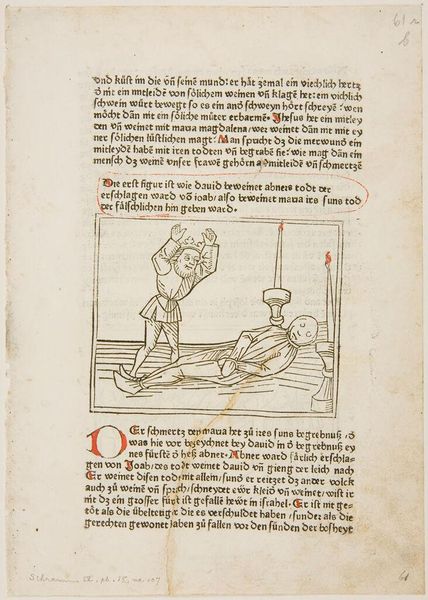
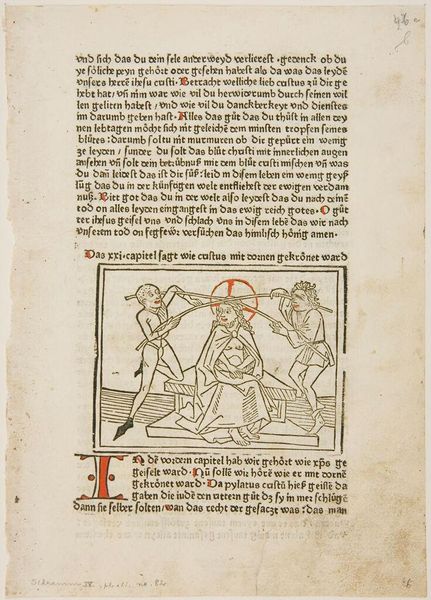
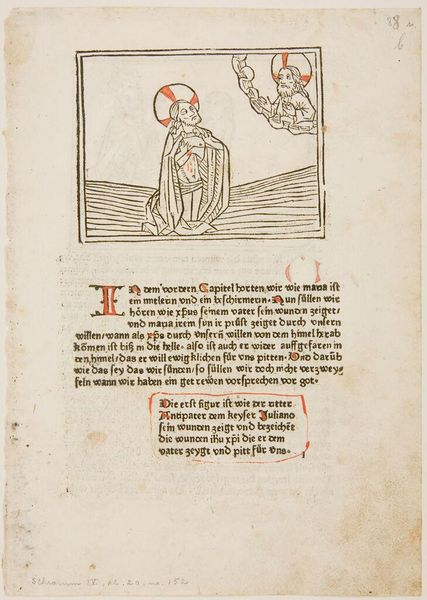
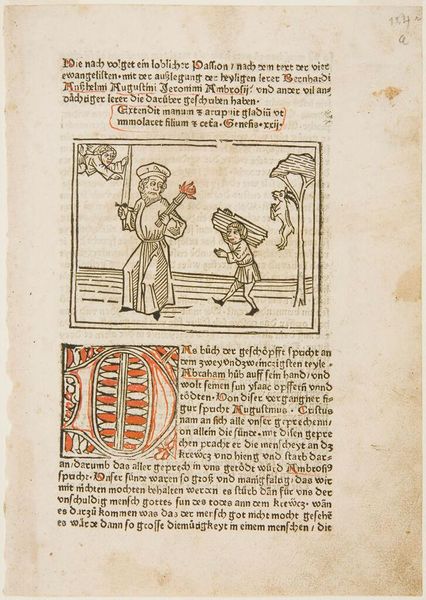
Curator: Let’s consider this intriguing woodcut, anonymously created and titled “Mary Triumphs over the Devil; verso: Queen Thamarys with Head of Cirus.” Editor: Well, the first thing that jumps out is the stark, almost brutal simplicity. It's raw and immediate, like a visual shout. Curator: Indeed. The stark lines emphasize a direct symbolic narrative. We see Mary, spear in hand, standing over the defeated Devil. This imagery reflects the intersection of religious power and gender, and the subjugation of evil through feminine virtue. Editor: I feel the Devil’s defeated posture is compelling. It's a kind of grotesque vulnerability, a raw depiction of powerlessness that I can't help but find... strangely sympathetic, despite the clear message. Curator: Understanding the historical context, this piece would have resonated powerfully in a time of immense social and spiritual upheaval. It is a narrative of hope and reassurance of the victory of good. Editor: It makes you think about the ongoing battles, internal and external, doesn’t it? What does it mean to triumph, and what are the costs? Curator: Precisely. The artwork invites viewers to engage with the historical and contemporary understanding of power dynamics.