About this artwork
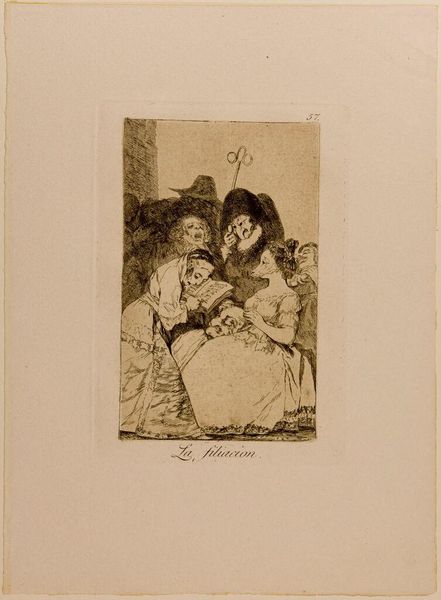
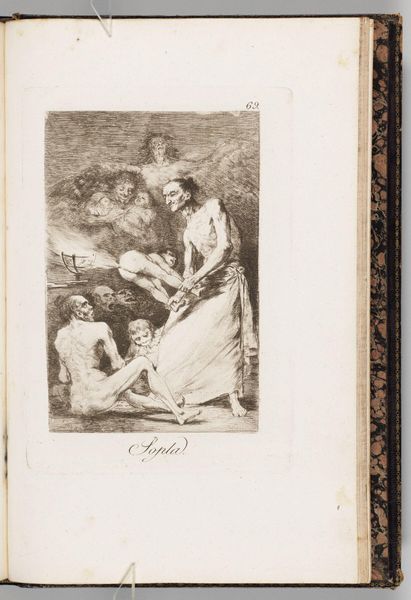
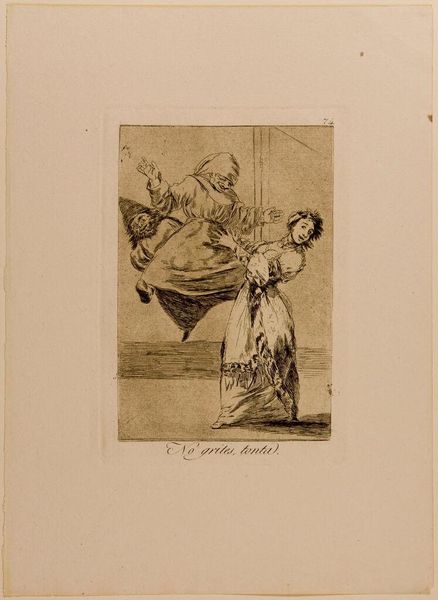
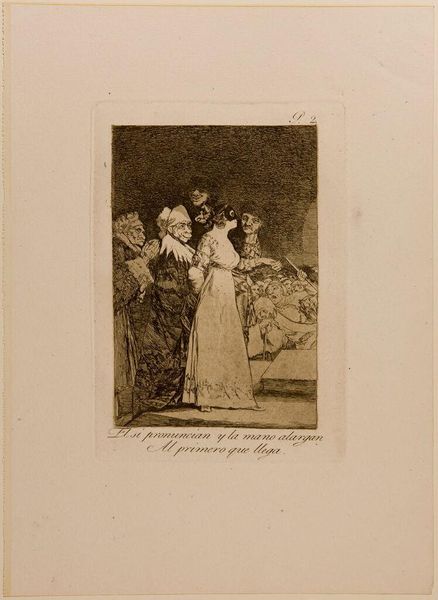
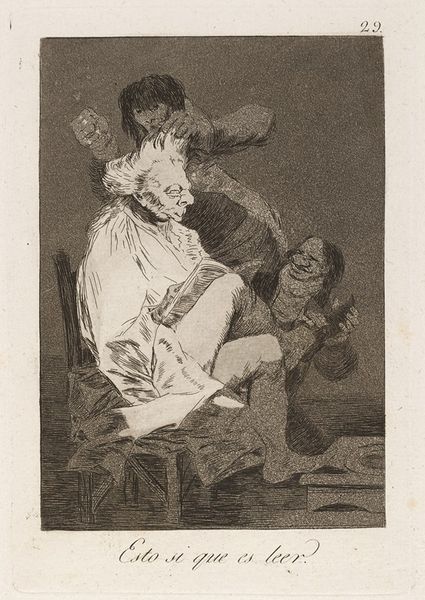
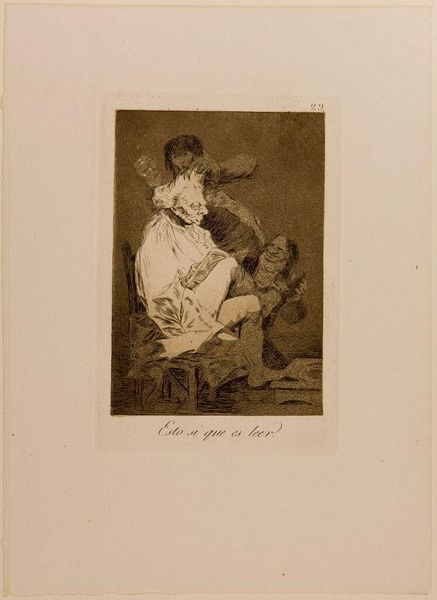
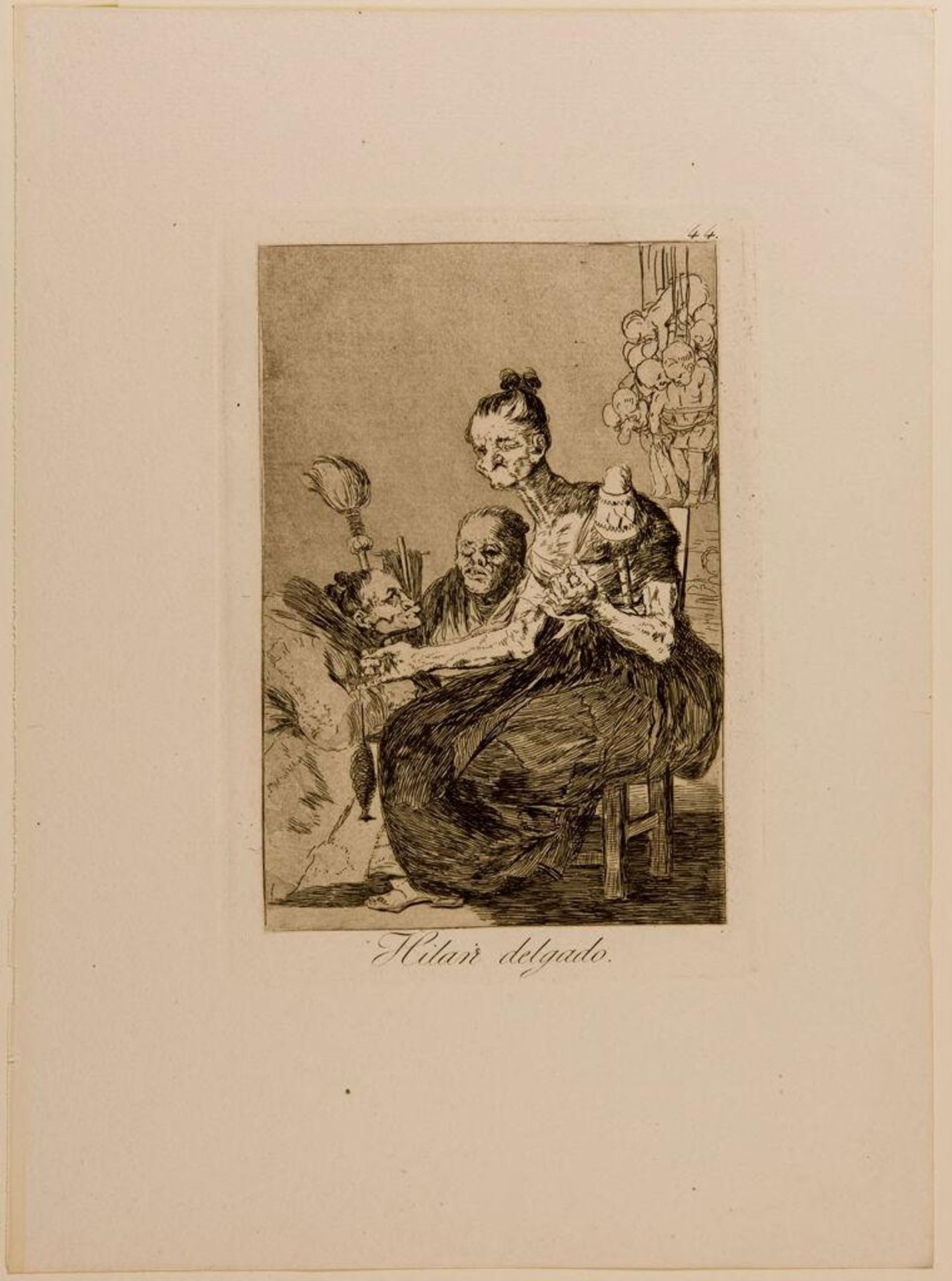
Editor: This etching by Francisco Goya is called "They Spin Well." There's an unsettling mood, heightened by the skeletal figures. What do you see in this piece? Curator: Goya’s works often critique societal structures, particularly the exploitation of marginalized groups. Here, he uses the imagery of aging women to symbolize the decay of social justice. How might their labor connect to broader systems of power and inequality? Editor: So, their physical state represents a larger commentary on exploitation? Curator: Precisely. Goya situates their lived experiences within a landscape of political and economic oppression, prompting us to consider who benefits from their work and who is rendered invisible. What does this invisibility mean for our understanding of social responsibility? Editor: It’s a stark reminder of the need to confront injustice. Curator: Yes, it highlights the importance of recognizing and addressing systemic inequalities.
They Spin Well 18th-19th century
Francisco José de Goya y Lucientes
@franciscojosadegoyaylucientes
Harvard Art Museums
Harvard Art MuseumsArtwork details
- Location
- Harvard Art Museums
- Copyright
- CC0 1.0
Comments
No comments
About this artwork
Editor: This etching by Francisco Goya is called "They Spin Well." There's an unsettling mood, heightened by the skeletal figures. What do you see in this piece? Curator: Goya’s works often critique societal structures, particularly the exploitation of marginalized groups. Here, he uses the imagery of aging women to symbolize the decay of social justice. How might their labor connect to broader systems of power and inequality? Editor: So, their physical state represents a larger commentary on exploitation? Curator: Precisely. Goya situates their lived experiences within a landscape of political and economic oppression, prompting us to consider who benefits from their work and who is rendered invisible. What does this invisibility mean for our understanding of social responsibility? Editor: It’s a stark reminder of the need to confront injustice. Curator: Yes, it highlights the importance of recognizing and addressing systemic inequalities.
Comments
No comments