About this artwork
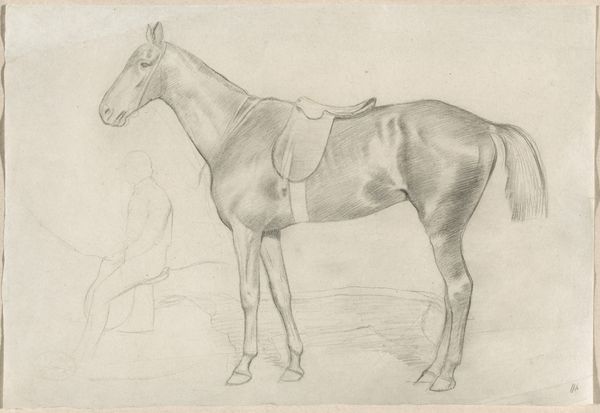
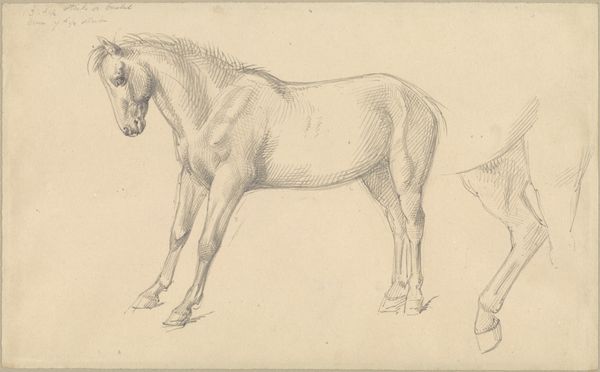
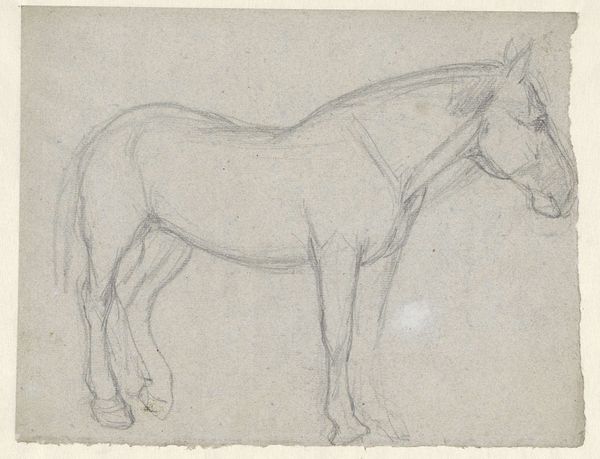
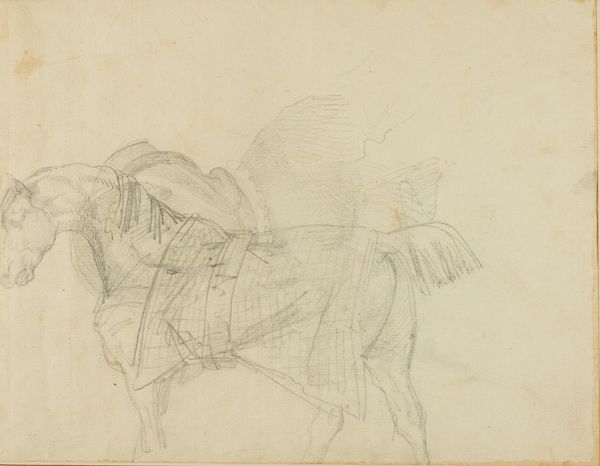
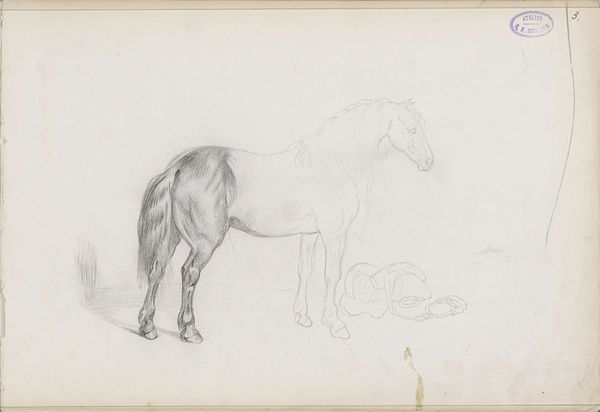
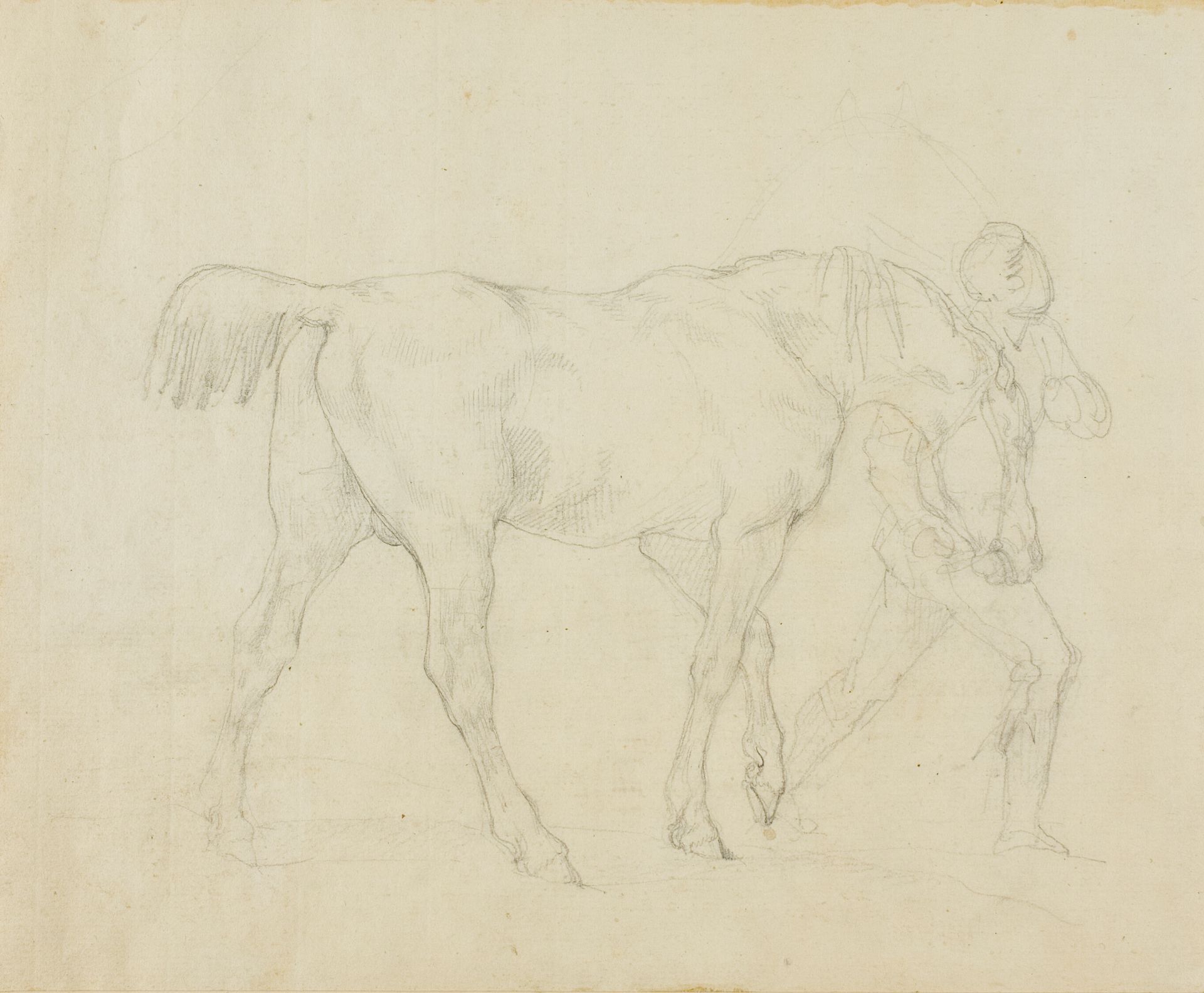
Théodore Géricault made this drawing, "Groom Leading a Horse", with graphite on paper. The pale tonality and delicate lines give it a light, airy feel. The composition is structured around the diagonal movement of the horse and groom. Géricault used line to define form, but note how the linearity doesn't delineate so much as it suggests. This implies a state of becoming, in a semiotic sense, it signifies transition. The semiotic codes, like the horse as a symbol of power and the groom as subservient, are destabilized by the drawing's incompleteness. The lack of firm boundaries allows for multiple interpretations. Consider how this incompleteness reflects the philosophical concerns of Géricault's time. Thinkers were questioning fixed meanings and embracing the fluidity of existence. The drawing invites us to consider how meaning is constructed and constantly renegotiated. It is less about what is definitively represented and more about the potential for representation itself.
Groom Leading a Horse
1818 - 1819


Artwork details
- Medium
- drawing, print, paper, pencil, graphite
- Dimensions
- 214 × 260 mm
- Location
- The Art Institute of Chicago
- Copyright
- Public Domain
Tags
Comments
Share your thoughts
About this artwork
Théodore Géricault made this drawing, "Groom Leading a Horse", with graphite on paper. The pale tonality and delicate lines give it a light, airy feel. The composition is structured around the diagonal movement of the horse and groom. Géricault used line to define form, but note how the linearity doesn't delineate so much as it suggests. This implies a state of becoming, in a semiotic sense, it signifies transition. The semiotic codes, like the horse as a symbol of power and the groom as subservient, are destabilized by the drawing's incompleteness. The lack of firm boundaries allows for multiple interpretations. Consider how this incompleteness reflects the philosophical concerns of Géricault's time. Thinkers were questioning fixed meanings and embracing the fluidity of existence. The drawing invites us to consider how meaning is constructed and constantly renegotiated. It is less about what is definitively represented and more about the potential for representation itself.
Comments
Share your thoughts