About this artwork
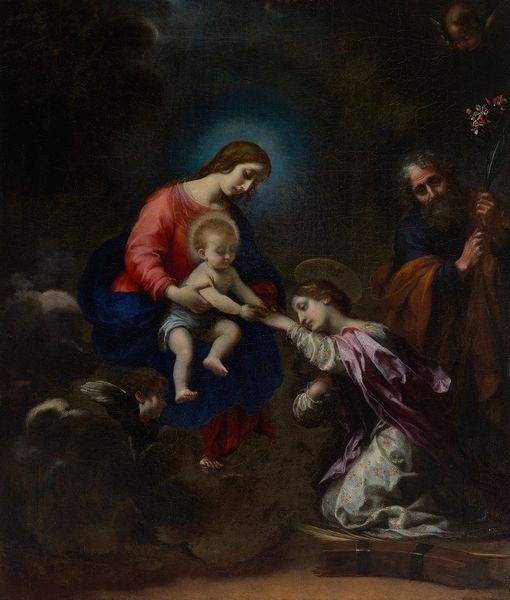
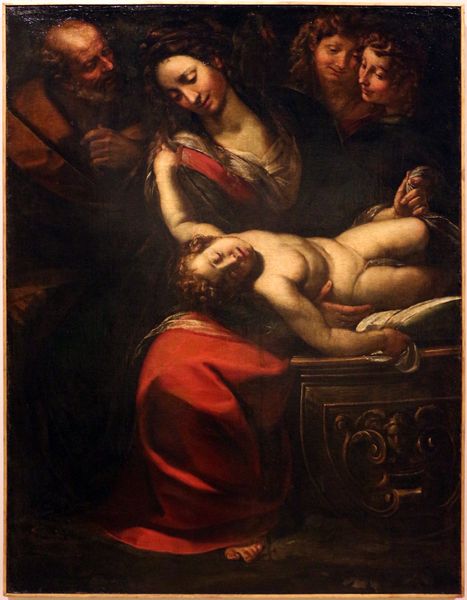
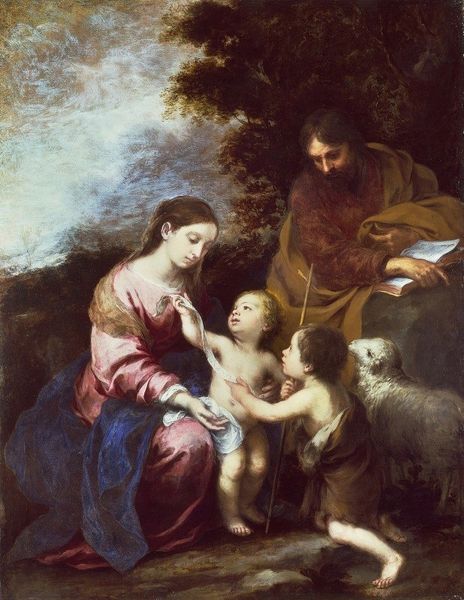
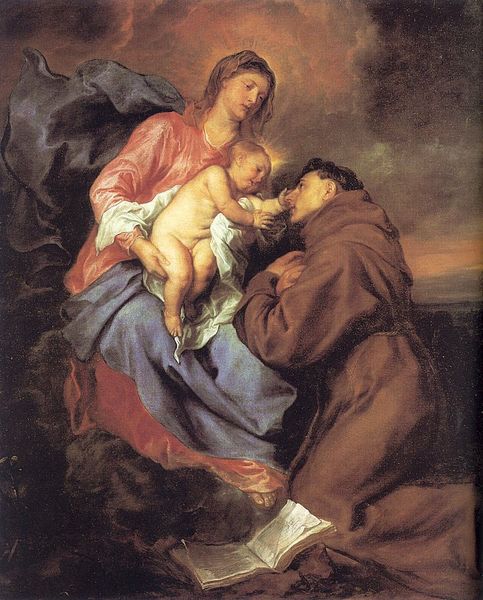
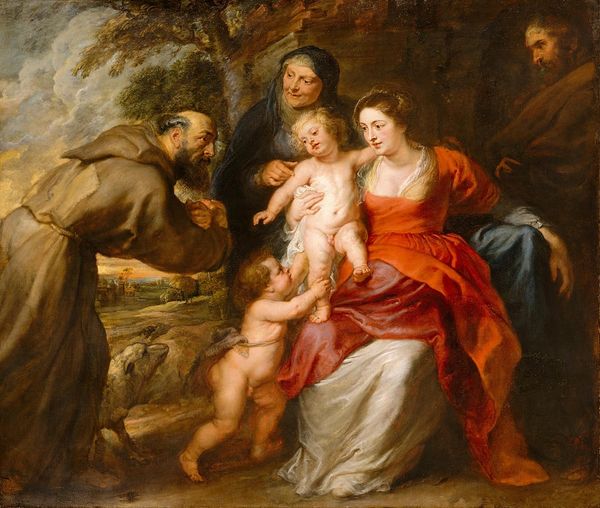
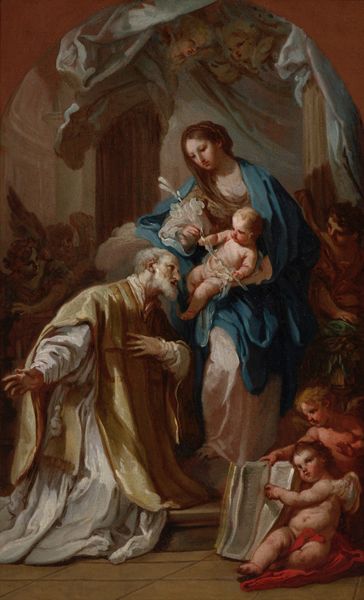
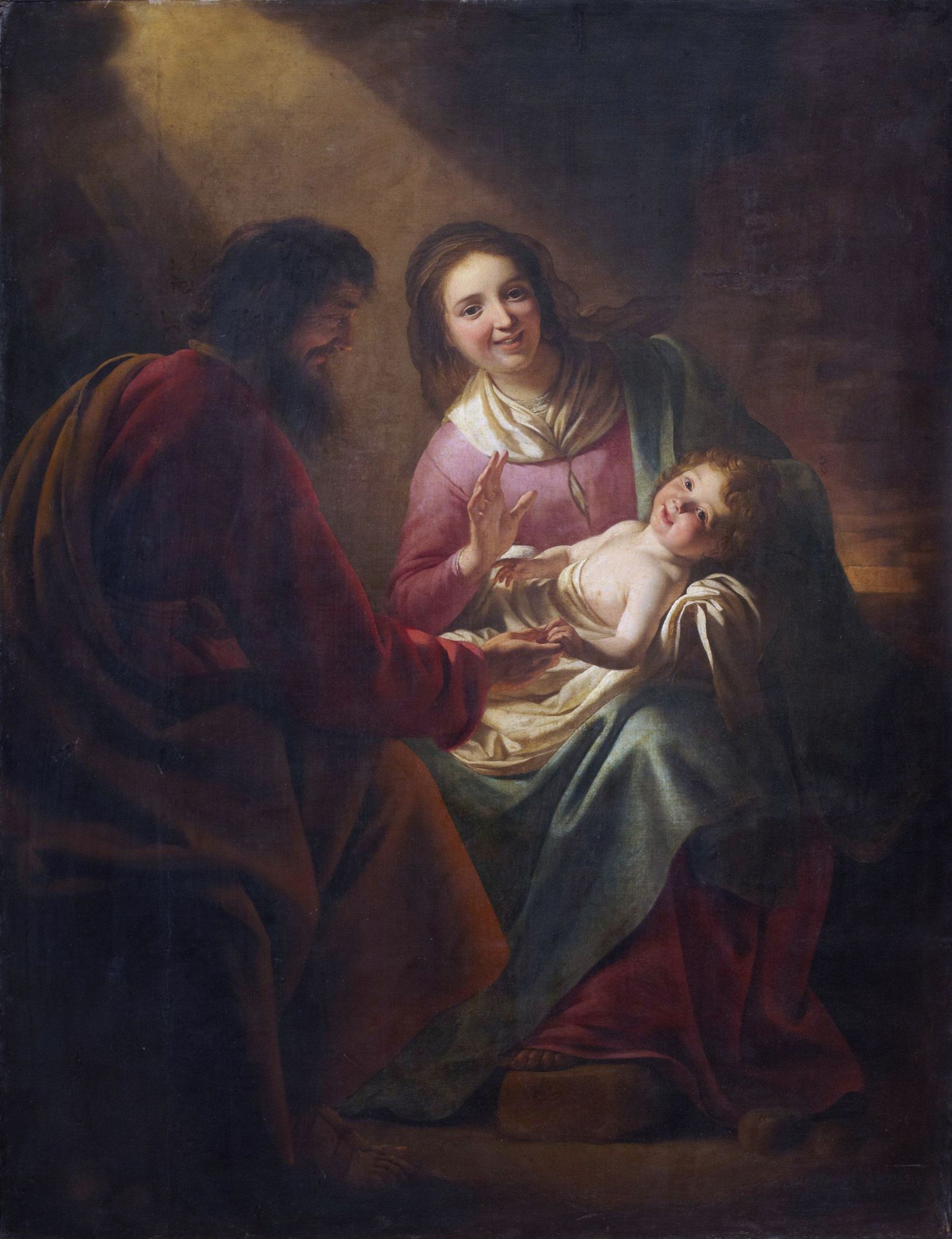
Gerard van Honthorst created this image of The Holy Family, bathed in light, with oil on canvas. The composition is arranged to draw your eyes to a central tableau of intimate interaction. The dramatic use of light and shadow, known as chiaroscuro, casts strong light on the faces, particularly illuminating Mary and the infant Jesus. This use of tenebrism is not merely decorative; it structures the narrative, highlighting the purity and innocence of the Virgin and Child, while Joseph remains partially shrouded, a witness to a divine event. The artist employs color to further this symbolism, with warm reds and pinks clothing the figures, signifying love and sacrifice. The soft, flowing lines of the garments contrast with the hard, angular shadows, creating a visual tension that underscores the complex relationship between the human and the divine. The gaze of the figures binds them together and invites you to enter into their private, sacred sphere. The symbolism in the painting challenges fixed meanings and offers new ways of thinking about perception and power.
The Holy Family
1632

Gerard van Honthorst
1592 - 1656Location
Stedelijk Museum, Amsterdam, NetherlandsArtwork details
- Medium
- painting, oil-paint
- Location
- Stedelijk Museum, Amsterdam, Netherlands
- Copyright
- Public domain
Tags
Comments
Share your thoughts
About this artwork
Gerard van Honthorst created this image of The Holy Family, bathed in light, with oil on canvas. The composition is arranged to draw your eyes to a central tableau of intimate interaction. The dramatic use of light and shadow, known as chiaroscuro, casts strong light on the faces, particularly illuminating Mary and the infant Jesus. This use of tenebrism is not merely decorative; it structures the narrative, highlighting the purity and innocence of the Virgin and Child, while Joseph remains partially shrouded, a witness to a divine event. The artist employs color to further this symbolism, with warm reds and pinks clothing the figures, signifying love and sacrifice. The soft, flowing lines of the garments contrast with the hard, angular shadows, creating a visual tension that underscores the complex relationship between the human and the divine. The gaze of the figures binds them together and invites you to enter into their private, sacred sphere. The symbolism in the painting challenges fixed meanings and offers new ways of thinking about perception and power.
Comments
Share your thoughts